He sold cars for 43 years. Here’s why the salesperson has to go ‘talk to the manager’ before settling on a number
Anyone who’s ever set foot in a car dealership has heard some version of the same line: “Let me go talk to my manager.” It’s as much a part of the showroom experience as the k-cup coffee station and fluorescent lights. But why, exactly, does that ritual exist? Is the salesperson really conferring with some all-powerful figure in a back office? Or is it just “theater” to squeeze a few more dollars out of you?
It happened to me about five years ago
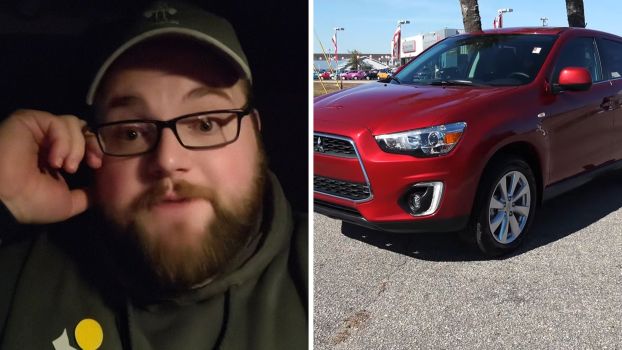
I went to a rural Kia dealership east of downtown Columbus, Ohio. The target was a used Fiat 500L. It was a trade, and the dealer was looking to get rid of it quick. I brought cash with me…but not as much as the full asking price.
The salesman let me drive the L. Yep, it was exactly what I’d expected: an impressively spacious version of Fiat’s classically fun 500. I’d like to take it home.
After making my cash offer (tax, title, and fees included), the salesman wrote the number down on a crap piece of paper. He took a breath, clearly disappointed at the figure. After all, he’s used to selling brand-new Kia Sportages, Tellurides, and the like.
I got the cliché: “Let me see what the sales manager says about your offer.” Weird. Up until that point, he’d seemed like the authority on the listing. Wasn’t there a standard floor on all the listings the sales staff knew about? Why did he need to speak to someone else?
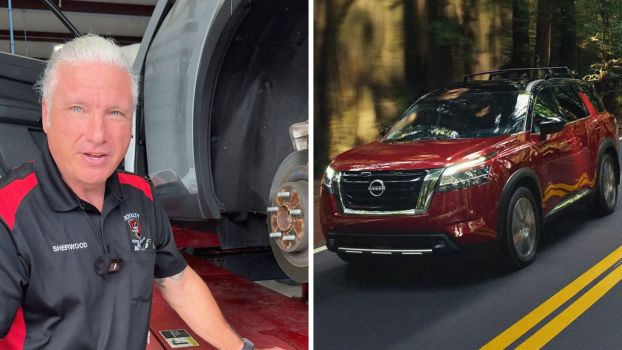
Ray Shefska would know
He spent 43 years in retail automotive, starting as a car salesperson and working his way up to general manager.
In a conversation with his son Zack on the CarEdge YouTube channel, he laid out what’s actually happening behind the curtain when your salesperson disappears “to check with the manager.”
And it turns out, there’s a lot more going on in that little walk across the showroom floor than most buyers realize.
The dealership salesperson isn’t really calling the shots
The first thing to understand, Ray explained, is that the average salesperson has almost no authority.
They can help you pick out a vehicle, they can take you on a test drive, but when it comes to actual pricing or payment terms, their hands are tied.
That’s why when you counter an offer (maybe you want a few thousand knocked off the price or a different monthly payment) the salesperson can’t just say yes or no. They have to ask the sales manager. “That’s the main reason,” Ray says.
It’s not a stall tactic in the sense of wasting time for no reason. It’s literally how most car dealers are structured. According to Ray, in roughly 90% of dealerships, salespeople can’t finalize pricing or deals themselves. Those decisions live at what’s called “the desk,” run by the sales manager or desk manager.
The real negotiation happens behind the scenes
If the salesperson’s job is limited, the sales manager’s role is anything but.
When a salesperson heads back with a customer’s request, they don’t always get a warm welcome. Ray described a typical exchange: the salesperson says something like, “I think the customer will buy the car if we do this, this, and this.” The manager responds by asking why the offer isn’t stronger and often pushes them to go back and extract more money.
That dynamic creates pressure on the salesperson, but it’s also by design. The manager is trying to maximize profit, and part of that involves challenging the salesperson to negotiate harder.
This is where that back-and-forth you experience as a customer (the repeated exits and returns, the “let me see what I can do” routine) really comes from. The manager may counter with a modified proposal: “We can do this part, but not that part,” and send the salesperson back to see if you’ll bite. It’s a deliberate process aimed at getting you to come up a little more or give up something else.
It’s exactly what happened to me at that Kia dealership. Oh, and what I did myself for a decade as a licensed car salesperson.
“Liner-closer” stores make the car buying game even more layered
In many dealerships, Ray said, there’s another wrinkle: the salesperson isn’t even the one who closes the deal.
These are called “liner-closer” stores. The salesperson (“liner”) handles the initial interaction. This includes finding the car, presenting the first offer, and ferrying proposals to and from the manager. But once the deal reaches the final stage, a different person (the “closer”) steps in.
That closer, Ray said, is often someone with more experience and more authority. Their job is to push harder to get a yes. At that point, even the salesperson isn’t part of the decision-making process anymore.
In more progressive dealerships, the structure is simpler: salespeople are trusted to negotiate and finalize deals themselves. If they reach an agreement with a customer, it’s done. No back-room approval needed. But those dealerships are still in the minority.
In my professional experience, things were a bit more lax. My dad and I often worked together to get a sale done. Sometimes I’d ask him about an offer, sometimes he’d ask me, and other times we just ran solo. Over time, trust built. It was always about making sure both the company and the customer got what they needed.
Can you skip the “talk to my manager” dance?
As a customer, Ray said, you don’t have to accept the traditional routine. If you’re short on time (or patience) you can simply ask to speak directly with the sales manager.
Something as straightforward as, “I’d like to sit down with the manager to work through the details so we don’t have to keep going back and forth,” can cut through a lot of the runaround.
It won’t always work. Some dealerships insist on sticking to their system. But many will accommodate a buyer who asks to have the decision-maker join the conversation. And that can make the whole process faster and more transparent.
Most of this is persuasion, not math
For all the numbers being thrown around in a dealership, Ray said the heart of the process isn’t really arithmetic. It’s persuasion. Every line, every tactic, every trip to the manager’s office is part of a strategy to influence your decision.
The dealership is trying to persuade you to pay more, and you’re trying to persuade them to accept less. Whoever does the better job usually wins.
That’s why, Ray emphasized, it helps to understand the “word tracks.” These are scripts and talking points salespeople and managers use to guide you toward their goals. Recognizing those tactics makes you less likely to reveal information they can use against you and more likely to steer the conversation toward what you want.
Leveling the playing field
After more than four decades in the business, Ray knows how lopsided the system can feel for shoppers. Most people buy a car once every few years. Salespeople do it every day. That imbalance gives the dealership an edge.
But buyers can close that gap by learning how the process really works. Knowing that your salesperson probably doesn’t have final authority changes how you negotiate.
Understanding that the manager’s job is to push for more helps you spot when you’re being steered. And realizing that persuasion is the core of the whole dance lets you approach the situation strategically instead of emotionally.
For me, it was more straightforward. And, to be honest, selling cars myself for 10 years helped me stay firm and close the deal I’d envisioned. I had this much cash, that’s it, I’ll take the car off your hands, easy-peasy. A “no” meant I’d walk, and I was okay with that. But it worked. Though, there’s no doubt that the Kia staff was less than elated about the sale. I just wasn’t their target customer.
The next time someone disappears to “talk to their manager,” you’ll know exactly what’s happening in that office. You’ll be better prepared to handle it.
I’ll add that it’s absolutely critical to your financial safety that you understand car loan terms, as well as the model’s current and five-year market trends. Don’t sign anything you don’t understand, and have the true costs of car ownership spelled out before you even set foot a sales floor. Don’t be a victim.
Because behind that door, it’s not just about numbers. It’s about who’s really in control of the deal.