The Meaning Behind the Ford F-Series Name
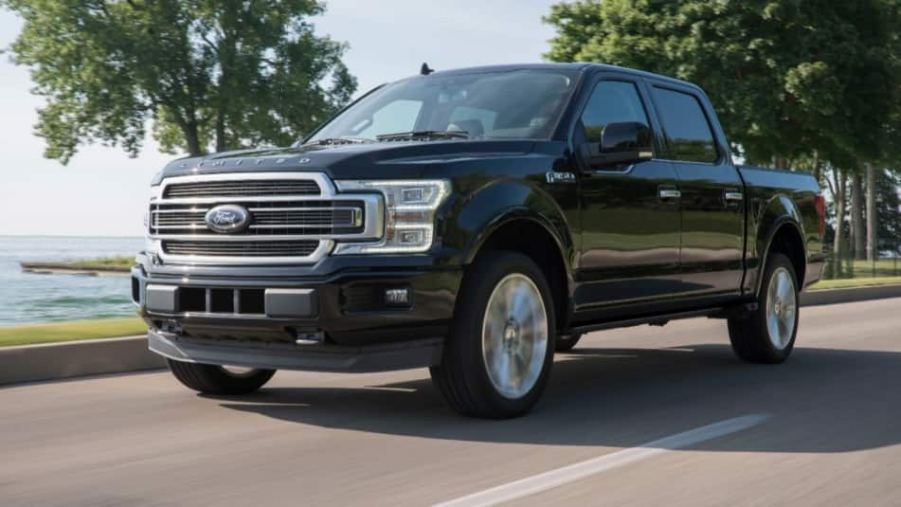
Whether in fantasy or automotive reality, names have power. They signify heritage and history; they mean something. There are few names as iconic as Ford’s F-Series, especially the F-150. They’ve been the best-selling vehicle in the US for over 30 years. They’re as ubiquitous as McDonald’s and potholes. But why ‘F-150’? What does it mean? Here, we present the history of the Ford F-150 name.
How the F Did The F-Series Name Begin
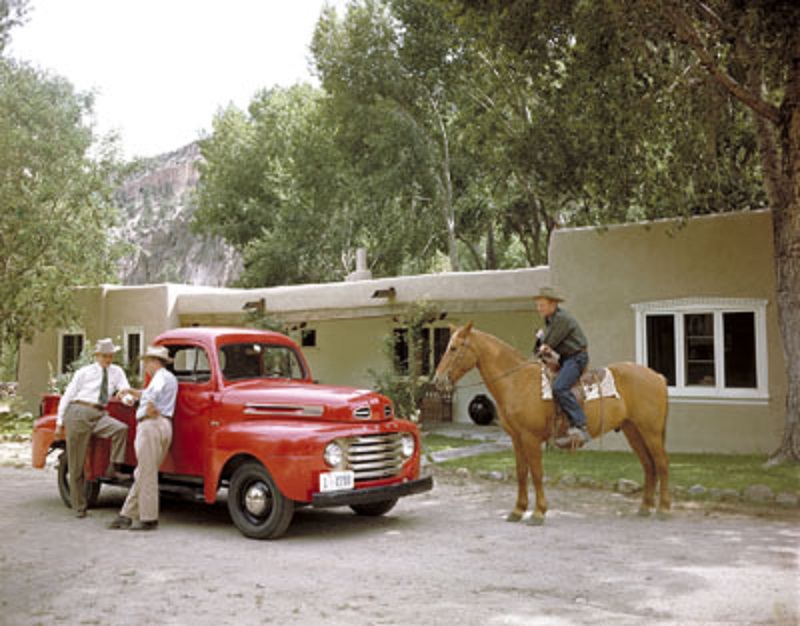
Although Ford had pickup trucks before the F-Series, they were special extensions of existing cars. First the Model TT, based on the Model T. Later, the Model AA, built on the Model A chassis. It wasn’t until after WWII that Ford developed a stand-alone pickup line.
In 1948, Ford debuted the first official F-Series, aka the Ford Bonus-Built line. They ranged from the half-ton F-1, all the way up to the 3-ton F-8. The larger the number, the larger the payload capacity: the F-2 and F-3 were ¾-ton (the latter the heavy-duty version), and the F-4 was a one-ton truck. And while we’re on the subject, this is when ‘half-ton’ really did mean half a ton of packages and passengers.
Why ‘F-Series’? According to Consumer Guide, because ‘F’ stands for ‘Ford’. Sometimes, it really is that simple.
The F-Series Names Go from 1 to 100

The first-gen F-Series was built from 1948 until 1952. In 1953, Ford unveiled the second-generation models. And already, there were some name changes.
The F-1 had become the F-100 and F-110. The F-2 and F-3 had merged and become the F-250 and F-260. The F-4 had become the F-350 and F-360. As before, the numbers were a way to scale payload. The F-100 and 110 were half-ton, the 250 and 260 ¾-ton, and the 350 and 360 one-ton.
Nowadays, such model number inflation isn’t out of the ordinary. But why did Ford go from 1 to 100? Allegedly, to honor the F-100 Super Sabre fighter jet that first flew in May 1953. The rest of the F-Series was scaled to match (250 is halfway between 200 and 300, and 350 is 100 more than 250). As for the extra ‘10’, that was for the all-wheel-drive version, according to the Ford Truck Enthusiasts website.
The F-150 Debuts
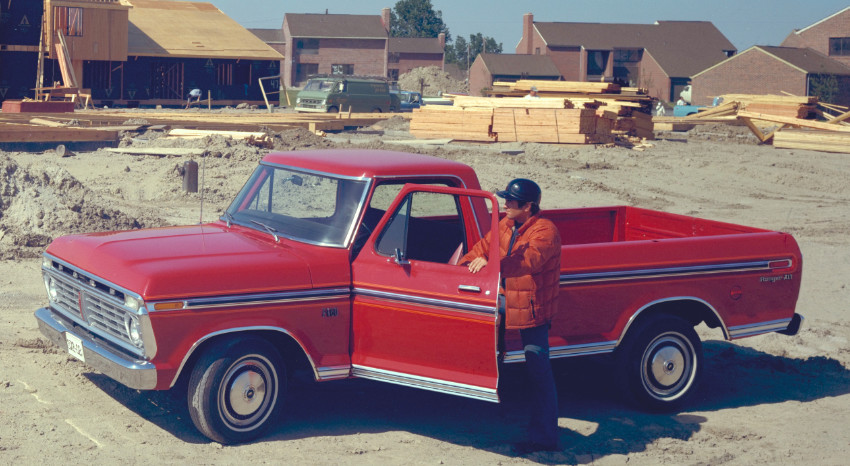
So, the F-250 and F-350 have existed since 1953. But it took until 1975, in the middle of the sixth-generation F-Series, for the F-150 to be introduced.
Given the F-150’s current best-selling status, at the time the introduction wasn’t anything special. At the time, it was a model that split the difference between the F-100 and F-250. The F-150 was essentially a heavy-duty version of the F-100, with a higher payload capacity and heavier springs. And up until the end of 1983, both the F-150 and F-100 were sold side-by-side, until the latter was discontinued.
The F-Series Rolls On
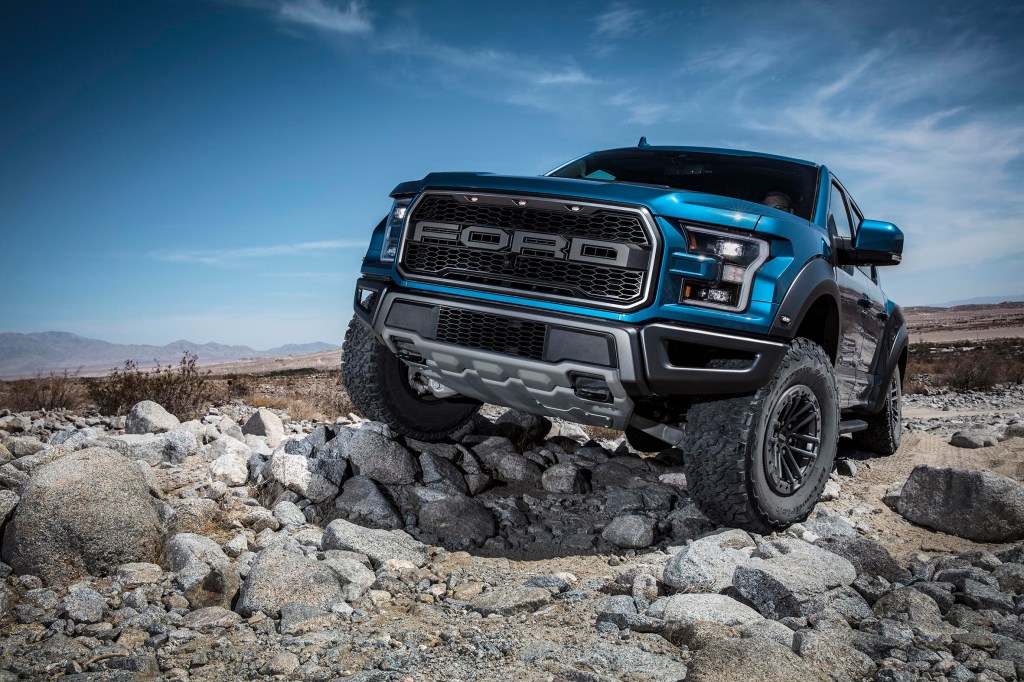
However, it wasn’t just sales figures that killed the F-100. Nor did Ford’s product planners simply see a middle-ground between the F-100 and F-250 for customers. The F-100 didn’t just lose a popularity contest, it died because of emissions. Then, as now, vehicles with a gross vehicle weight rating (basically, vehicle weight with fluids and people) over 6000 lbs had looser emission requirements. The heavy-duty F-150’s GVWR was just high enough to qualify for those less-restrictive emission limits. The F-100 didn’t.
Huh. Now why does this emission loophole seem familiar?
Regardless, since the F-150’s introduction, the F-Series nameplates have remained constant. They still serve to rank the trucks in order of increasing payload capacity. Though the F-Series now stretches all the way up to the commercial F-750, the ‘150’, ‘250’, and ‘350’ designations have become common lexicon. As I said, names have power.