Why Are Car Side Mirrors So Expensive to Replace?
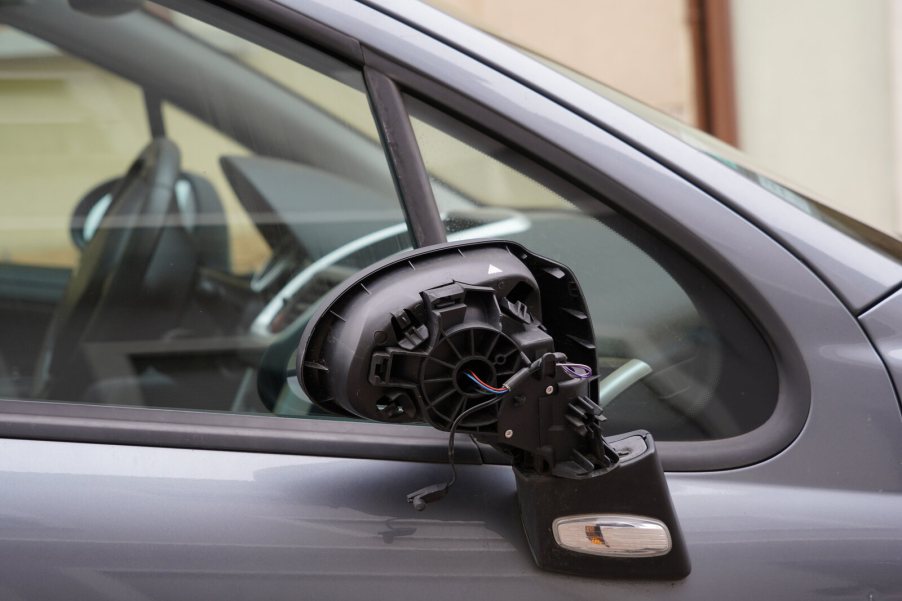
Banging a side mirror against something is one of the most common mishaps I used to see in the service department. It happens everywhere: tight parking garages, crowded driveways, or drive-thru lanes that were clearly designed by someone who never owned a modern car.
Well, if you drive a newer vehicle today, after the initial surprise of sudden side mirror destruction, get ready for another shock. It’ll come from the repair estimate. At the counter, drivers often couldn’t believe that a broken mirror, something they thought of as a simple part, could cost so much to replace.
Side mirrors are no longer mere reflective surfaces
Back in the 90s and early 2000s, side mirrors were mostly simple mechanical parts.
We’re talking about a reflective glass panel that clipped into a plastic housing, maybe with a manual adjust lever. No wiring, no sensors, no cameras. You could replace just the glass, just the housing, or just the painted cover.
And you could bolt the whole dang thing on in minutes.
Today, side mirrors have evolved into multifunction sensor pods. They may include:
- Power adjustment motors
- Heating/defrost modules
- Integrated turn signals
- Blind-spot detection sensors
- Cameras (for 360° systems or side-view monitoring)
- Auto-dimming glass
- Puddle lights
- Memory settings (folding/mirroring for multiple drivers)
If your vehicle has any of these features, the cost of the replacement mirror alone can shoot up.
Some manufacturers charge several hundred dollars or more for a genuine mirror with the full feature set. In fact, some mirror part-only prices (for complex, sensor-laden mirrors) match or even exceed what older cars cost in total.
And if your mirror includes sensors or cameras, calibration post-install can add yet another layer of cost.
Labor is more involved
Replacing a side mirror used to be a straightforward fastening job for many cars. Now, you often must disassemble a large portion of the door’s interior panel to access mounting bolts and wiring harnesses.
That adds time…and risk of accidentally breaking fragile plastic trim or stripping hidden fasteners.
Typical shops estimate anywhere from 0.7 to 1.5 hours of labor just to remove and reinstall everything cleanly. This is for, say, a Honda Civic.
If you have a luxury vehicle or high-end trim, that’s before any time for diagnostics, calibration, or dealing with broken clips or wiring.
In my years as a service writer, I’ve seen quotes where the “labor” portion is one of the bigger shockers, especially at dealerships. They’ll bill by their hourly rate and sometimes round up. If the mirror requires careful handling of electronics, or addressing uncovered issues, the time creeps upward.
Calibration and diagnostics
If your side mirror houses advanced features (camera, blind spot sensor, lane-keeping assist) the vehicle may require calibration after installation.
A shop might run pre- and post-scan diagnostics and perform alignment procedures to make sure all sensors are working and the vehicle systems accept the new mirror.
In some cases, that calibration is not optional (if you skip it, warning lights or malfunctioning assistance systems will nag you).
I once saw a quote for a modern SUV’s mirror replacement where $725 was listed just for the “multiview camera 360 calibration.” That ballooned the total estimate skyward.
OEM vs. aftermarket vs. used
The kind of mirror you choose matters enormously:
OEM (factory) mirrors are usually the safest bet for fit, finish, and full functionality. But they cost more. Many come unpainted, too, or painting through the dealership is an added fee.
Aftermarket mirrors can save money, but not all will support every feature (e.g. sensor or camera wiring). Sometimes they’ll “physically fit” but leave features disabled or trigger errors.
Used mirrors reduce parts cost dramatically. But you risk unknown wear, wiring fatigue, or missing internal parts.
A used or aftermarket mirror might save you hundreds, but may come with cons. Of course, certain aftermarket suppliers are closer to OEM versions than others. Be sure you understand your options before agreeing to either.
Shipping, inventory, and markups
Dealerships often don’t stock every mirror off the shelf. They order them from regional parts centers, sometimes overseas.
That adds lead time and shipping overhead. The dealership must carry parts overhead, and they’ll price-in margins for ordering, handling, and warranty coverage.
That margin is harder to see as a customer, but it’s baked into the cost.
Inflation, materials, and labor rates
Auto parts, plastics, and electronics all have price escalations over time. Labor rates at body shops and dealerships have risen. And as cars add more electronic content, technicians must maintain specialized diagnostics tools and training, pushing shop costs higher.
A recent MarketWatch repair cost analysis showed that advanced driver assistance systems (ADAS) can increase repair costs by a substantial percentage.
Example numbers
A “normal” side mirror replacement (less complex car) might run $300 to $500 in parts and labor.
Some quotes from dealerships run as high as $1,000 for a mirror replacement (part, paint, install).
On specialized vehicles with multi-camera systems or blind-spot sensors, the parts alone can cross $1,000.
How I’d handle it, if I were you
If a side mirror needs replacement, here’s what I’d look at (speaking from shop-floor experience):
Assess the damage. Is it just glass or the whole unit? If just glass, a cheap glass-only replacement might do. This isn’t always possible.
Check your features. Does your mirror have heated glass, sensors, folding motors? If yes, get the proper part.
Obtain quotes for OEM vs aftermarket vs used. You may find a match at lower cost.
Ask about calibration and diagnostics. Don’t assume the shop includes it initially. If omitted, you may pay later.
Get the labor charged fairly. A good shop will break out mirror removal, reinstallation, calibration, painting, etc., rather than a flat “mystery fee.”
Consider DIY. If you’re handy and the vehicle has a simpler mirror, swapping might save you labor charges (but only if you can manage wiring, trim removal, and reassembly cleanly).
Side mirrors cost more to replace today because they’re no longer simple bits of glass
They’re complex assemblies with electronics and sensors. The labor to remove them without damage is higher. Calibration might be required. And parts carry markups. If you understand all of those moving pieces, the price doesn’t feel quite as mysterious. Oh, it still stings like hell, but it sort of makes sense.
Explaining concepts like this one reinforce my near-apathetic attitude on the cost of car ownership
These machines are really wonderful…but they’re so advanced, and so expensive. I wonder if, over the next few decades, we rid ourselves of the culture of car ownership due to their financial strain. Will we establish more accessible and efficient public transportation? Will we all lease cars for a monthly fee?
Automakers are working on more “affordable” versions of what we might want (with some success! For example, the Chevrolet Trax). But only time will tell if the $20-something-thousand mini Slate EV truck or even the incoming Toyota Stout will hit with buyers.
“Cheap” usually means compact and lacking in safety, comfort, and tech. What about families who feel uneasy in econoboxes? I don’t have answers, but I’ll be watching what happens to the market over time, of course. Curiouser and curiouser…