We’re Going to the Moon in April
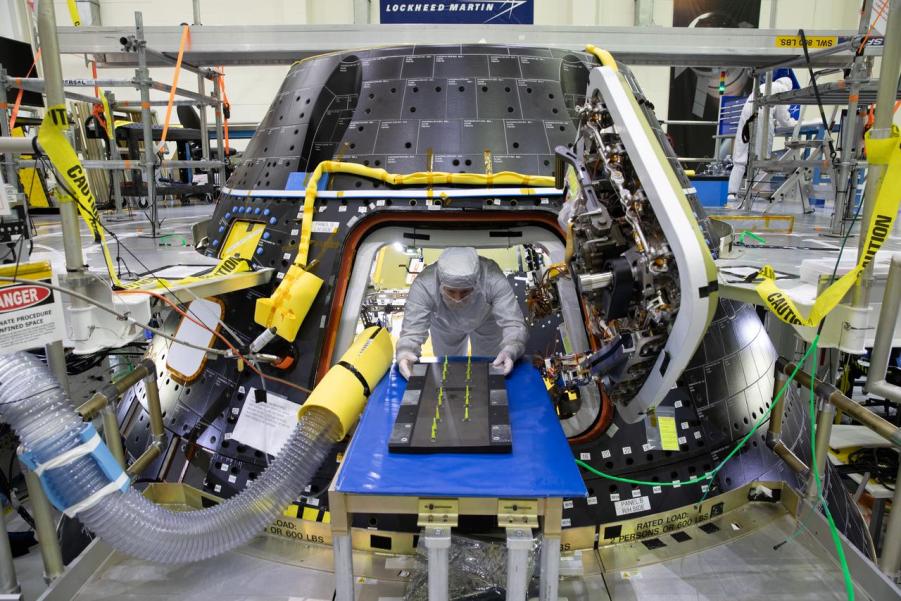
In about five months, four astronauts will lift off from Kennedy Space Center and travel farther from Earth than any crewed mission in half a century. Artemis II will send NASA’s Orion spacecraft around the Moon and back on a roughly 10-day journey.
The mission is designed to run every critical system under the stress of deep space rather than a ground simulation.
And if you haven’t heard much about this whole thing, it’s probably because the agency is still treating it as a pivotal technical verification flight, not a ceremonial return to Moonwalking.
The astronauts are Reid Wiseman, Victor Glover, Christina Koch, and Canadian Jeremy Hansen
They’ll launch from Florida aboard the Space Launch System, NASA’s current heavy rocket.
After liftoff, the boosters and tower separate, the main engines shut down, and Orion continues into space with its interim propulsion stage.
Orion first orbits Earth twice
The initial loop is relatively short. The second lasts almost a full day and stretches high above the planet to build enough momentum for the next move.
During this time, NASA says engineers will monitor every major system so nothing gets missed before committing to the journey toward the Moon.
One key test happens early
The crew will manually guide Orion around the used upper stage to practice precision movements.
NASA said this matters because it prepares astronauts for the kind of slow, close-in flying needed later around the Moon.
They’ll also check how well Orion keeps them alive
That includes basic breathing air, removing moisture and carbon dioxide, and maintaining the right atmosphere whether they’re in their suits or working in plain clothes.
They’ll exercise and sleep so NASA can gather data across real physical conditions, not simulations.
Another early challenge comes when Orion briefly travels beyond the reach of everyday satellites
That allows NASA to confirm long-distance communication links can hold, which is essential once they move into deep space.
When everything checks out, Orion’s service module performs the push toward the Moon
The spacecraft will swing around the far side of the Moon, traveling about 4,700 miles beyond it before heading back.
The total distance from Earth stretches past 230,000 miles. The return relies heavily on natural gravitational pull, which reduces the need for extra fuel.
Throughout the trip, the crew will run through procedures, emergency drills, and system monitoring.
Artemis II won’t include a Moon landing
That comes on the next mission, Artemis III. This one has a focused purpose: prove Orion can safely carry people into deep space and back.
Rumors around objects like 3I/ATLAS may stir curiosity, but these Moon missions are actually happening. If you’d like to follow along, NASA keeps a blog on Artemis progress.