Steinbeck’s ‘The Grapes of Wrath’ is absolutely a car book
In a conundrum I, least of all, fail to understand to this day, I didn’t read “The Grapes of Wrath” until well out of college. This is something of an oversight, or whiff, in my mind, because I majored in English lit and practically lived inside books from the age of seven. Not only that, but at this point, I think it’s safe to say that I’m very much a “car person.”
In high school, I read “East of Eden” in an AP English course. While I enjoyed the novel, it didn’t disrupt or excite my world as much as other readers. In fact, it wasn’t until I pretty much begrudgingly picked up “The Grapes of Wrath” years later that I felt what I assume EOE readers experienced. And I couldn’t believe what I found inside.
In John Steinbeck’s 1939 novel “The Grapes of Wrath,” the Joad family doesn’t just migrate west. They drive there. And in certain parts, their car isn’t an extra. It’s a co-star.
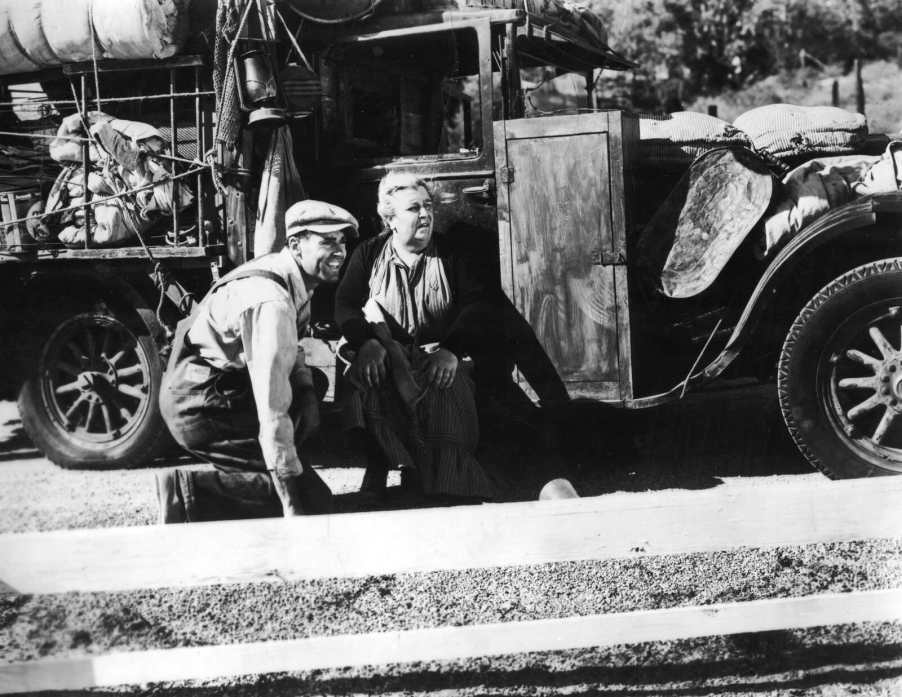
The Joad family’s beat-up 1926 Hudson Super Six
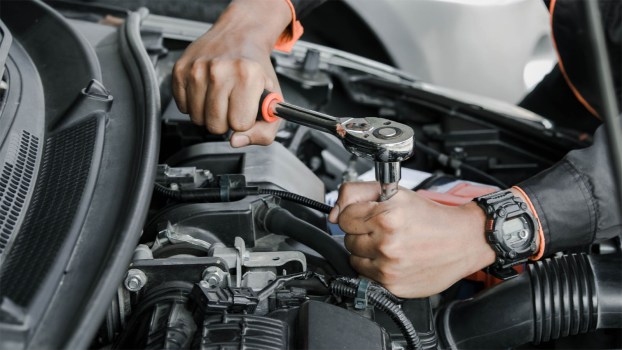
Steinbeck gives us entire chapters, called intercalary chapters for us bookworms, dedicated to cars, used car salesmen, busted radiators, and flat tires. He talks about fan belts and wheel bearings with the kind of detail that makes modern wrench-turners nod in appreciation. I certainly did.
The Joads’ ride in “The Grapes of Wrath” is never named explicitly. However, based on the descriptions in the novel and research by historians, it’s widely believed to be a 1926 Hudson Super Six sedan.
Originally, the Super Six came with a straight-six engine that was considered powerful and smooth-running for its time. It had a top speed of around 70 to 75 miles per hour when new, although in the Joads’ heavily modified and overloaded version, it likely struggled to hit even 40.
The family converted the car into a homemade truck by stripping off the rear half of the body and building a wooden flatbed. That flatbed carried not just furniture and tools, but the entire family. Three generations piled together on a journey west. It wasn’t just a road trip car: It was a rolling lifeboat, held together with hope, wire, and roadside ingenuity.
A lifeline, shelter, and, at times, a liability. Anyone who’s ever tried to coax a rusted barn find across town with a bit of fresh gas and a prayer knows the feeling.
And Steinbeck doesn’t just gesture at car trouble…he digs in
I’ll never forget my giddy surprise at the scene early in the trip where the Joads discover oil leaking from the lower pan of their worn Hudson. Tom and Al pull over and get to work. Steinbeck walks us through the fix: draining the oil, dropping the pan, checking the gasket, and sealing it up with whatever scraps they had lying around.
It’s not quite a Chilton manual, but it’s close enough for me to confirm, right then and there, that cars and art go hand in hand. You get the tension, the sweat, the frustration, and that mix of hope and urgency anyone with an overheating radiator has felt on the side of a highway.
And it’s not just there for realism. That repair job is a metaphor in motion. If the car keeps running, so does the dream. If it quits, they’re stuck. And stuck in “The Grapes of Wrath” means hungry, homeless, maybe even dead. So every wrench turn is an act of survival. Every patch is a prayer.
The automobile in “The Grapes of Wrath” is the great equalizer
In the novel, everyone’s car is breaking down. Everyone’s moving, desperate, hopeful, and leaning hard on a machine just barely holding together.
And think about the structure. It’s a road trip novel…just a grim, dust-choked one.
The Joads head west on Route 66, chasing the California dream like it’s a mirage. The road is long. The engine’s tired. Every mile brings a new revelation or heartbreak. That’s not unlike any great American road story: Kerouac. Pirsig. Even Smokey and the Bandit, if you squint.
So yes, “The Grapes of Wrath” is about poverty, injustice, and the American working class. But it’s also about what happens when you load up your family, slap on some bald tires, and point your battered hood ornament west.
Sure, they don’t build them like they used to…but at least you could, in theory, nurse them across the country yourself with hand tools.
In this sense, then, “The Grapes of Wrath” is absolutely a car book. One of the best, even.