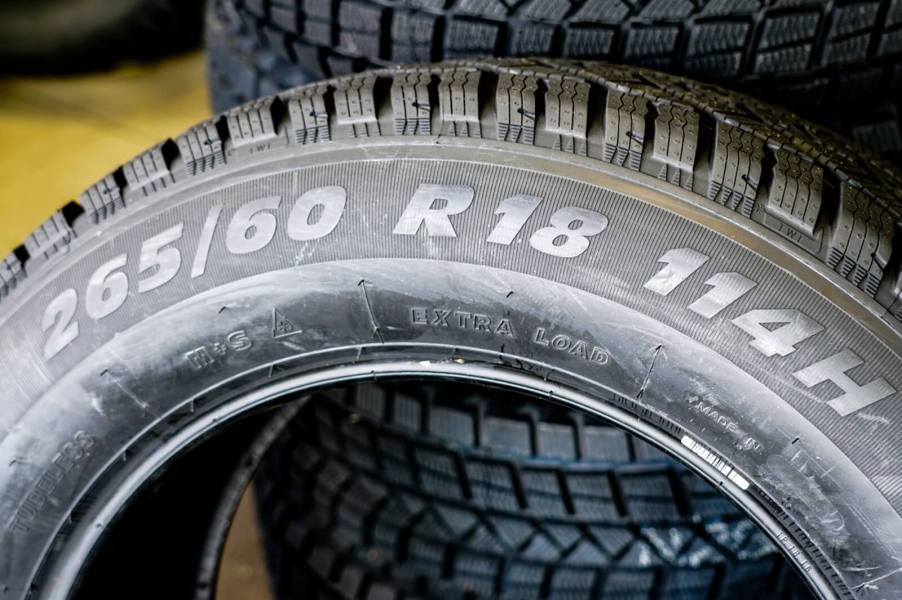
Know how to read a tire to avoid disaster
Diversity seems like a bit of a boogeyman nowadays. But one look at our roads reveals a diverse collection of cars, trucks, SUVs, vans, motorcycles, and commercial vehicles. All different sizes, colors, outputs, origins, and appeals. But one thing remains the same: all the cars on our streets and highways need tires. But if you want to order the right tires or shop for your next set, you’ll need to know how to read a tire.
Don’t panic– knowing how to read a tire is a simple, helpful skill for getting your ride the right rubber
“225/70 R16 91S.” It looks like some wild alpha-numeric code you’d find on the manufacturer’s label of your favorite gadgets. The truth, however, is that it’s a relatively straightforward way to understand what your tires are all about. And learning how to read a tire is a similarly simple process and vital for vehicle maintenance.
Break it up into three parts. The first two numbers, separated by a forward slash, refer to the tire’s width and aspect ratio. As for the second group, the first letter represents the construction of the tire. Most tires will say “R” for radial ply. The number beside the first letter refers to the rim’s width in inches. The last group, a number and a letter, represents load index and speed rating. See? Nothing too intimidating there.
Let’s tackle an example. Let’s say you have a car with tires that read “235/50 R18 101Y.” Don’t worry; it’s not some crazy cryptic code. It’s just your tire trying to tell you what you’re looking at and what you can expect from it. For starters, the “235” refers to your tire’s width, namely 235mm.
The second number, or the aspect ratio, helps you understand the profile of your tire. In this case, the “50” represents an aspect ratio that is 50% of the tire’s width. As we discussed above, the “R” in the tire code refers to the material construction of the tire. In this case, it’s a radial tire. The “18” beside the R refers to the diameter of the wheel, namely 18 inches.
Finally, the “101Y” represents the load index and speed rating of your rubber. Specifically, the “101” refers to the poundage that the tire can support while inflated, and the “Y” means the tires are rated for up to 186 mph. Refer to this chart to decipher your tire’s speed rating.
Check out a YouTube video with a visual aid to help you read your tires below!