The easiest way to tell if you’re tailgating
Most drivers don’t leave enough space between vehicles. And of those, many don’t even realize they’re doing it. Tailgating remains one of the most common driving habits…and one of the most dangerous. It shrinks your reaction time, limits your ability to avoid a car accident, and creates a tense driving environment for everyone on the road.
If you’re not sure whether or not you’re tailgating, here’s a quick trick: Use the three-second rule. This method holds up whether you’re going 30 mph or 80.
One Mississippi, two Mississippi, three…
Pick a fixed object ahead, like a signpost or overpass. When the car in front passes it, start counting.
If you pass the same marker before finishing that third count, you’re following too closely.
In poor weather or at night, stretch it to four or five seconds.
The National Safety Council recommends this rule as a basic guideline for everyday driving
It’s not just advice. It’s a direct response to data: Rear-end crashes account for nearly 30% of all traffic collisions in the U.S.
In 2022, the National Highway Traffic Safety Administration recorded more than 42,000 traffic deaths. Using that 30% also provided by the NHTSA, we can assume that about 12,800 fatalities were linked to rear-end crashes.
Drivers often assume that closing the gap will move traffic along
In practice, though, the opposite happens.
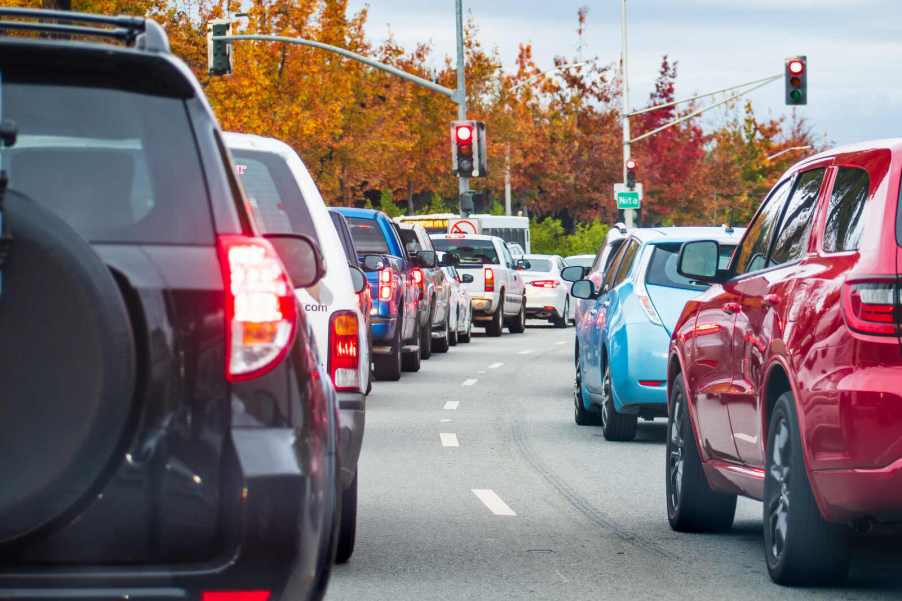
When drivers tailgate in heavy traffic, they create a stop-and-go ripple effect. A 2017 study from the Virginia Tech Transportation Institute showed that tighter spacing increases the likelihood of rear-end collisions and slows overall flow.
More distance leads to smoother movement, not less.
If you spend a lot of time on the highway, use cruise control when possible
It helps maintain a steady speed and a consistent gap. Many newer vehicles come with adaptive cruise control, which adjusts automatically based on traffic.
Manufacturers now program these systems to maintain a three- or four-second gap by default. It’s not just for comfort, by the way. It’s based on crash avoidance research.
Aggressive driving often comes from stress
When drivers feel rushed or frustrated, they follow more closely. That increases risk and leaves no room for error. Step back. Let the car ahead pull away. You won’t lose time, you’ll just gain control.
Tailgating also carries financial consequences
Rear-ending another vehicle can skyrocket your car insurance premium.
Insurance.com says one at-fault accident can increase your rate by 56% or more. It may also impact your policy eligibility or your deductible.
Following distance isn’t just about safety, it’s about giving yourself options. It gives you time to brake, time to change lanes, and time to think clearly if something chaotic happens ahead. Ultimately, many rear-end crashes can be avoided. But drivers need to recognize that they’re following too closely before it’s too late.