Cops Answer What It’s Like Being in a Police Chase
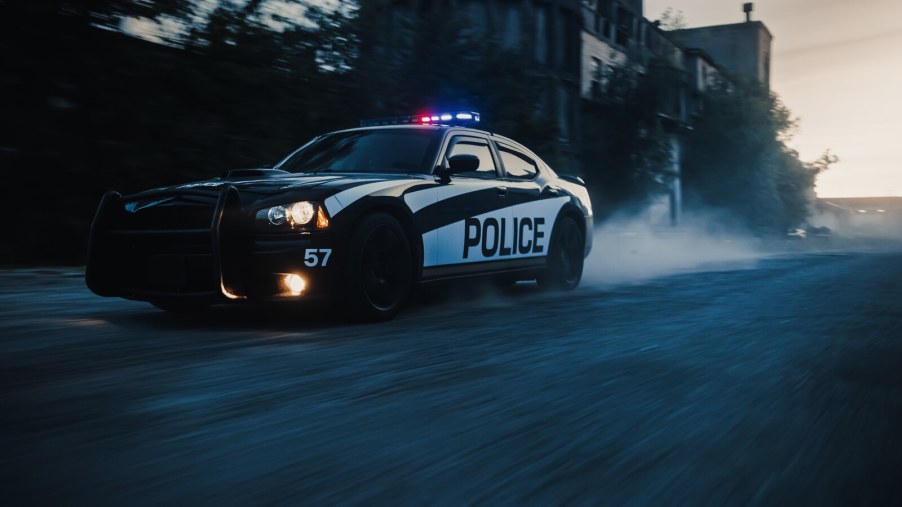
It’s one of the most dramatic sights across social media. Flashing lights in the mirror, tires screaming around corners, and some car tearing down the interstate with half a precinct behind it. To the rest of us, a police chase might look like a blockbuster action scene unfolding in real life. But to the people behind the wheel in uniform, it’s something far more complicated.
A recent discussion on Reddit’s r/AskLE pulled back the curtain on what chases are actually like from the police perspective. And as it turns out, they’re exactly as intense as you’d imagine, just without the Hollywood soundtrack (well, mostly).
Cops answer what it’s like being in a police chase
One officer summed up the experience as a split-brain moment between trying to process the situation and desperately wanting everyone else to stop talking on the radio so they can describe what’s happening.
Another recalled initiating a pursuit that ended in a rollover crash and fire, only to have their radio jammed with chatter from uninvolved units asking questions instead of listening for updates.
That communication overload is a real hazard, because while the lead unit is calling out speeds, directions, and potential threats, every second matters.
The stress doesn’t stop once the chase ends
One commenter explained that their department has a permissive but “very strict” pursuit policy.
In that department, every police chase is followed by a lengthy after-action review. So that officer says they stressed over sticking to communication and driving policies as much as the chase itself.
Another said the adrenaline doesn’t hit until it’s over. Like when they’re standing outside the vehicle with a suspect at gunpoint, suddenly feeling how exposed they really are.
For many officers, though, there’s no denying the thrill of a police chase
Several admitted it’s their favorite part of the job.
One officer joked they even have a playlist ready for chases (tracks ranging from Johnny Cash to Lil Jon) though they rarely remember to hit play once the pursuit starts.
Others described the sensation as an adrenaline-fueled test of skill. You’re handed the keys to a marked SUV, told to catch someone, and reminded not to crash or injure anyone in the process.
One officer said their first chase only hit 89 mph but stretched across eight miles and into a neighboring state, and that despite the adrenaline dump, everything just “felt right.”
Another remarked that “away games” were their favorite. “Report went like this: I assisted X agency as needed. Closed. Lol”
Still, not all departments allow officers to pursue at all
One commenter noted that they’re no longer permitted to chase suspects because of the liability and danger involved.
That’s a trend across the country. Many police agencies now forbid or strictly limit high-speed chases unless a violent felony is involved. After all, these pursuits endanger not just officers and suspects but everyone else on the road.
Another added that they have a “chase only” policy, meaning no PIT maneuvers.
In some cases, departments decide it’s safer to let a suspect go and catch them later, as one officer did after calling off a 29-second police chase that felt too risky. They arrested the suspect two days later, no wrecks involved.
And not every pursuit involves a muscle car and triple-digit speeds
One officer recalled chasing a golf cart. Another said most of their chases end when the fleeing driver wrecks on their own.
Another added that sometimes, the reason a cruiser seems “slow” nowadays is just that police SUVs are electronically limited to around 120 mph. Something that’s less dramatic but far safer for everyone.
In the end, police chases sit at the intersection of danger, adrenaline, and policy
They’re thrilling, terrifying, and often more paperwork than payoff. And while they might look cinematic from the outside, the reality is that they’re carefully managed risks in which seconds, decisions, and training all collide. Often at 100 miles an hour.