13 everyday cars quietly climbing in value (and they’re not all Toyotas)
If you drive something ordinary, you probably assume it loses most of its value the moment you pull off the lot. That expectation is still true for many cars. But since Covid, really, the used market has tilted.
A smaller supply of near-new trade-ins, shifting buyer priorities (toward durability and efficiency), and pockets of regional demand have produced a group of cars that used buyers now hunt for…and dealers pay up for.
The headline numbers are blunt: three-year-old used cars were trading at roughly $30,500 on average in early 2025
That’s up a bit year over year, which narrows the gap between new and used. And it makes some mainstream used cars, well, surprisingly valuable.
Below are everyday models whose value curves have improved sharply across the country. I’ve kept this list practical: these are cars commuters, families, and weekenders actually drive. You won’t see sports cars or collectible machines here.
Each entry explains the real reasons buyers now pay more for clean, low-mile examples.
Ford Maverick (the compact pickup that found a market)

The Maverick arrived as a mainstream compact pickup with excellent fuel economy and a hybrid option that lots of buyers liked.
It isn’t a luxury product. It’s a pragmatic truck: small bed, low running costs, and a simple bed-and-cab layout that appeals to city buyers and tradespeople alike.
Because many buyers want a capable second vehicle without the running costs of a full-size truck, clean Mavericks in the used market are commanding higher prices than analysts expected two years ago. Resale analysis points to the Maverick as a surprising value retainer among compact trucks and crossovers.
Subaru Outback and Forester (practical all-weather machines)

Subaru’s bread-and-butter models are not glamorous, but they offer something people do pay for. We’re talking standard all-wheel drive, durable packaging, and usable cargo space.
That utility plays especially well in snow-belt states and mountain regions. A well-kept Outback or Forester with routine maintenance and modest miles is suddenly a hot commodity in those markets, which lifts national asking prices on the cleanest examples.
Market studies repeatedly flag Subaru small SUVs among vehicles that hold value better than expected.
Honda Civic (a staple that got a second act)

Civics have been the safe choice for decades. Lately the Civic’s combination of modern efficiency and low running cost makes it a preferred used buy.
The 1.5-liter turbo variants commonly average in the mid-30s mpg combined, which keeps operating cost low and demand high for compact commuters.
Clean, low-mile Civics are selling faster and at stronger prices than five years ago because buyers want reliable, affordable cars that still feel up to date. Resale studies show Civics among the mainstream cars with the slowest depreciation.
Toyota Tacoma (the basic pickup that stopped behaving like a commodity)

You had to expect the Tacoma to land a spot on this list.
After all, it’s hardly exotic, but it behaves like something rarer in the used market: consistently rugged, easy to service, and in demand.
That combination drives dealers and private buyers to pay up for well-kept Tacomas. The truck’s simple powertrains and broad parts availability keep ownership costs predictable, which matters when buyers compare a near-new Tacoma to a similarly priced newer compact truck.
Kelley Blue Book and resale studies routinely rank the Tacoma near the top for five-year retained value, and that reputation is the backbone of its recent price resilience.
Kia Soul and Kia Sportage (practical reliability hidden behind style)

Kia’s reputation has shifted in the past decade, and some of its models now surprise in the used market.
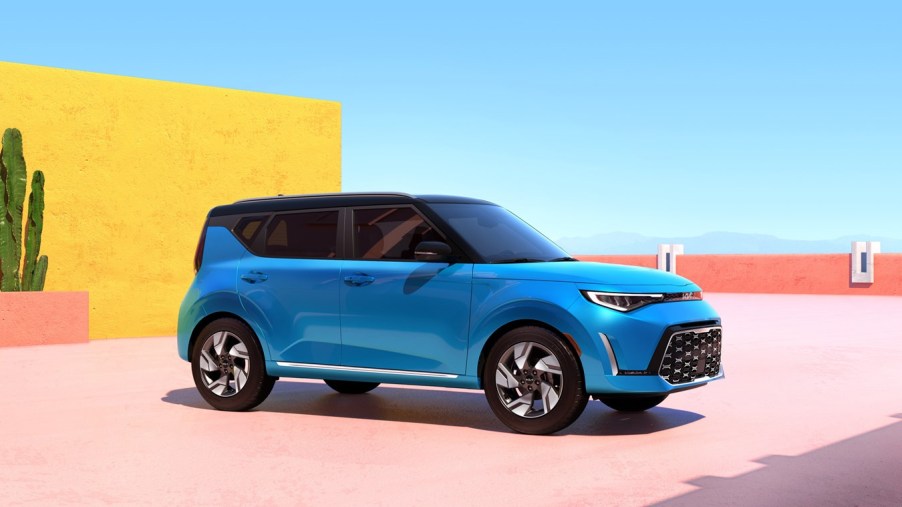
The Kia Soul, once considered a quirky budget pick, has gained a loyal base because of its boxy practicality, upright driving position, and decent reliability scores. According to iSeeCars’ 2025 data, the Soul depreciates less than the average subcompact SUV, making it an unusual value-holder in the entry-level category.
The Kia Sportage is another model that’s quietly climbing. Demand rose after the 2023 redesign, but even pre-redesign versions are holding steady on dealer lots. Buyers like its balance of warranty coverage, compact SUV usability, and fuel efficiency, which makes well-kept used examples hard to find at bargain prices.
This trend reflects Kia’s broader improvement in long-term quality, but it’s these practical, everyday models that best show how far the brand has come.
Jeep Wrangler (lifestyle mainstream that resists markdowns)

The Wrangler is a mainstream choice for many drivers, which counts.
It’s simple to modify, simple to repair in most cases, and carries a strong owner culture. That means that used Wranglers with solid histories, desirable trim/options, and no structural damage fetch firm prices.
They’re everyday in the sense that many owners use them daily, yet they don’t behave like plain appliances when priced in the resale market. Resale rankings show the Wrangler among the SUVs and small trucks that depreciate slower than peers.
Hyundai Tucson and Elantra Hybrid (improving brand economics)

Hyundai and Kia (mentioned above) aren’t legacy retainers historically, but that’s changing.
Better engines, competitive hybrid drivetrains, longer warranties, and improved perceived quality have made models like the Tucson and Elantra Hybrid attractive used buys.
In some analyses the Elantra Hybrid and similar efficient models lose much less value than early EVs and many luxury cars, especially when paired with a strong certified pre-owned program and long factory warranties.
Even despite the security and theft issues plaguing many owners during Covid, these brands are becoming mainstream value plays, not rebound risks.
Toyota Corolla Hybrid (ordinary, but shockingly efficient)

The Corolla’s reputation for reliability has always been steady. What tipped it into the “rising value” category was the hybrid.
EPA estimates for recent Corolla Hybrid models reach roughly 50 mpg combined in popular trims. That suddenly makes the Corolla not only cheap to run but scarce in good used condition.
Demand rises when fuel economy matters and when buyers can find well-maintained hybrid examples with documented service histories. That dynamic shows in both dealer behavior and resale projections.
Chevrolet Silverado and Ford F-150 (the plain workhorses)

Full-size trucks are a different market, but the everyday trims (single-cab or lower-spec beds and powertrains designed for durability) have held ground.
When fleets and small businesses delay new purchases, the used work truck market tightens. That has the effect of lifting clean, low-mile examples of practical Silverado and F-150 trims.
These aren’t dealer flippers looking for show trucks; they’re buyers who need reliable hauling without the new-truck premium. Industry resale trackers show trucks and hybrids as classes that retained value better than many other categories in recent measurements.
Why these cars have a common thread
Across these entries you’ll notice repeats: simplicity, efficiency, predictable maintenance costs, and regional utility. Those things matter when buyers decide between a new car that costs more and a used car whose future is predictable.
Tariff talk and constrained new-car pipelines have nudged more buyers into the used market, and that shrinks the supply of the best near-new examples.
The result is a pull on cars that combine low running cost with proven longevity. Edmunds and other market analysts point to these supply-demand shifts as a major reason the average used price sits near $30,000 in 2025.
If you want to benefit from these trends, focus on 3 things
First, condition matters more than ever: documented service history, no accident title, and tidy cosmetics move prices up.
Second, buy the right trim: mid-level trims with useful safety tech and an efficient powertrain are where demand concentrates.
Third, shop regionally: AWD SUVs and trucks command premiums in colder states; efficient hybrids sell faster in price-sensitive metro areas. If you own one of these models, don’t assume the market is static; a clean mid-range Civic, a low-mile Maverick, or a cared-for Outback can produce a trade-in number that surprises you.
These aren’t collector cars
They’re ordinary choices that suddenly matter more in household budgets. That’s the quiet surprise of 2025: everyday equals value for a lot more buyers than it did just a few years ago.