10 Things Experts Say You Should Always, Always Do at a Traffic Stop
Police officers in the United States often pull motorists over. Really often. On average, American cops flash the red and blue lights at around 50,000 drivers in a typical day. As a result, around 40% of driving-age Americans admit they’ve been stopped by the police. That means a traffic stop is a likelihood for just about any driver. Fortunately, with these expert guidelines, you can keep that stop as brief and inconsequential as possible.
The experts agree that a traffic stop has the best chance to remain chill if you do these 10 things
No one wants to get stopped by the cops. But if the fuzz does decide to light you up as you’re out driving, these legal experts agree that you should stick to some of these must-dos.
Signal or turn on your emergency flashers to acknowledge the stop
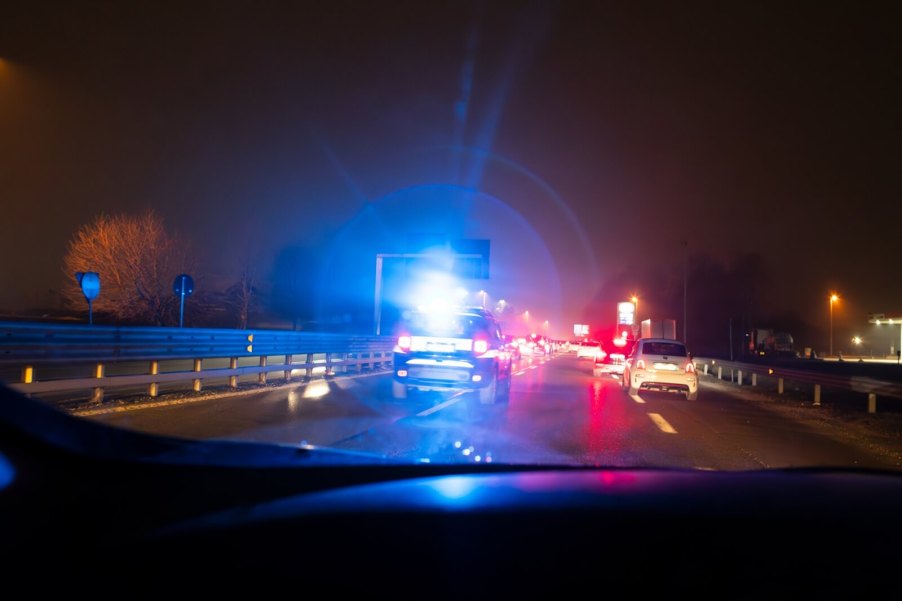
Okay. It happened. You rolled that stop sign, and a police officer wants you to pull over. Before you panic due to a lack of places to pull over, simply remember to signal that you see the police officer’s lights.
Better yet, the North Kingstown Police Department reminds drivers that putting on four-way emergency flashers can let the cop know that you intend to pull over as soon as is safely possible. Reducing your speed can also let law enforcement know that you don’t intend to run.
Stop quickly (and safely)
After you signal, you must stop as quickly and safely as possible. The American Civil Liberties Union, a not-for-profit organization that often defends citizens in cases involving interactions with law enforcement, echoes that much.
“Stop the car in a safe place as quickly as possible,” the ACLU says. Don’t do something needlessly dangerous like stop in the left lane of a busy roadway. Lower your media volume, signal accordingly, listen for speaker prompts from the police car, and identify a safe spot to pull over.
Never drive without ready access to your documentation
Even if your last traffic stop won’t hold up in court, driving without the necessary documentation is a no-no. Always remember to grab your license before you leave for a drive. The same goes for having access to your registration and proof of insurance.
Things can get much worse if you drive without documentation, knowing that you have a suspended or revoked license.
Turn on your interior light
If you have an operational interior light and your traffic stop happens in low-light conditions, turn it on. Doing so allows the approaching police officer to better see your interior and demonstrates that you don’t have anything to hide.
The American Association of Motor Vehicle Administrators reminds drivers that an interior light can help keep things running smoothly. “Turn on your interior lights if you are pulled over at night to assist with visibility. Officers may use a spotlight for additional visibility”, per the AAMVA.
Place your hands on the steering wheel or the dashboard
Your first instinct might be to dive for your license, proof of insurance, and registration. Pump the brakes. If the police officer is approaching your vehicle, all they see is an occupant moving. Unfortunately, rapid, uncommunicated movements might be misinterpreted.
According to the Traffic Law Guys, you should “keep your hands visible on the steering wheel” when stopped by the cops. “Do not reach for anything until the officer asks for it.”
Communicate your movements to the officer or wait for a prompt
In the same vein as keeping your hands in view, communicate your movements to the officer. “The approaching officer does not know if you are reaching for your insurance card or a gun,” the Traffic Law Guys add. It doesn’t matter that you’re reaching for a cell phone and not a handgun. The cop may tragically misunderstand.
Stay in your car until the officer asks you to step out
Even if you think you’ve been wrongfully stopped or you’re in a hurry, don’t step out of your car before the officer tells you to do so. If the police ask you to exit the car, follow instructions. Short of that, the North Kingstown Police Department says you should “walk to the rear of your vehicle to the side away from the traffic,” to create a protective barrier against traffic.
Stick to the necessary information
You might think the right thing to do is to volunteer as much information as you can to a police officer. Not so fast. You can be cordial without incriminating yourself or prolonging a stop. The Traffic Law Guys remind drivers not to volunteer unnecessary information.
When departing a traffic stop, do so carefully and mindfully
Okay, so you rolled through that stop sign, and you’re getting a ticket. Well, that might be suboptimal, but life goes on. That said, when the officer returns your documentation, issues your ticket, and dismisses you, you shouldn’t leave exuberantly. Avoid peeling out, as the Traffic Law Guys remind you that you might get yet another ticket if you kick up gravel on a squad car.
Remember the details
If you believe your law enforcement has violated your rights at a traffic stop, you have options. For starters, drivers should try to remember and write down as much as possible. What time did the stop happen? Who were the police officers in the stop? What did they say?
The ACLU reminds drivers to “write down everything you remember, including officers’ badges and patrol car numbers, which agency the officers were from,” and to “get contact information for witnesses.” Doing so can help your case with a complaint or legal action after the fact.
- Signal or turn on your emergency flashers to acknowledge the stop
- Stop quickly (and safely)
- Never drive without ready access to your documentation
- Turn on your interior light
- Place your hands on the steering wheel or the dashboard
- Communicate your movements to the officer or wait for a prompt
- Stay in your car until the officer asks you to step out
- Stick to the necessary information
- When departing a traffic stop, do so carefully and mindfully
- Remember the details