What the 5 Most Popular SUVs Really Cost You After 5 Years
You know the model names because they’re everywhere now: in your neighbor’s driveway, parked in packs at Costco, and sitting next to you in traffic. But are these SUV owners actually happy with their purchase, or are they sweating the bills?
As you might guess, some are lifelong fans…and others regret signing the sales agreement.
5-year ownership costs on the 5 most popular SUVs in 2025
CarEdge, known for its detailed breakdowns of vehicle sales and ownership costs, recently released its analysis of the true five-year costs for more than 250 models.
The group factored in depreciation, insurance, maintenance, financing, and fuel. The results offer a clear picture of where everyday drivers will spend (or save) money over the first half-decade of ownership.
Let’s take a closer look at how five crowd favorites stack up.
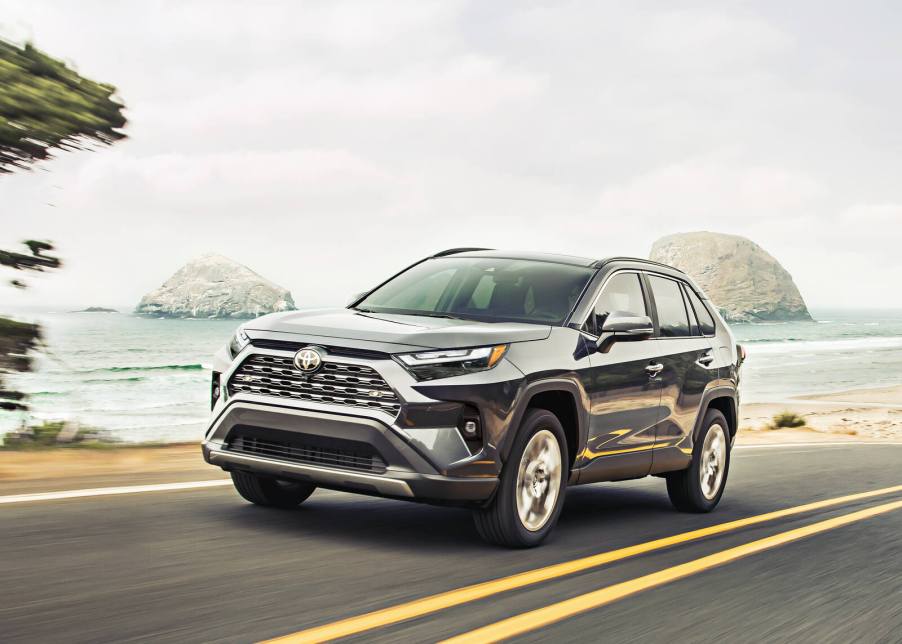
Toyota RAV4: $37,407
The Toyota RAV4 continues to wear the small SUV crown. CarEdge’s analysis found that the RAV4 costs an estimated $37,407 to own and operate over five years.
That figure includes everything from depreciation to gas and insurance, and it puts the RAV4 near the top for affordability among best-selling SUVs.
The RAV4’s strong resale value helps keep long-term costs low, and Toyota’s reputation for reliability doesn’t hurt either. Owners tend to see fewer unexpected repair bills, and the hybrid model in particular offers lower fuel costs without requiring a plug.
Toyota’s wide dealer network and relatively inexpensive parts also help rein in maintenance spending.
Honda CR-V: $39,523
The Honda CR-V follows closely behind, at $39,523 in total five-year ownership costs. Honda has refined this formula for decades, and it shows.
Resale value on these SUVs remains solid, though not quite as bulletproof as Toyota’s.
Maintenance remains modest, but Honda’s parts and service rates push it just above the RAV4.
That said, its turbocharged engine and hybrid powertrain options deliver an appealing balance of performance and efficiency. The CR-V’s blend of comfort and long-term dependability keeps it one of the most rational picks on the list.
Nissan Rogue: $45,248
The Nissan Rogue lands at $45,248 in total five-year costs. That puts it just ahead of a popular Chevrolet product, reflecting Nissan’s recent efforts to improve durability and resale value.
Routine maintenance stays competitive, and the Rogue’s fuel economy keeps running costs manageable.
Its depreciation rate, however, remains steeper than Toyota’s or Honda’s, which adds a few thousand dollars to the long-term bill.
Still, the Rogue’s updated tech and comfort upgrades have helped it regain footing in a fiercely competitive class.
Chevrolet Equinox: $45,737 / EV version: $44,946
Chevrolet’s Equinox is often overshadowed by the RAV4 and CR-V, yet it quietly delivers a middle-of-the-pack ownership cost.
The gas-powered version totals $45,737 over five years, while the upcoming all-electric Equinox EV shaves that down slightly to $44,946.
The gas model’s higher fuel use explains most of the difference, but the EV’s advantage depends heavily on electricity rates and available incentives (farewell, federal tax credit).
Chevy’s new warranty programs and simpler EV maintenance schedules could tip the scale further in favor of the electric model. The Equinox’s mainstream appeal (low insurance costs and widespread dealer support) keeps it a steady, if not flashy, value.
Tesla Model Y: $65,526
Then there’s the Tesla Model Y, which costs considerably more to own at $65,526. CarEdge also reported that Tesla as a brand carries a pretty high five-year cost among mainstream automakers at roughly $85,000 (shew, that stings).
Despite the promise to save on fuel costs, its high initial purchase price, insurance premiums, and faster depreciation curve offset those savings.
Electricity may be cheaper than gas, but insurance on Teslas tends to run (much) higher, and repair costs for collision damage or out-of-warranty issues can climb quickly.
Looking at these SUVs side by side
The RAV4 and CR-V continue to set the standard for value, while the Model Y demonstrates that lower fuel costs don’t always guarantee a cheaper total. Chevy and Nissan hold their own, but the biggest difference comes from resale strength and brand reliability.
For anyone budgeting for a new car, remember that the cost of owning one doesn’t stop when you drive off the lot. It starts as soon as you sign the papers.