What really happens if you keep driving after the low fuel light comes on
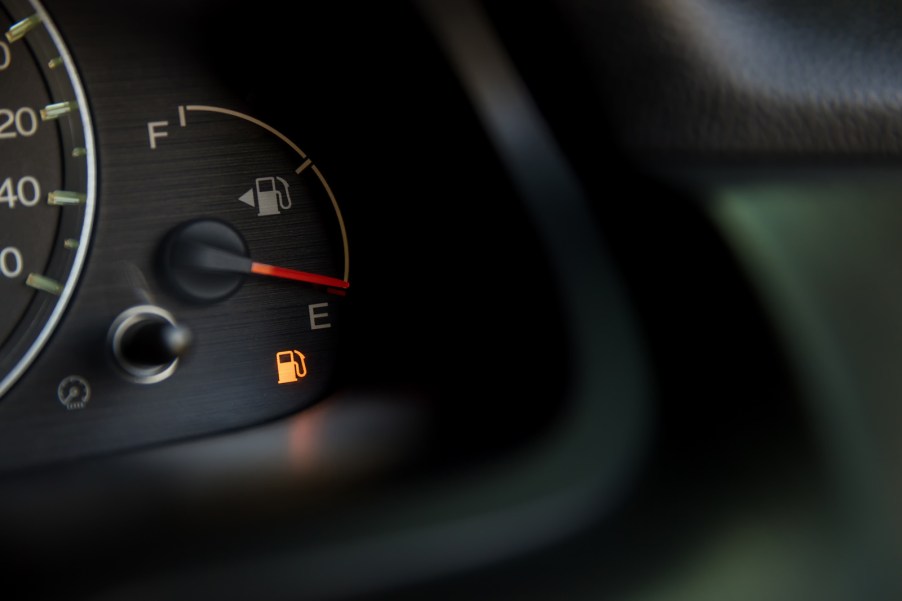
We’ve all done it. The low fuel light pops on, and we’re almost surprised at not noticing the level beforehand. We’re not close to a gas station, so we decide to test fate and “coast it out.” But what kind of damage are we doing in the process?
For most cars, the low fuel light kicks in when you’ve got somewhere between 30 and 50 miles left in the tank
Some vehicles will give you a precise range estimate, but experts say those numbers can be misleading. Real-world driving conditions, speed, and even tire pressure can cause that estimate to drop like a rock.
So what’s the risk, besides getting stranded?
First, your fuel pump could take a dump
That’s the component that draws gas from the tank to the engine. It relies on gasoline not just for operation, but to stay cool and lubricated.
If you regularly let the tank run near empty after the low fuel light flicks on, the pump can overheat or wear out faster than it should. That’s not a cheap fix, by the way. Replacing one can easily cross $1,000 with parts and labor.
Then there’s the grime
Over time, sediment and debris settle at the bottom of your gas tank. When your fuel runs low, your pump has to suck from that sludge-filled zone. That gunk can clog your fuel filter or damage the injectors. It’s like asking your engine to sip muddy water and still run a marathon.
Safety’s another factor
Run out of gas at highway speeds, and you could suddenly lose power steering and power brakes. That’s not just inconvenient…it’s dangerous. If it happens at night, in bad weather, or during a heatwave, it can also become a roadside emergency.
And yes, it still happens.
AAA reports that hundreds of thousands of drivers run out of gas every year
In fact, in 2015 alone, they responded to over 500,000 out-of-fuel calls, despite more advanced fuel level monitoring systems in cars. Even in 2025, AAA’s roadside fuel delivery service remains one of their most common assists. By the way, in 2024 alone, AAA says it got more than 27 million calls from customers experiencing roadside trouble.
So if your low fuel light flips on, consider it less of a suggestion and more of a countdown. Waiting too long can mean a damaged fuel system, a pricey repair, or an awkward call for help. Save yourself the trouble and get in the habit of checking your fuel level. I usually just fill up before the tank lowers below 1/4.