‘Doesn’t seem all that ‘progressive’ to me’ Tow company snitches on Progressive Insurance after it stalls a stranded driver’s rescue
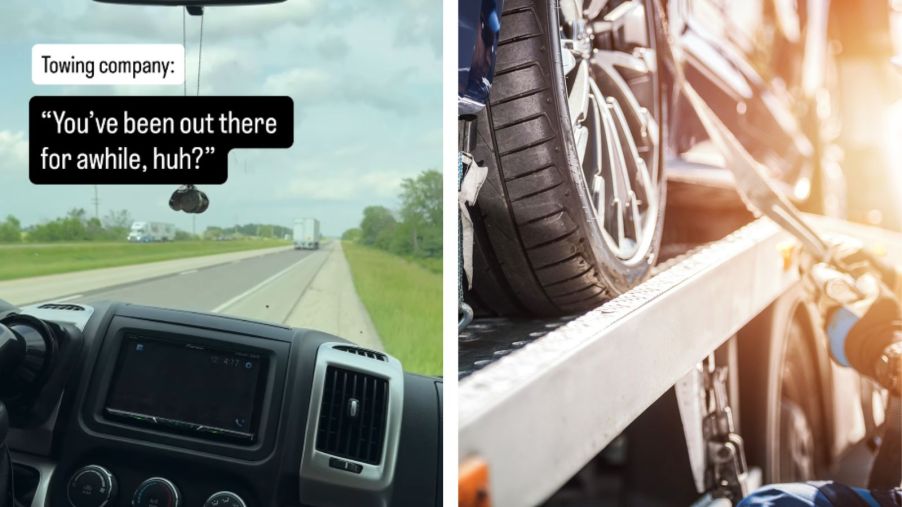
It was supposed to be an easy run to Indiana Dunes State Park. Just an hour into the trip, though, the thump-thump-thump of a shredded tire turned Sarah Womack’s camper van adventure into a roadside headache. And it turns out, she says, that Progressive Insurance only added to the stress.
Her van, affectionately named Camper Van Beethoven, didn’t carry a spare. Instead, the undercarriage space usually reserved for a tire was taken up by a generator. Handy for keeping the air conditioning running, less handy for escaping a breakdown on the side of Interstate 70 near Vandalia, Illinois.
With traffic flying past, Womack did what most drivers would do: she called roadside assistance
Hers was through Progressive Insurance. The representative texted her a link to submit a service request, then followed up with a call.
They warned it could take anywhere from 30 minutes to an hour and a half to find a suitable tow truck.
Two hours later, she got a different answer entirely: there were no trucks available
That’s when Progressive suggested she try calling around herself.
If she could find someone, she could pay the bill, then submit the receipt for reimbursement.
Problem was, she wasn’t sure how she’d succeed where an insurance company had already failed.
Except Progressive hadn’t failed. Not exactly.
The third towing company she reached was available and ready to go.
The twist: They had already spoken to Progressive…twice. The holdup wasn’t the availability of a truck. It was the rate. The tow company wanted $185. Progressive only wanted to pay $100.
Not all roadside assistance programs work the same way, and the differences matter when you’re the one standing next to a dead car on the shoulder
The biggest providers fall into three categories: motor clubs, automaker-backed plans, and insurance add-ons. Each has its strengths…and its fine print.
Motor clubs like AAA and Better World Club operate independently of your insurer. You pay an annual membership fee, which usually covers towing up to a set distance, battery jumps, fuel delivery, and locksmith services.
The upside is that they maintain their own contractor networks and tend to be familiar with larger or specialty vehicles. AAA, for example, offers RV and motorcycle coverage if you opt for their higher-tier plans.
The trade-off is cost: The top-level packages can run well over $100 a year, whether you use it or not.
Automaker programs such as Ford Roadside Assistance, ToyotaCare, or Mercedes-Benz Roadside Assistance are typically included for free with a new vehicle for a limited period, often 3 to 5 years.
They know your vehicle’s specs and are more likely to send an appropriate truck. The downside is the expiration date. Once the coverage window closes, you’re on your own unless you buy an extension or switch to another plan.
Then there are the insurance add-ons, like Progressive’s Roadside Assistance, GEICO’s Emergency Road Service, or Allstate’s Roadside Assistance
These often cost just a few dollars a month and are bundled with your existing policy. They can be convenient, but as Womack’s experience shows, they may lean harder on cost control when dispatching service.
Some use third-party dispatchers with no direct connection to local tow companies, which can slow things down or result in mismatches between the vehicle’s needs and the truck that arrives.
A fourth option, pay-per-use services like Urgently or Honk, work through smartphone apps. They connect you directly with nearby tow and service trucks on demand. There’s no subscription fee. You just pay for the service when you need it. That can be cost-effective for people who rarely break down, though prices vary by region and time of day.
The best choice depends on your vehicle, your travel habits, and your tolerance for waiting. If you drive a standard sedan mostly in urban areas, an inexpensive insurance add-on might be fine.
If you’re hauling a camper van cross-country, a dedicated motor club or RV-specific plan could save you time, frustration, and maybe a few awkward hours parked on the interstate shoulder.
So, Womack torturously sat on the shoulder of the freeway while the insurer and the towing company squabbled over $85
The towing crew eventually loaded Camper Van Beethoven onto the flatbed, carefully adjusting the angle so the generator wouldn’t scrape. They delivered the van safely to Kelly’s Auto Repair & Towing, where the ordeal finally ended.
Progressive eventually reimbursed her for the full $185, plus the cost of cutting and mailing the check. But for Womack, the whole episode left a bad taste.
She had trusted her roadside assistance plan to take care of her in a moment of need. Instead, she learned the hard way that cost negotiations could leave customers stranded.
In a follow-up blog post, she warns drivers that sometimes it’s faster (and less stressful) to line up your own tow and deal with reimbursement later.
More importantly, if you drive a camper van, know its exact measurements, keep a list of potential repair shops that can handle its size, and always mention any special equipment mounted underneath.
As this trip proved, anyway, sometimes the biggest road hazard isn’t the flat tire. It’s the red tape.
MotorBiscuit reached out to Sarah via her Instagram page, Super Cool Van Trips, for comment and too see if she heard back from Progressive about the communication issues while she was stuck on the side of the road.