Thousands of Titanic artifacts are stored in a ‘secret’ warehouse somewhere in Atlanta, Georgia
While the Titanic was sinking in the North Atlantic Ocean in 1912, the boat broke apart. Its contents spilled out and created a broad radius of odds and ends. Many of these items sank to the ocean floor near the shipwreck. 82 years later, in 1994, a U.S. federal court granted a private firm salvor-in-possession rights over the Titanic shipwreck. Since then, RMS Titanic Inc. recovered thousands of artifacts from the site.
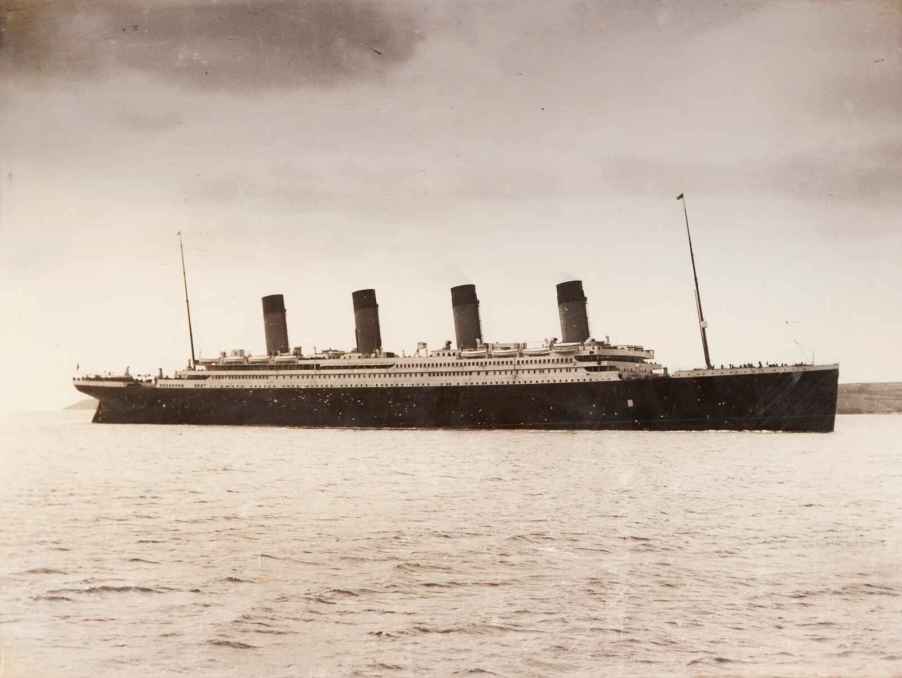
The Titanic is one of the world’s most legendary passenger ships. It sank in the North Atlantic Ocean on April 15, 1912, only a few days into its route from England to New York City. The ship struck an iceberg the day prior and took hours to completely submerge. Unfortunately, it sank too quickly for help to arrive soon enough. While about 700 people lived, more than 1,500 others died due to the lack of lifeboats—something Titanic officials were very much aware of before embarking.
RMS Titanic Inc. recently let the BBC into a “secret” warehouse
The storage facility is home to thousands of recovered Titanic artifacts. Its inventory includes everything from ship parts to personal possessions. Due to the value of these items, the location of the warehouse is kept private. We do know it’s somewhere in Atlanta, Georgia, though.
The company operates under strict regulations regarding the recovery, storage, and display of artifacts in its exhibits worldwide. For example, the items can’t be sold separately and are considered a single, unified collection. Some of these artifacts are photographed and explained on the company’s site, like a bracelet with the jewel-studded name “Amy.”
Since the ship broke apart near the kitchen area, many of the items sitting on the ocean floor are from that area. RMST also found many personal objects and tracked their original owners. Of course, many died on the ship, but others survived, like a perfume salesman whose inventory landed on the ocean floor. The tiny bottles still release a potent smell despite spending decades underwater.
Another woman wasn’t so lucky. Her alligator bag, complete with a reference letter from her landlord and “clear” medical card, was also recovered. The woman was traveling to join her daughter in the States. In an unfortunate coincidence, she originally ticketed with a different ship. That ship never took off, and so she was transferred to the Titanic. Sadly, she didn’t survive.
Many consider the boat itself a burial ground and, as such, must remain untouched. The company hasn’t removed items from inside the ship, at least not yet. It would like to recover the boat’s Marconi radio equipment. The radio would have transmitted various communications, including distress calls made on April 14, 1912. More on this legal “battle” down below.
Indications that the “unsinkable” ship may have been built with substandard materials
RMST has a collection of rivets that would have secured the ship’s exterior steel paneling. These panels required about three million metal rivets. Tomasina Ray, the director of collections for RMST, told the BBC that some of the rivets were tested. They contained high amounts of slag, a glass-like substance that displays brittleness under certain conditions, like severe cold.
The Titanic was steam-powered. When the ship struck the iceberg, it’s possible the rivets couldn’t handle the pressure from escaping steam in such cold temperatures. They might have broken apart faster than the industry standard. As such, substandard rivets could have caused the ship to sink faster, killing more people. This is one of many theories, of course.
“We’re able to help look into the theories, so being able to contribute to the science and that story behind it is something that we’re very happy to do,” Tomasina told the BBC.
To date, RMST completed nine expeditions to the Titanic shipwreck, the most recent in July 2024. This last one was an imaging mission meant to digitally map the ship using remotely operated vehicles (ROVs). Each expedition involves various experts, oceanographers, scientists, and historians.
Last year, the U.S. government challenged the company regarding its intentions to enter the Titanic’s hull, claiming this action would break the law. Since then, RMST has declined to recover additional artifacts until further plans and clarifications are made. Its 2024 expedition was switched to image collection only.
Adding to these complications is the death of RMST’s former director of underwater research, Paul-Henri Nargeolet. Nargeolet died on the Titan, the storied passenger submersible built by OceanGate that imploded last June.