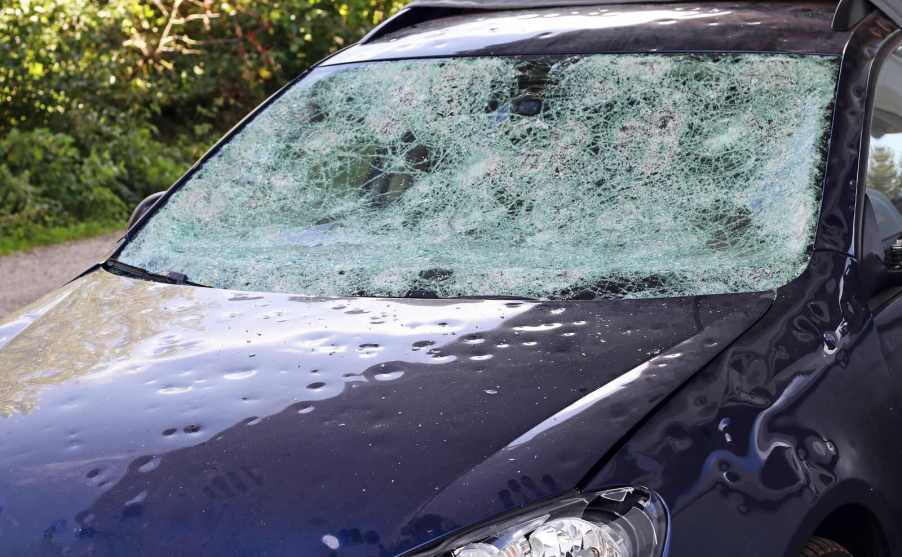
[Watch] Texas hail shatters SUV windshield and sunroof on I-10
In the middle of Interstate 10 in Kerrville, Texas, on Sunday, March 23, Raeanna Willis and her mom hunkered in her car. The SUV, though, might not provide enough protection from the giant hail raining from the sky.
Willis shakily details the scene, covering her head in a denim jacket. “I’ve got water coming in…this is my windshield…” she narrates as she pans the camera to the vehicle’s front glass. It’s covered – edge to edge – in spiderwebbed cracks.
Thankfully, the occupants reported zero injuries. After the hail stopped, Willis showed the SUV from the outside. The sunroof is totally gone, shattered into the headliner. The Weather Channel shared a picture of someone holding a handful of the hail. Each piece is at least golfball-sized.
The Weather Channel also shared footage of the same hailstorm wreaking havoc on a Kerrville home. The egg-sized balls of ice rained down so hard they shattered a sky light.
Kerrville is in South-Central Texas. Areas of North Texas were warned about additional giant hail risks this week, too.
Who pays for hail damage to your car?
If you have full coverage car insurance that includes a type called “Comprehensive,” then your insurance company will pay for repairs. There’s a deductible involved, too.
Of course, if the insurance company determines that fixing hail damage would run more than the car’s worth, it’ll total the vehicle.
This is more likely if the woman’s SUV above has body damage to several panels outside the broken glass. The insurance company will weigh repairs against the car’s current market value. Age, mileage, and resale numbers are all considered.
Without comprehensive coverage, though, you’re left to pay for any hail damage on your car straight out of your own pocket.