Texas Border Patrol Seizes 166 Exotic Animals Headed to Mexico in a Toyota Pickup
A silver Toyota pickup rolled toward the outbound lanes at the Anzalduas International Bridge like any other southfacing car on the Texas border. To Customs and Border Patrol officers, it didn’t look overloaded. But it was carrying quite exotic cargo.
On October 22, U.S. Customs and Border Protection officers working outbound enforcement at the Anzalduas International Bridge in Mission, Texas, flagged the truck for a closer look as it attempted to leave the United States for Mexico. That decision changed the day. A physical inspection uncovered jars and bags hidden inside the vehicle, each packed with live animals.
By the end of the search, officers had counted 166 reptiles and arthropods. Royal pythons, ball pythons in multiple color morphs, milk snakes, king snakes, salamanders, frogs, skinks, monitors, chameleons, geckos, tarantulas, centipedes, and even an Indian star tortoise. Some animals were juveniles. 10 red-eyed tree frogs were described as “ill.”
Exporting wildlife requires formal declarations, use of designated ports, clearance from Fish and Wildlife, and often licenses and fees
A federally accredited veterinarian must sign off on health certificates endorsed by the U.S. Department of Agriculture. Mexico has its own import requirements through SENASICA. International treaties like CITES further restrict what can legally cross a border.
According to the CBP press release, here’s the complete list of animals Customs and Border Patrol found in the Toyota:
- 24 Royal Pythons
- 15 Green Anoles
- 11 Spotted Salamanders
- 10 Sick Red Eye Tree Frogs
- 10 Albino Milk Snakes
- 10 Orange Milk Snakes
- 10 Mexican Black King Snakes
- 4 Monarch Ball Pythons
- 4 Tarantulas
- 3 Pacman Frogs (yellow)
- 3 Coffee Pacman Frogs
- 3 Chilean Rose Tarantulas
- 3 Irian Jaya Blue Tongued Skinks
- 3 Bearded Dragons
- 3 Savannah Monitors
- 3 Rankin Dragons
- 3 Albino Aberrant Calif. King Snakes
- 3 Albino Banded Calif. King Snakes
- 3 Albino Striped Calif. King Snakes
- 3 Albino/Amelanistic Corn Snakes
- 3 Black Corn Snakes
- 2 Ball Pythons
- 2 Honduran Milk Snakes
- 2 Ornate Monitor Lizards
- 2 Chinese Caved Geckos
- 2 Veiled Chameleons
- 2 Centipedes
- 2 Green Tree Pythons
- 2 High White Calif. King Snakes
- 1 Timor Python
- 1 Carpet Python
- 1 Garter Snake
- 1 Banana Blade Clown
- 1 Banana Spotnose
- 1 Pinstripe Ball Python
- 1 Fire Skink
- 1 Indian Star Tortoise
- 1 Ghost Aztec Jungle Boa
- 1 Female Juvenile Axanthic Banana Ball Python
- 1 Female Juvenile Axanthic Banana Lesser Ball Python
- 1 Juvenile Axanthic Lesser Ball Python
- 1 Juvenile Axanthic Ball Python
- 1 Juvenile Ghost Piebald Ball Python
- 1 Juvenile Piebald Ball Python
- 1 Male Juvenile Axanthic Banana Enchi Ball Python
The seizure reads like a greatest hits album from the exotic pet underground
The green tree pythons stand out right away. They’re striking, expensive, and tightly regulated depending on origin. Wild-caught animals are especially sensitive under international trade rules, and their value makes them a frequent smuggling target.
The Timor python is another eyebrow-raiser. It is far less common in the pet trade than ball pythons and comes from a limited geographic range in Indonesia. That alone makes it higher risk from an enforcement standpoint.
Several ornate monitor lizards and Savannah monitors also matter. Large monitor species are often scrutinized because wild capture is common, transport conditions are brutal, and survival rates are low when moved illegally.
On the amphibian side, the spotted salamanders are unusual to see in an international smuggling case. They are native to North America and typically protected at the state level. Seeing them packed for export suggests someone was trying to exploit regulatory gaps.
The red eye tree frogs, especially with some listed as sick, raise animal welfare concerns. Amphibians are extremely sensitive to stress and disease, and illegal transport is a known pathway for spreading fungal infections that devastate wild populations.
Finally, while not rare, the sheer number of ball python morphs, including axanthic, piebald, and banana variants, signals commercial intent. That volume is not a hobbyist mistake. It looks like inventory.
Taken together, the mix tells a clear story. This was not one prized animal slipping through the cracks. It was a rolling supply chain, crammed into a pickup, headed south.
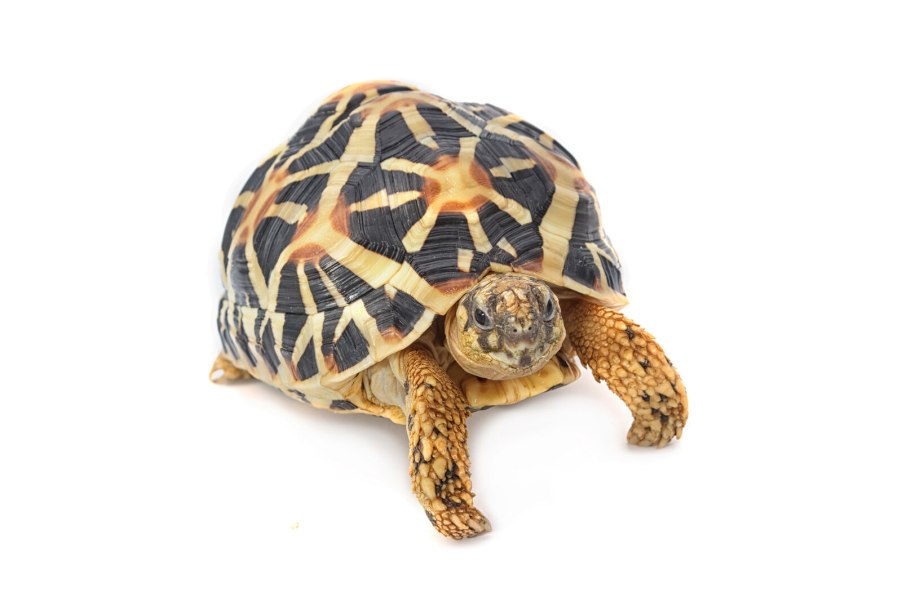
Of everything packed into that Toyota, the Indian star tortoise stands apart as the rarest and most legally sensitive species CBP officers found
Unlike most of the snakes, lizards, frogs, and spiders in the seizure, the Indian star tortoise is protected under the Convention on International Trade in Endangered Species. According to National Geographic, folks consider them good luck charms. Despite their coverage under the Wildlife Protection Act, people like to keep them as pets.
Commercial international trade is essentially prohibited. That puts it in a different category than ball python morphs or tarantulas, which are widely bred in captivity and legally traded with the right paperwork.
Native to India and Sri Lanka, the tortoise is heavily targeted by smugglers because of its striking shell pattern and demand in the exotic pet market. Wild populations have been hammered for years. Even a single specimen moving across borders without permits is a serious violation.
Border Patrol seized the Toyota pickup on the spot
Homeland Security Investigations agents arrested the driver and opened a criminal investigation. The animals were transferred to the U.S. Fish and Wildlife Service, which took custody of the reptiles and spiders.
Carlos Rodriguez, port director for the Hidalgo, Pharr, and Anzalduas ports of entry, said officers have seen an increase in exotic pet smuggling in the area and continue to work closely with Fish and Wildlife to protect the animals and enforce federal rules.