You might want to steer clear of these 2 Honda CR-V model years
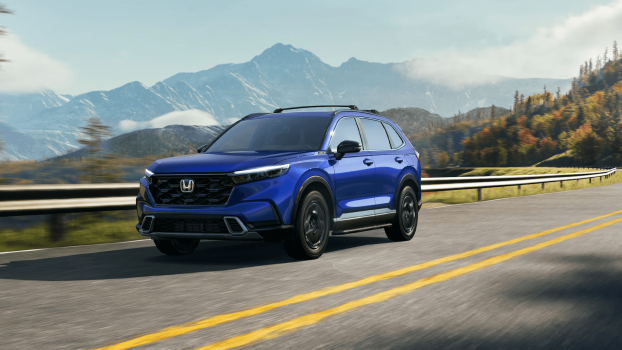
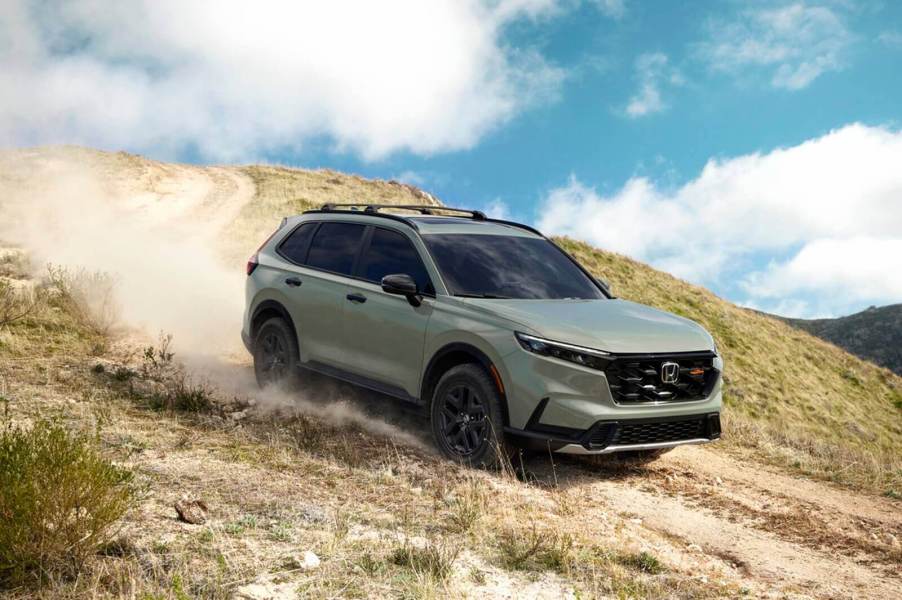
The Honda CR-V. It’s the big H’s best-selling model in the United States and the fifth-best-selling vehicle in the country. However, not every used CR-V is a reliable choice. And a drama-free example is what you’re after, you might want to strike these two relatively recent model years from consideration.
According to ownership experiences and reported issues, 2017 and 2015 weren’t the best years for the CR-V
Honda’s best-selling little crossover SUV has been in constant production for decades now. That means dozens of model years to consider. But, if you’re after a more recent model, the 2017 and 2015 Honda CR-V might be more trouble than other model years.
2017 Honda CR-V
The 2017 CR-V, unlike more recent model years, exhibits a laundry list of owner-reported problems. Most notably, a large number of 2017 models have gasoline contents in the engine oil at as few as 12,550 miles.
Typically, gas seeping into an ICE vehicle’s engine oil, or “fuel dilution,” is the product of incomplete combustion. However, some owners reported no solution from Honda service centers, aside from checking and changing the oil more frequently.
It’s part of the 525 NHTSA complaints owners have filed about the 20187 model. As a result, Car Complaints awarded the 2017 model its “Beware of the Clunker” badge, typically reserved for vehicles with a disproportionate number of regular problems.
2015 Honda CR-V
Like the 2017 model, the 2015 Honda CR-V has hundreds of owner complaints against it for “engine problems.” However, unlike the 2017 model’s propensity for gasoline in the engine oil, most of these complaints regarded excessive vibration.
Altogether, the 2015 model has 281 NHTSA complaints against it for engine problems like vibration and knocking. And like the 2017 model, the 2015 gets the dreaded “Beware of the Clunker” badge.