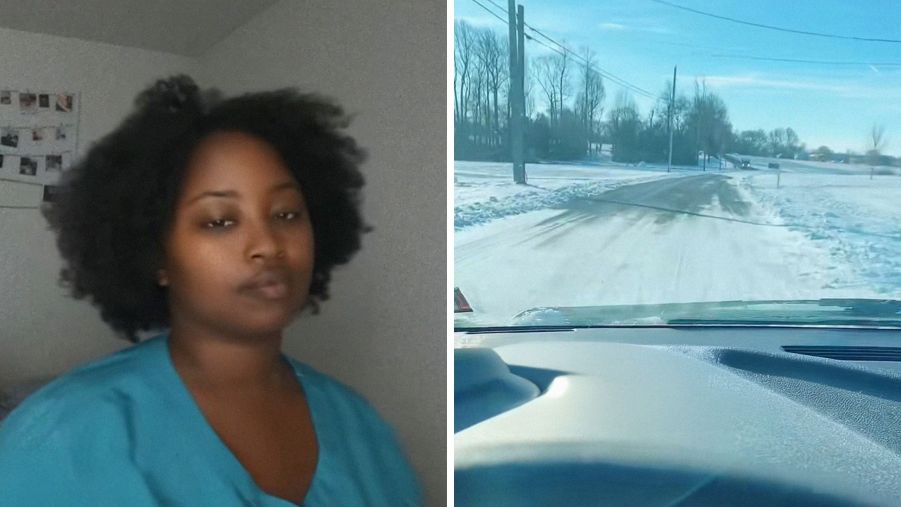
Ohio Woman Complains About Lazy Snow-Plowers. Then Workers Clap Back—And Reveal Why They Leave Snow Behind On Purpose
A TikTok user complained about the roads being too snowy. However, viewers were quick to inform her that the snowy roads might be better than the alternative.
And for her own safety.
On Dec. 15, a TikTok user (@ceceespree) posted a comedic video complaining about the roads, which has amassed 1.9 million views as of this writing.
“I Coulda Did Ts Better Than This”
The TikTok begins with the content creator driving on a road covered with snow.
“To whoever did these roads, I hope this ain’t how you wipe your [expletive],” she says in the video.
The road is partially covered with snow.
Now, her complaint is a common one which was echoed by many of the top comments.
“I don’t know but Cincinnati’s roads have been horrible. It’s been like 3 days since the storm?” one TikTok commenter shared.
“Ridiculous,” another wrote.
“At least they attempted to do y’all’s. Philly streets haven’t been touched,” a third added.
However, some viewers were quick to inform her that the complaint might not be fully informed.
“Sometimes they do that on purpose because of the ice underneath,” wrote one user.
“We do that when the roads are super icy. The snow gives you more traction and then over time the salt will melt the ice underneath. We come back through and scrape the rest off,” added another.
What’s The Best Way To Plow The Road?
Many of the commenters were correct, as winter roads are often left intentionally snowy for safety reasons. In many winter-maintenance playbooks, leaving some snow behind is actually safer than scraping the pavement completely with nothing left for traction, Wyandotte County reports.
In extreme cold, snow and ice pack down and form a slick, bonded sheet on asphalt. If a plow were to scrape off that top layer of snow without addressing the ice underneath, it could leave a nearly frictionless surface, essentially a sheet of black ice.
Ironically, that’s more dangerous than leaving a thin snow layer that gives tires traction. Some snow plowers will deliberately leave a light pack so cars have more traction on the snowy surface. This move is done to prevent sliding uncontrollably on pure ice beneath.
This is precisely why the Department of Transportation guidance often mentions not seeing bare roads during active storms.
Trucks aren’t just pushing snow; they’re managing traction, temperature, and ice chemistry simultaneously. Salt, the main deicing agent, only works down to certain temperatures and needs time to lower the freezing point of water.
Below about 15° Fahrenheit, its effectiveness drops sharply, and crews sometimes choose to sand or leave a snow layer that actually helps tires grip the pavement until conditions warm up.
Plow strategy also depends on when crews hit the roads, as many agencies apply anti-icing brine before snow starts to prevent a hard bond between ice and pavement, then follow up later with plows once snow has stopped falling.
How To Drive On Snow And Icy Roads
When driving on snowy or icy roads, it always best to use extreme caution and drive slowly, Continental Tires reports.
In addition to driving slow, PEMCO Insurance suggests doing the following as well:
- Slow down: Drive under the speed limit as this number is based off optimal driving conditions. It’s very easy to lose traction driving in winter conditions so it’s best to lay off the acceleration
- Increase following distances and brake gently: As mentioned, traction is comprised so it’s best to give yourself and other drivers space to operate.
- Keep your low beam headlights on: The headlights reflections can help you spot any ice on the road.
- Do as little As Possible If You Hit Black Ice: Typically short patches (often less than 20ft) so best strategy is try to let your car just coast over it.
- Steer strategically if you start to skid: Gently turn the wheel in the direction to where you want the front of the car as you lay off the brake or accelerator.
- Change to a flatter route: Even if it adds more time to the journey, it’s better than operating on hills.
Additionally, driving on freshly plowed but still snowy roads tends to be safer than on untreated ice, because the rough, snowy surface increases tire grip.
Another thing to consider is driving behind plow trucks. New York State reports, following plows closely or trying to pass them is dangerous, as accumulation on the blade can create deep ridges and unpredictable traction zones, and visibility is reduced by the spray of snow.
Motor Biscuit reached out to @ceceespree for comment via TikTok direct message.
@ceceespree the way I just cha cha slide to work is insane?? #fyp #snowday #funnyvideos ♬ original sound – ceceespree?️??