10 things police can absolutely make you do during a traffic stop
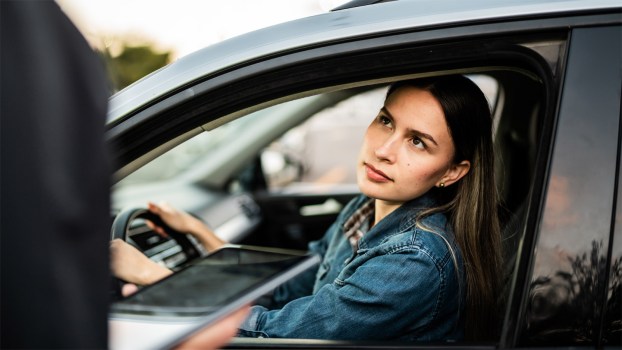
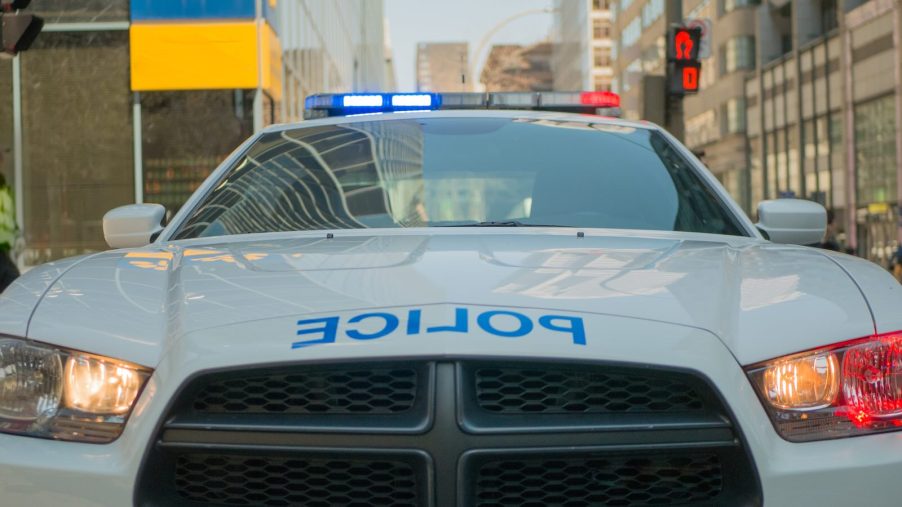
So you’re driving along when you see the blue lights in your rearview mirror. Yes, police are pulling you over for a traffic stop. No, you aren’t under arrest. Officers justify detaining you in this legal limbo—called a “Terry Stop”—because they have a reasonable suspicion you committed a crime. Their job is collecting enough evidence that they have probable cause you committed a crime, at which point they can arrest you for further investigation. To this end, there are many things they absolutely can make you do.
Table of contents
- 1‑ Police can ask you to turn off the engine
- 2‑ Officers can order you to stay in your car
- 3‑ Police can order you to get out of your car
- 4‑ Demand your personal driver’s license
- 5‑ Demand your vehicle registration
- 6‑ Demand proof of insurance
- 7‑ Police will ask you questions
- 8‑ Pat you down for weapons
- 9‑ Inspect your car and charge you with a secondary offense
- 10‑ Order you to take a breathalyzer (in some states)
- Your rights during a traffic stop
1‑ Police can ask you to turn off the engine

Yes, police can ask you to turn off your engine during a traffic stop. They are detaining you to investigate a crime, and you aren’t allowed to walk away until they’ve completed the investigation and decided whether to: release you with a warning, give you a ticket, or arrest you for further investigation. An officer’s first responsibility is to keep both you and themselves safe by the roadside. So to this end, they can give you orders during a Terry Stop. They may ask you to shut off your engine, remove your keys from the ignition, keep your hands visible, or roll down a tinted window so they can see you.
2‑ Officers can order you to stay in your car

Another way police may manage the scene to keep everyone safe during a Terry Stop is to require you stay in your car. They absolutely have the authority to do this. In rare instances, they may even ask you to move your car to a safer spot to pull over.
3‑ Police can order you to get out of your car
Again, to keep the situation safe, police may order you or your passengers to get out of your car. Most commonly, this will be because they want to conduct a pat down and make certain everyone is unarmed, but more on that later. Note that you can always confirm whether police officers are making a polite request or giving you an order. You don’t need to comply with requests, but should comply with orders.
4‑ Demand your personal driver’s license

Police officers can check that the driver of any vehicle on a public road has a valid driver’s license—at any time. In fact, in states that don’t allow DUI checkpoints, police departments often set up checkpoints to stop every driver and ask to see their paperwork—because this is still legal to do. Note that once you’ve provided your driver’s license, police can’t force you to answer further questions about your citizenship status. Note that you may not need a physical copy of your license, as 15 states now allow you to keep your license on your phone.
5‑ Demand your vehicle registration

Yes, a police officer likely ran your license plates before they even pulled you over. They already know your registration status. But they can still demand to see your paper registration, so make certain it’s in your glovebox. Note that police can give you a ticket for forgetting to put your registration sticker on your license plate, even if your registration is up to date.
6‑ Demand proof of insurance
The final piece of documentation police can demand is proof of auto insurance. The only exception is the state of New Hampshire, but there drivers must prove they have sufficient funds to pay for accident damages. Police officers can probably look up your registration via your license plate number and your license status if you just have your driver’s license number. But they don’t have a database to check on your insurance status. It’s important you keep your insurance cards in your car. In a pinch, you may be able to open your email or auto insurance app and find the latest cards your insurance company sent you.
7‑ Police will ask you questions

Remember, police officers are investigating whether you committed a crime during a Terry Stop. That crime may be speeding, drunk driving, or stealing the car you’re in. Or it may be something else entirely. To this end, they’ll most definitely ask you pointed questions. Note that you do not need to answer any questions once you’ve handed over your documents. Some experts urge you to invoke your right to remain silent, and ask for a lawyer.
8‑ Pat you down for weapons

If a police officer has reasonable suspicion that you are armed and dangerous they can absolutely pat you down for weapons during a Terry Stop. They can always do this as part of their responsibility to keep the scene of the traffic stop safe, and so they can pat you down for a weapon without arresting you on the suspicion of any specific crime. This is technically a warrantless search or a “frisk.” Don’t confuse this with a full search of your vehicle or person to gather evidence you committed a crime. A police officer can only do a full search if you consent, or if they have probable cause you’ve committed a crime and request a warrant.
9‑ Inspect your car and charge you with a secondary offense

While police are detaining you to investigate a primary offense (such as speeding), they can also charge you with any secondary offenses they notice. What is a secondary offense? This varies by state but it can be anything from something hanging off your rearview mirror and obstructing your vision, to you driving without seatbelts, to a mechanical issue with your car such as a cracked windshield or bald tires. To this end, police may inspect your vehicle for mechanical defects during a traffic stop.
10‑ Order you to take a breathalyzer (in some states)

In several states—such as Michigan—police can order you to take a roadside breathalyzer test during a Terry Stop. A roadside breathalyzer is not accurate enough to provide evidence admissible in court. But its results can be used as evidence to establish probable cause and arrest you for further investigation into drunk driving (this investigation will include a more accurate breathalyzer at a police station or hospital). In 46 states you can refuse the roadside breathalyzer test, the same way you can refuse consent to have your car searched. In all 50 states you can refuse a roadside sobriety test, which may include walking in a straight line, standing on one foot, etc.
Your rights during a traffic stop
During a traffic stop, a police officer’s job is to investigate you for a suspected crime–while keeping both you and themselves safe. To this end, there are many things they can make you do. Meanwhile you can provide your documents, then ask to speak to a lawyer before answering any questions or consenting to searches or tests. Next, see 13 things police can’t actually make you do during a traffic stop.