Mercedes-Benz Dropping EQ Badge for EV Future
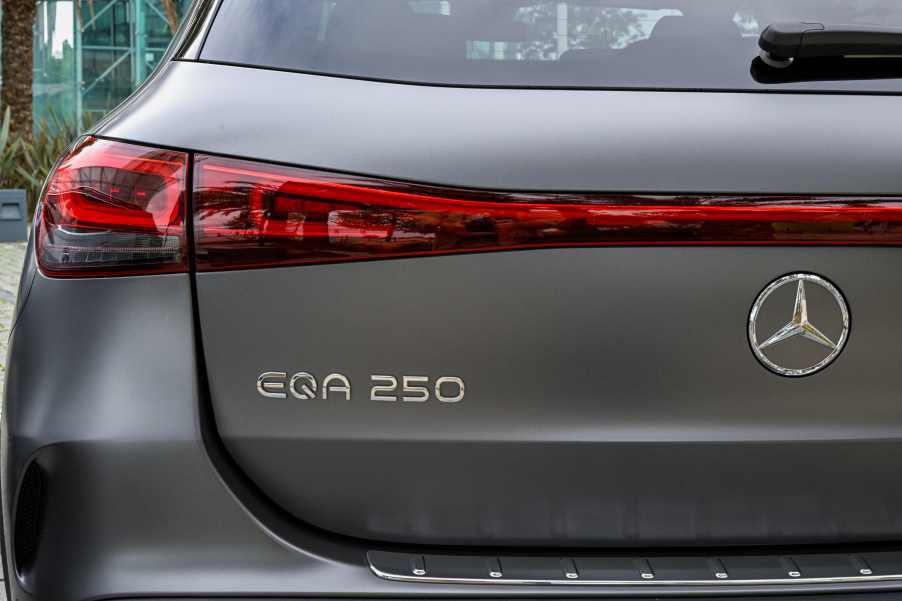
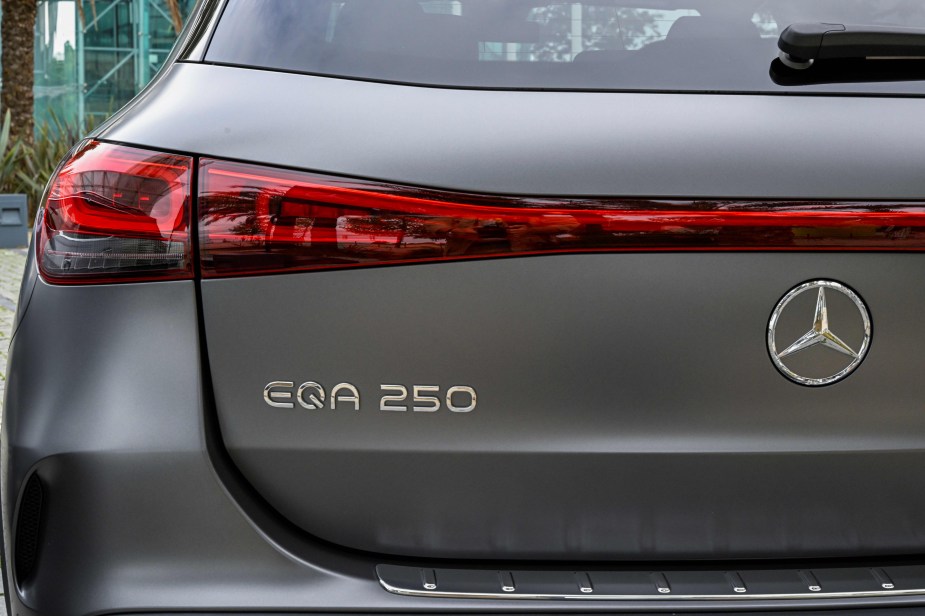
Seven years ago, Mercedes-Benz rolled out an EQ badge to help its all-electric SUV lineup stand out from its fossil fuel-powered counterparts. As EVs become a mainstay of the consumer automotive market, company CEO Ola Kallenius is making a big move to get ahead of the competition. To shore up its wide-ranging yet slightly confusing lineup, the Stuttgart giant will drop the Mercedes-Benz EQ badge by next year.
Mercedes-Benz plans to become an ‘all-electric powerhouse’
Companies like Ford are moving ahead with plans to have a split lineup: EVs and traditional internal combustion engine vehicles. However, others are looking to satisfy future consumer demand by concentrating solely on electric power. Following the decision to focus on the “Mercedes-Benz brand promise,” the German automaker is ditching internal combustion. When asked by The Verge in an interview last year, Kallenius Mercedes-Benz is “going all-in on electric” soon. “In fact, as of 2025, all new vehicle architectures for Mercedes…will be electric-only,” he said.
Even though EQ is shorthand for “Electric Intelligence,” the moniker will likely leave with non-EV products, not to be repurposed. Once the all-EV lineup is set, the differentiation in models the EQ badge demonstrates will become irrelevant.
Mercedes-Benz plans on being EV-only in just two years. Yet, the company revealed its first electric model years ago at the 2016 Paris Motor Show.
What Mercedes-Benz EQ models are there?
The EQ series featured an electric version of Mercedes-Benz’s internal combustion vehicles. For example, the EQB and EQC were based on the GLB and GLC compact crossovers, respectively. Mercedes-Benz also offered the EQA, EQE, EQG, EQS, and EQV. Yet, the EQS was the first Mercedes-Benz EV based on the current three-prong EV architecture system. The EQS SUV closely followed the four-door electric-only sedan.
Later this year, the automaker is set to release the AMG EQE sedan. With nearly 700 horsepower, Mercedes-Benz says the experience will be “invigorating.” There will also be an EQE SUV and a “track-ready highway-conquering” AMG variant. However, Mercedes-Benz will wait until 2024 to put it on sale.
When will Mercedes-Benz stop selling internal combustion vehicles?
Enthusiasts of the thumping, angry engines Mercedes-Benz has produced over the years shouldn’t be listening for “last call” just yet. While the company has invested over $1 billion in three plants across Germany for EV production, there is no official plan to cease production of internal combustion engines on a specific date. The company is still working on rolling out its upcoming Mercedes Modular Architecture (MMA) and Mercedes-Benz Electric Architecture MB.EA electric platforms. U.S. News reports that Mercedes-Benz is still waiting on local government approval for an additional battery factory in Koelleda, Germany.
Subsequently, Mercedes-Benz will continue to build internal combustion engines in the same plants as long as there is a demand for them. Until then, the automaker is operating at pace to launch an all-electric lineup by 2030. So, proponents of fossil fuel-propelled powerplants are still in luck with remaining vehicles with engines stocked with four, six, eight, or 12 cylinders.