‘Quiet as a church mouse’ Seasoned mechanic gives a Jeep Gladiator a new heart to replace a ‘nightmare’ V6
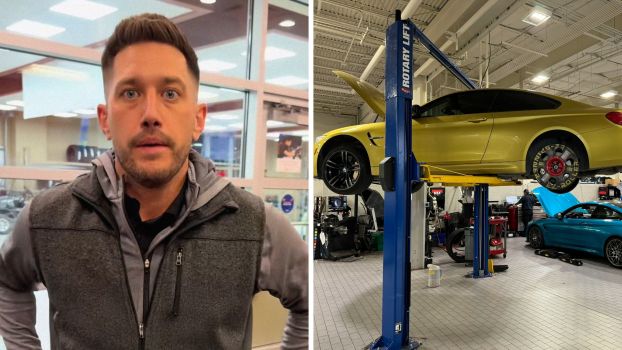
“How’s it doing?” The red-and-black-clad mechanic looked back at the camera and replied with a smile, “Quiet as a church mouse.” His smile was warranted. This marked the end of a lengthy ordeal and a Jeep Gladiator that a technician in the shop described as the “biggest nightmare” they’ve ever repaired.
The 3.6L V6 in this Jeep Gladiator had to go
After a lengthy back-and-forth with a local dealership, Sherwood and the team at Royalty Automotive Service in Georgia got the go-ahead to pull the engine from a Jeep Gladiator. It was still under warranty, and the warranty provider was hesitant to pay up for the engine swap. But this Gladiator sorely needed it.
It was a noisy, rattling mess for a relatively new engine. But before the warranty company would bankroll the procedure, Sherwood had to jump through a few hoops. “We had to give a bunch of different stuff. A bunch of images, serial tag, and IDs for the engine. Gotta have the pictures of the heat tabs, but we can’t use a bore scope for that.”
The email discussion seemed to test the limits of the crew’s patience and make getting repairs paid for as difficult as possible. Fortunately, the warranty company ultimately agreed to the shop rate and expenses for the swap. Sherwood could finally start on the swap.
New engine, major improvement for the Gladiator
“Probably the quietest V6 I’ve ever heard in my life.” “It should be,” his son chuckled, still holding the camera. “It has no miles.” Sherwood smiled in response. “Zero.” They had given the hulking Jeep Gladiator a new heart, and the ticker seemed to be a welcome transplant.
The culprit was a 3.6L “Pentastar” V6 with variable-valve timing (VVT), a workhorse for Jeep since 2012. While the Pentastar doesn’t have a reputation for bullet-proof reliability, the number of catastrophic failures is reasonable relative to the sheer number of Pentastar engines in Stellantis vehicles. Still, the V6 mills are prone to cam phaser issues, cylinder head failures, and leaks.
A closer look at the ‘nightmare’ Jeep engine was revealing
“We can see some metal,” Sherwood said as he rubbed his finger along the end of one of the Pentastar’s overhead cams. He showed his finger to the camera, and, sure enough, it was covered with a fine metallic powder. “And this side’s way worse.” Needless to say, cams picking up fine metal particulate within an engine is a recipe for disaster.
“Something in this motor is coming apart. No doubt about it,” he said as he wiped the metallic breakfast spread off his fingers. “It is what it is. It’s defective. And in this case, it shouldn’t have taken this long to get the warranty done on it.”
“Whoever tears it apart is going to find the problem. I think they’re going to find it pretty easily,” he said matter-of-factly. “I’m just happy that that one is quiet,” Sherwood said. “It started up perfectly.”
Commenters had no love for the V6 in this Jeep
“Trade it in. Months later, it will be the same problem,” one commenter responded. Ouch. Another commenter replied by saying, “Immediately trade that in.” Are you sensing a trend here?
“Look at the heat marks on the cam phasers,” a commenter said. They were referring to the discolorations on the camshaft-end actuators caused by high heat. And, as we all know, too much heat in an engine is a sure way to invite premature wear or a catastrophic failure.
MotorBiscuit reached out to Royalty Auto Service in Georgia for comment on the Jeep debacle via TikTok message.