‘Simple fix’ Georgia mechanic solves misfiring Tahoe after Chevy dealer tries 2 engine swaps
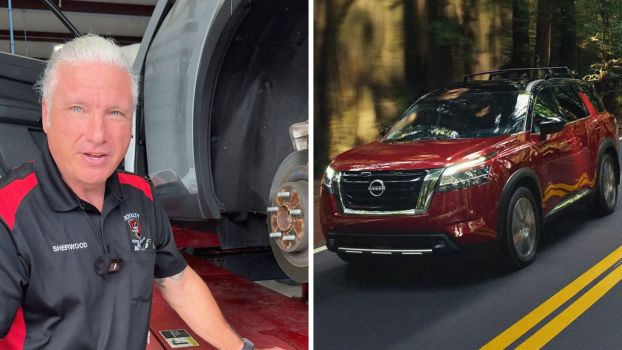
“You know what I’m going to say: Follow the data.” Sherwood has just done it again. A customer brought in their 2009 Chevrolet Tahoe. The 5.3L V8 was misfiring badly, but now it’s fixed. Royalty Auto Service in Georgia wasn’t the first mechanic to take a look at it, either. The dealership put in two engines, a set of cylinder heads, spark plugs, coils, and ignition wires. None of that did anything.
Tahoe owner states misfire on cylinders 2 and 3
The Tahoe has quite the backstory. The owner says they went to the dealer with an Autozone engine. The service department agreed to install it in order to fix a supposed dead-cylinder (or two).
Once the Autozone engine was in, though, the misfire remained. The dealer recommended swapping the cylinder heads off the aftermarket block. Okay. That didn’t fix it, either. Finally, the dealership opted for a GM remanufactured engine. Nope. Oh, and new plugs, coils, and ignition wires went on, too.
Long story short, it still isn’t running right. The customer followed Royalty on TikTok and decided that enough was enough with the dealer.
It’s a misfire, y’all. To fix it, you need proper spark, fuel, air, and compression…all at the right time
If you’ve read my byline before, you might know by now that I worked in a shop for a long time explaining car problems to their owners.
When your car has a misfire, it means one of the engine cylinders isn’t working right.
The first step your mechanic is supposed to take is to plug in a scanner to see if the vehicle’s computer stored any trouble codes. That helps narrow down which part of the engine is acting up.
From there, they’ll check if the spark plug and coil for that cylinder are doing their jobs. Sometimes, just swapping these parts with another cylinder can show whether they’re the problem.
If the spark checks out, the next step is fuel. The tech should make sure the fuel injector is getting power and actually delivering fuel. If it’s clogged or not getting the right signal, the engine won’t run smoothly.
They’ll also make sure the engine is breathing properly. Air leaks in the wrong place can also cause a misfire, so they might use smoke or a special spray to find hidden vacuum leaks.
If spark, fuel, and air all seem fine, they’ll check compression. That tells them whether the cylinder is actually able to build pressure and do its job. If it’s not, there could be a deeper engine problem, like a worn valve or a failed lifter. These are common in some Tahoe engines, especially those with cylinder deactivation.
Your mechanic needs to work through each step methodically to avoid throwing parts at the problem and costing you extra…like this Tahoe owner.
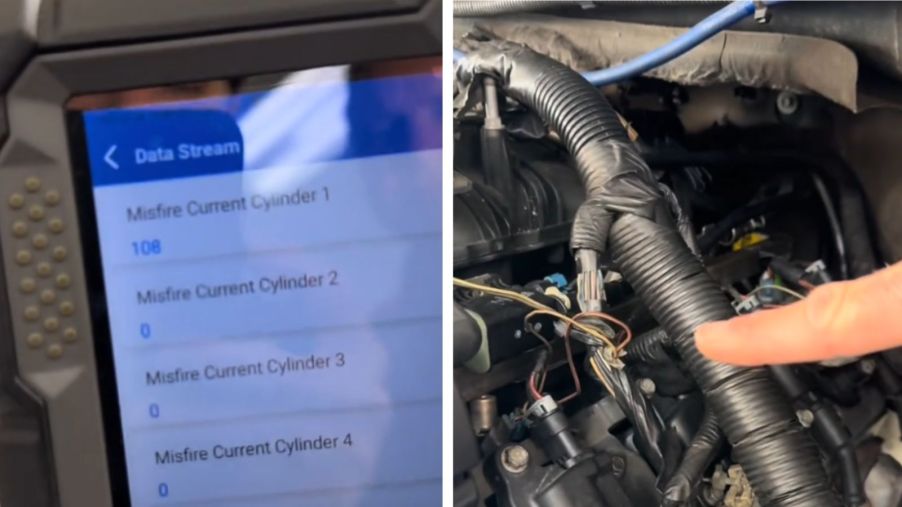
That takes us back to the program, here: The owner told Royalty that the SUV was missing on cylinders 2 and 3. However, on initial inspection, Sherwood only sees a problem with cylinder 1.
Since the mechanic is a data guy, he goes with what the scanner shows. After all, he’s seen many, many cases of ‘Telephone’ gone bad
Regardless of what anyone previously involved with the Tahoe repair says, the Royalty team looks at the science of the situation.
After confirming a miss on 1, Sherwood performs a compression test. The Tahoe passes, so no internal problems at the piston level.
He moves on to the wiring. The mechanic checks the fuel injector wiring and some ignition coil wiring. He ultimately spots the problem: a bad connector at the cylinder 1 ignition coil.
If Sherwood holds his finger on the connection and reads the scanner data, the missing stops.
“Now I just gotta ride around with the people and keep my finger there,” he jokes. “The simple fix on this is: bad connection.”
What a journey for the Tahoe owner, and proof that fixing cars is far from simply replacing parts.
Commenters are stunned at the lack of technical knowledge from the dealership
“You sir are a mechanic. Diagnosing and fixing a problem. The others are parts replacers.”
“what’s the name of the dealership cause if their service can’t diagnose that and send it to an independent shop they need to avoided at all cost.”
“This was a wiring or harness problem from the start I don’t understand shops anymore.”
“Are technicians in the automotive industry, not doing tug test on wiring harnesses nowadays? If I have an intermittent issue, I’m definitely gonna be looking at wiring harnesses.”
“Good fine guys but I’m completely speechless about this scenario and how it happened. None of the guys I work with would’ve ever allowed this to happen.”
But the bottom-line lesson here was well-put by one: “Sometimes the biggest problems have the easiest fix.”
In any case, don’t let a mechanic just guess, like they probably did on this Tahoe before it got to Sherwood. Make sure they’re following a standardized process and try to confirm accurate testing before agreeing to replace components.
MotorBiscuit reached out to Royalty Auto Service via its Contact Us form for comment.