Getting Gas With Your Engine Running Is Dangerous for Explosive Reasons
If you have a traditional gas-powered car, then you have to stop for gas. This is the way things have been for decades. But is it really necessary to turn cars off while getting gas? Or is this an old myth?
Is getting gas with your engine running dangerous?
Unfortunately, getting gas with your engine running is dangerous. I understand the desire to keep the engine on.
During cold mornings or hot afternoons, you don’t want to lose that perfect temperature in your cabin. Plus, it can be annoying to restart your directions app, podcast, music, or driving mode.
But turning off your engine is crucial to preventing fires and explosions, even if the risk is marginally low. According to the National Fire Protection Association (NFPA), the spontaneous combustion temperature of gasoline is 536 degrees Fahrenheit.
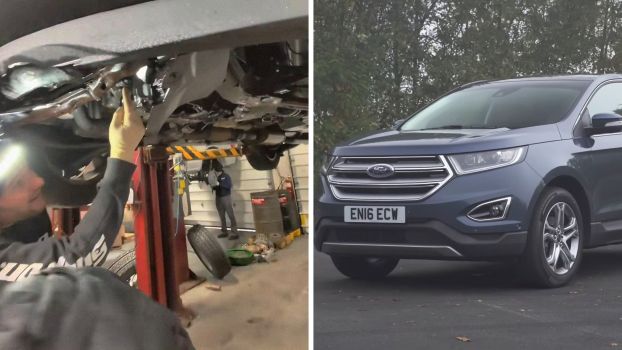
This temperature can be reached on multiple exhaust components like the catalytic converter which experience temperatures between 800 to 1,000 degrees. Coming into contact with hot surfaces may cause gasoline to ignite.
The catalytic converter is located under cars, but gas vapors are dense and can sink beneath your vehicle as currents sweep them under.
Plus, faulty sparkplugs may send unburnt fuel to the converter, causing it to overheat and send burning hot particles out of the exhaust.
Also, faults in your electrical system such as shorts and worn insulation can cause sparks that may ignite fuel vapors. So, it’s best to keep them at bay by turning your car off.
Worn-out charging cables and cheap vehicle accessories that plug into USB ports or the cigarette lighter can also lead to sparks.
Entering and exiting your vehicle while getting gas is actually the largest risk. Static electricity can build up as you rub against the interior, and then contact with the metal nozzle could transfer the electricity, leading to an explosive spark.
You can ground yourself after exiting your car by touching some of the metal on it that’s located away from the gas cap area. It’s best to touch the front car door before refueling.
About one car out of a billion explodes while getting gas, so again, the risk is low, but it’s still present. Plus, most states enforce the International Fire Code which requires your engine to be turned off while refueling.