What Was the First BMW M Series Car?
BMW‘s M Division produces cars known for their track-ready performance. M stands for “Motorsport,” and since 1972, the division’s created memorable vehicles like the 3.0 CSL, M3, and M5. However, even with their high-spec builds, these cars feature BMW’s trademark luxury and refinement. So, what was the first BMW M Series car? Let’s look at the first M-series car and the history of the M Division.
The first BMW M car: 1979 M 535i
The 1979 BMW M535i set the stage for future motorsport-inspired models. Using a formula that would become the M Division standard, the M 535i added racing-grade equipment to a street car. That gave it exceptional performance to go along with its sophisticated German build.
As Wheelhouse notes, the 1979 M 535i took an E12 5-Series and added Motorsport Division parts—so many it was almost an entirely different vehicle. That started under the hood, with a fuel-injected 3.5-liter inline-six producing 218 hp and 225 lb-ft of torque. A close-ratio five-speed manual transmission (in European models) kept the revs up, leading to a 0-60 mph time of 7.2 seconds.
Still, that wasn’t all. The M Division also added the following:
• M-tuned suspension with unique springs and Bilstein dampers
• Four-wheel disc brakes with 11-inch ventilated front rotors
• BBS alloy wheels
• Front air dam and rear spoiler
• Recaro bucket seats
BMW produced only 1400 M 535is from 1979 to 1981, making it as rare as it is exciting. For the M-Series collector, it’s a special find.
BMW’s M division: How it started
The BMW M Division started in 1972 as the company’s motorsports department. At the time, it only produced vehicles to meet homologation requirements—rules that mandated race cars have a specific number of production counterparts.
However, as success built on the track, the M Division added modified street cars to its portfolio. Over the years, these souped-up vehicles gained a reputation for outstanding acceleration, cornering, and braking.
From the E30 M3 coupe of the 1980s to today’s X5 M Sports Activity Vehicle, M-Series vehicles offer superb driving dynamics for the street, track, and everything in between. Today, BMW produces 11 M models, consisting of coupes, convertibles, sedans, and SUVs.
BMW M-Sport package vehicles
For customers searching for extra performance—but who don’t want a full-tilt M car—BMW offers M-Sport packages. While these bundles contain some upgraded hardware, often, they’re mainly cosmetic.
One example is the 2023 BMW X2 M-Sport, as tested by Car and Driver. While it adds retuned suspension and steering, the main difference is in appearance. With 19-inch wheels and M-Sport badging, the special edition X2 is more about sporty looks than enhanced driving dynamics.
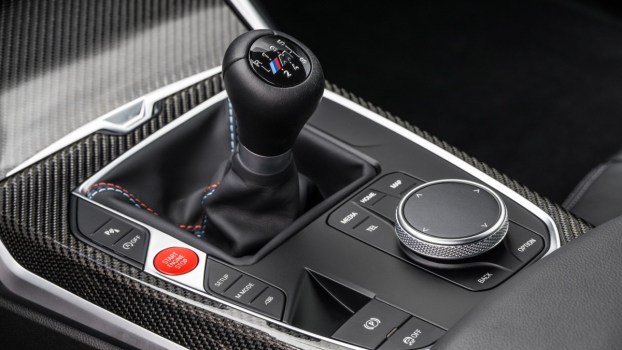
That’s in contrast to the 2023 BMW M3, with its 473 hp turbo inline-six, six-speed manual transmission, and adaptive dampers. In classic M-car fashion, the M3 seamlessly blends high-performance hardware with sophisticated luxury.
The 1979 M 535i was the first in a line of BMWs with motorsport-grade hardware. By applying racing experience to street vehicles, the M Division gave everyday drivers a taste of the track. Now, with M-Series vehicles proving themselves time and time again, they’ve become a popular pick for enthusiasts around the world. It’s a successful formula for driving excitement.