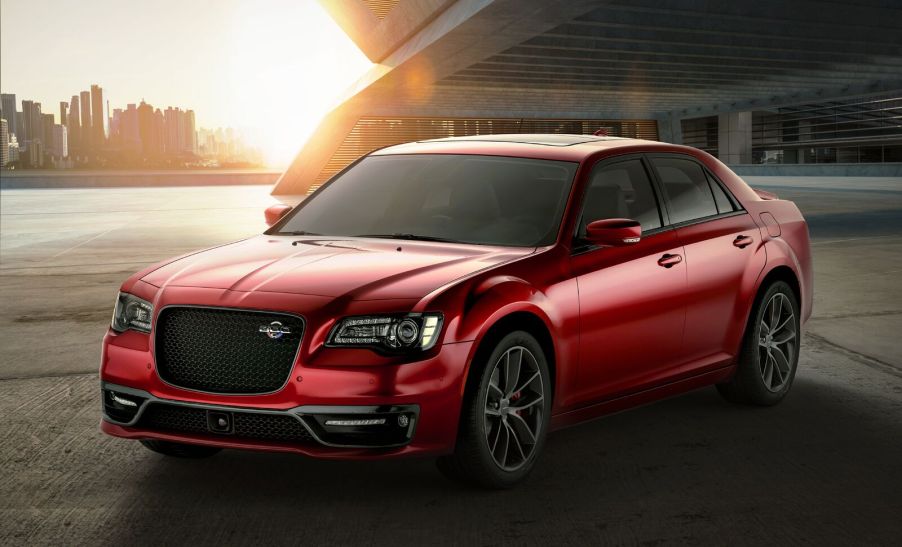
Dave Ramsey caller haunted by a $62,000 Chrysler 300 loan he co-signed because now his brother-in-law is headed to prison
On a recent episode of The Ramsey Show, a caller named Frank served up a cautionary tale wrapped in regret, family loyalty, and a very expensive Chrysler 300. The short version: Frank co-signed a car loan for his brother-in-law, and now that guy’ll be locked up for a long time.
The Chrysler is still Frank’s problem
Frank explained that his brother-in-law came to him with $20,000 in cash and a dream of driving off in a brand-new car. He said he needed help securing the loan.
Frank, admittedly against his better judgment, agreed to co-sign. The vehicle turned out to be a $60,000 Chrysler 300 with an $1,100 monthly payment. Since the brother-in-law is no longer free to make those payments, Frank is stuck holding the bag.
And the bag is ugly
The Chrysler is now behind on payments by over $5,000, with a total loan balance of around $62,000.
Frank estimated the car would only sell privately for $50,000 at best. That puts him at least $12,000 underwater.
What’s more, loan companies require valid insurance coverage on financed vehicles. The call didn’t even mention that added expense.
By the way, the loan numbers just aren’t adding up to me…
See, Chrysler discontinued the 300 in 2023. At the time, the highest trim level, the 300C, started at $56,595.
If Frank’s brother-in-law came to the sales floor with $20,000 cash, that should leave a balance of $30-something-thousand, not $62,000.
So what’s going on here? I suspect negative equity rolled over from other car loans. This could also be why the BIL needed Frank in the first place.
He lives in South Carolina, the car’s in Arizona, and the clock is ticking
Frank told the hosts he has some savings (about $10,000 to $12,000) and hopes several real estate closings this week will help.
But even if he brings the loan current, he’d still owe thousands after selling the Chrysler. He’s exploring a personal loan from a credit union to cover the difference. That’s likely the least painful path.
Co-signers aren’t backup singers, folks
They’re fully responsible if the primary borrower defaults, disappears, or, like in this case, gets locked up.
Once you co-sign, you’re legally bound to that debt. If the main borrower stops paying, the lender doesn’t knock on their door. They come after you.
Frank’s wife isn’t happy either
He said she advised him not to co-sign on the Chrysler in the first place. Now, she’s not letting him use their money to bail himself out. That’s adding strain at home on top of the financial hit.
In the end, Frank’s story is a (very) public reminder of a private truth: when someone can’t get a loan without a co-signer, there’s usually a good reason. After all, dude had $20K cash…why even get a car loan?
Once you’re tied to that note, you own the risk…no matter how well-meaning the favor seemed.