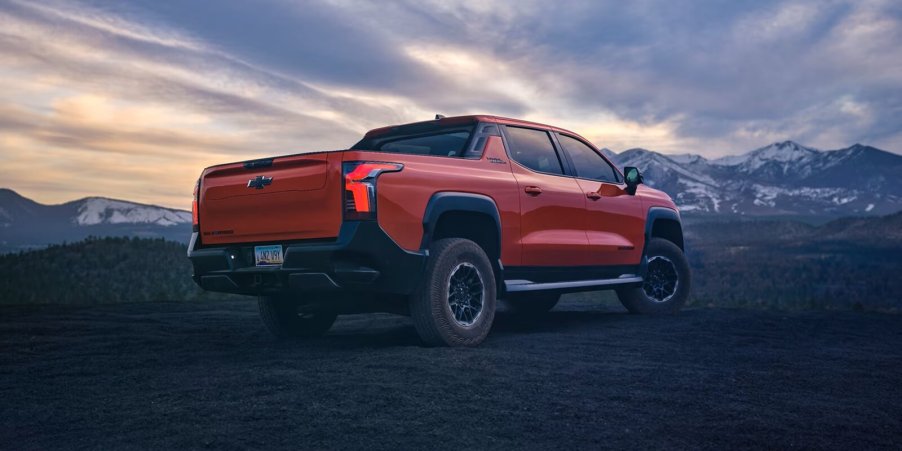
Chevrolet Silverado EV manages to go over 1,000 miles on a single charge by driving painfully slow
Have you ever noticed that your car has a “sweet spot” for fuel economy? Like your old four-cylinder compact car is happiest and returns the best mileage at 55 mph, not 60, 70, or 75? Well, EVs aren’t entirely different. And Chevrolet just proved it by driving a new Silverado EV over 1,000 miles by keeping things slow and oh-so-consistent.
GM’s Michigan proving grounds, a 2026 Chevrolet Silverado EV, 7 days, and 1,059.2 miles
Last month, the Lucid Air Grand Touring broke the record for the longest range covered on a single charge. The lofty luxury EV managed to travel 749 miles between Switzerland and Germany, crushing previous expectations by mixing slow, consistent speeds with mostly downhill travel.
Chevrolet has upped the ante even further by pitting its 2026 Silverado EV against General Motors’ Milford, Michigan, proving grounds. The goal? Take the hulking truck and its 205-kWh battery up against the proving grounds and see just how far they can drive on a single charge.
It took seven days of driving in the August heat, but the team of engineers and testers pulled it off. By the time the Chevrolet Silverado EV ran out of juice, it had covered 1,059.2 miles.
Hypermiling was the name of the game
So, how did Chevrolet manage to drive the 8,800-lb electric pickup truck further than the distance from New York City to Atlanta? In short: hypermiling.
Hypermiling techniques are the practices drivers use to maximize efficiency. While typically associated with ICE gas mileage, many of the techniques also apply to EVs.
In the case of Chevrolet’s range record, the team shed weight by ditching the spare tire, overinflated the tires, and turned off the air condition for the entirety of the seven-day test.
However, the engineering team also worked on the aerodynamic profile of the EV, adding a tonneau cover and even reducing the drag of the truck’s windshield wipers. But the team also kept things slow. Dead slow.
No, not 55 mph. The team reportedly kept things to around 25 mph or lower, with few exceptions. In keeping with the best hypermiling practices, hard acceleration or braking was strictly out of the question. Slow, lighter, slippery.