Cars With Buttons And Knobs Still Exist, You Just Can’t Afford Them
The first computer screens in cars were a novelty in high-end luxury vehicles (here’s looking at you, Aston Martin Lagonda). Now, they’re cheaper to build than buttons, and entry-level cars are full of them. Meanwhile, high-end automakers are bringing buttons and switches back.
Bugatti makes a stand against screens
Bugatti may have been the first automaker to plant this flag. Achim Anscheidt, Bugatti’s design director for the Chiron, said of the trend toward screens, “What’s going on in automotive interiors is, in one way, logical…On the other hand, it scares me.”
Anscheidt’s fear is building a car that’s soon obsolete. “What is going to happen to all those devices and all those things when operating systems are not working one day? What’s happening in 10 years, even? Are you still interested in the iPhone 3?”
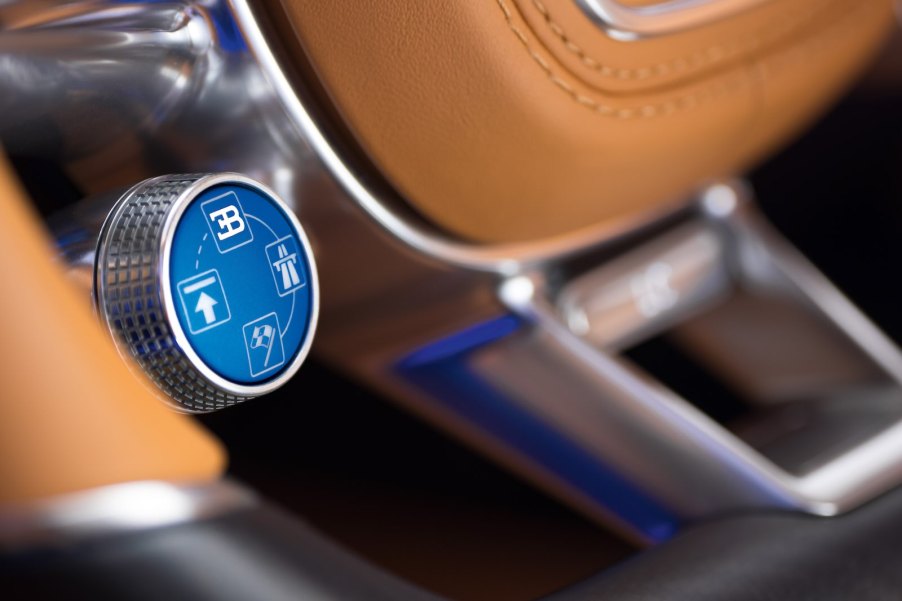
The Veyron and Chiron famously had no screens. Instead, the company’s buttons and knobs are works of art. Reviewers add that these pieces, often milled out of aluminum and knurled to offer grip, are each tuned to offer a shockingly satisfying “click.”
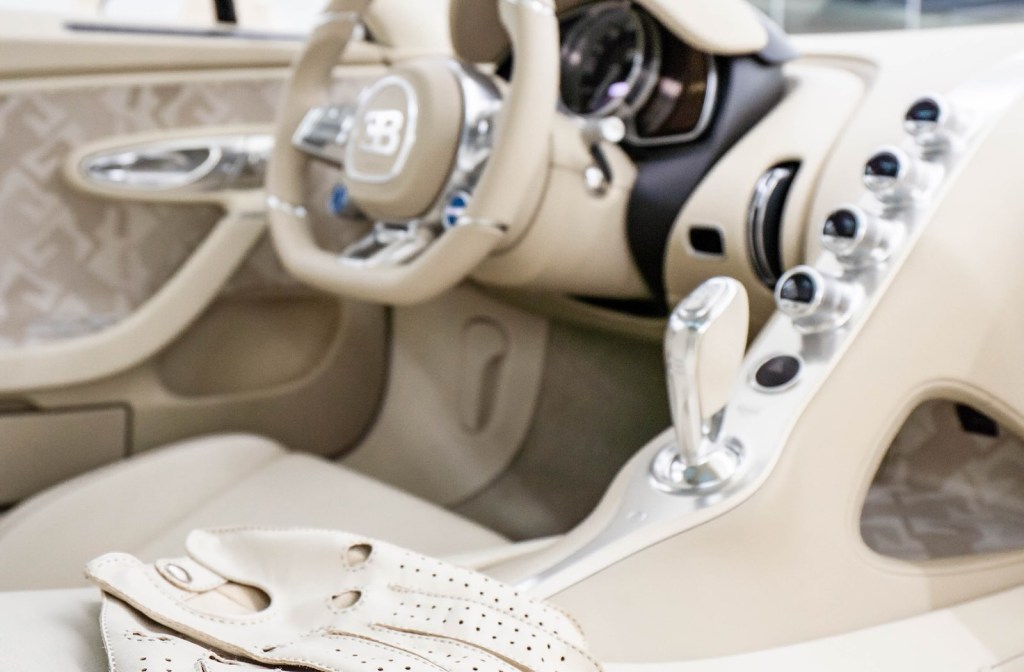
Anscheidt argues that high-end physical controls are timeless. “I think that’s what assures longevity, when a car sits in a collection and when it maybe sits on the lawn of The Quail in 30 years’ time. And it can not look up-to-date anymore, but it can still look authentic and it, hopefully, still has a sovereignty to it.”
But his design isn’t just about how the cars will age. In an era of overload, simplicity can be an act of genius. “The design is ultra clean, and you know that we are always on the hunt and searching for ultimate simplicity and cleanliness…I think there is a point to doing things different compared to the rest of the automotive field. Our main slogan is ‘If it’s comparable, it no longer is Bugatti.’” The latest Bugatti has a fold-away screen for its legally required backup camera. But the company has also doubled-down on analog design with a physical gauge pod that gives the car its name: a tourbillon is a component of a mechanical watch.
Physical controls for us peasants
Bugatti may have paved the way. But now, “comparable” luxury cars are emerging. Ferrari just revealed its first EV, the Luce. It partnered with design studio LoveForm—which was founded by iPhone designer Jony Ive. Despite Ive making a name for himself with the most famous touchscreen of all time, he argues that too many screens can detract from car interiors. And the Ferrari Luce is a masterclass in analog design. Though it does have a screen, you won’t find climate controls buried in a menu. Instead, the Ferrari features rows of machined-metal toggles and physical switches.
Don’t have Bugatti or Ferrari money? Don’t worry, this design aesthetic may trickle down to us peasants. Alfa Romeo’s CEO made headlines when he announced he would never “sell an iPad with a car around it.” More recently, Audi’s Concept C brings back physical buttons and features a fold-away screen.