Canada Courts Cheap Chinese EVs, Gets Wish-Store Teslas Instead
The Canadian government is slashing tariffs on Chinese-built electric vehicles. The goal is to lower the cost of entry-level EVs for Canadian drivers. But experts predict the move will funnel more money into Elon Musk’s pocket—at least in the short term.
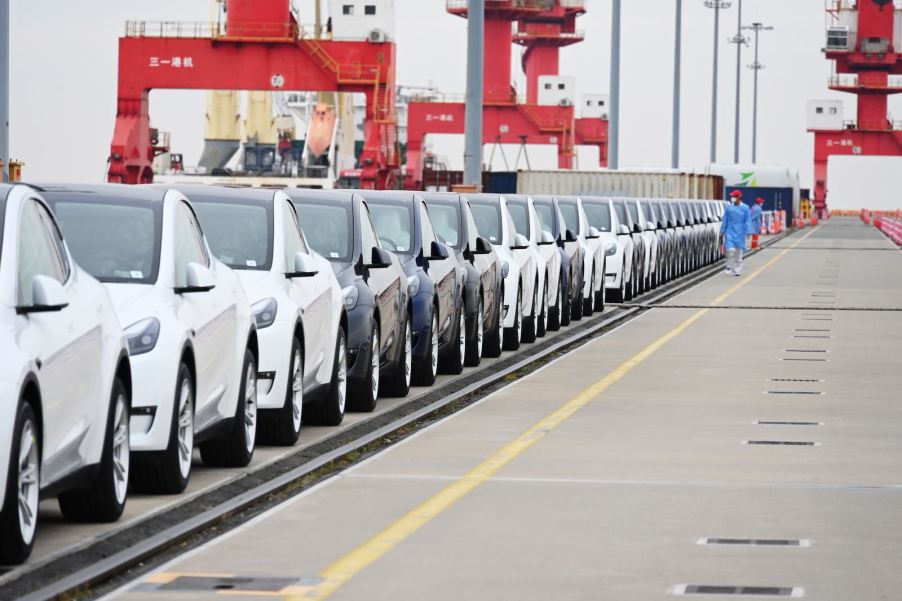
In 2023, Tesla retooled its Chinese factory to export Model Y EVs to North America. The goal was simple: boost profit margins using lower-cost Chinese manufacturing. Tesla shipped more than 44,000 China-built EVs to the Port of Vancouver in a single year.
Both the Canadian government and the Biden administration responded decisively. They imposed a 100% tariff on EVs assembled in China. Tesla backed off and began shipping vehicles from its German factory for the Canadian market.
Now Canada has reversed course. Ottawa struck a new deal allowing 49,000 Chinese-built vehicles per year to enter the country under a sharply reduced tariff. Automakers will instead pay a 6.5% “most-favored nation” rate.
Why cheap Chinese EVs are a desperate wish
Canadian drivers hoping for true budget EVs may be disappointed. Something like the $16,000 BYD Yuan Plus looks appealing on paper. In reality, that model likely won’t arrive.
BYD already sells the Yuan Plus in Europe, where it costs the equivalent of $50,650 USD. The company, which is poised to surpass Toyota as the world’s largest automaker by 2027, has little incentive to enter a new market capped at 49,000 annual sales. Building a dealership and service network would take years.
That leaves Tesla well positioned to ship Model Ys from Shanghai once again.
Several other Chinese-built vehicles already sold in North America are positioned to compete for the limited low-tariff slots. They include the Lincoln Nautilus, Buick Envision, Volvo S90, Volvo EX30, Polestar 1, and Polestar 2. Those models now face the same opportunity Tesla does.
Canadian lawmakers did try to ensure some of the automakers’ savings reach consumers. The policy reserves half of the low-tariff slots for vehicles priced under $25,189 USD ($35,000 CAD). Tesla currently lists the Model Y at $49,990 CAD.
That leaves Tesla with choices. It could cut prices. It could attempt to build the cheaper Model 3 in China for Canada. Or it could cede the slots to brands like Buick, which already has an established Canadian dealer network and Chinese manufacturing base—likely for internal combustion crossovers, not EVs.