7 Trucks That Cost Less to Own Than the 2025 Ford F-150
Most buyers considering a 2025 Ford F-150 want full-size capability. They expect towing strength, bed space for gear, and long-haul durability. The problem, though, is the total cost of ownership.
Edmunds estimates five years with the 2025 F-150 can top $70,000 when you include depreciation, fuel, insurance, maintenance, taxes, and financing. That can push even committed buyers to rethink their options. Some pickup trucks deliver similar usability with a lower cost profile, especially if you’re willing to go lightly used.
7 Trucks That Cost Less to Own Than the 2025 Ford F-150
2025 Ford Ranger
A brand-new Ford Ranger lands closer to what an F-150 shopper might accept. Edmunds estimates the 2025 Ranger XLT 4-door 4WD at roughly $44,728 over five years. That’s 40% less than the 2025 F-150.
It still tows well for a midsize, offers a practical cab, and takes up less space in town or at work sites. For people who don’t actually use the full capacity of a half-ton, the Ranger fits the job without bringing the extra cost.
2023 Chevrolet Silverado 1500
We know it ain’t a Ford, but recent-model Silverado 1500s from 2021 to 2023 earn strong reliability scores from J.D. Power and often deliver lower ownership costs once initial depreciation settles. A lightly used LT or RST model configured for typical towing and hauling can project into the low $50,000s over five years, depending on mileage and region.
For drivers who still want full-size capability without stepping into new-truck pricing, a well-maintained Silverado from this period often delivers similar utility to a new F-150 at a more manageable long-term cost.
2022 Toyota Tacoma
The 2022 Tacoma Double Cab 4WD runs about $55,251 over five years based on Edmunds data. Owners often keep them long term due to reliability and strong resale value. That helps lower the true cost per mile.
Again, capability isn’t at F-150 levels, but for everyday use, camping gear, or manageable hauling, it checks the right boxes. Parts availability and maintenance predictability also help keep ownership expenses under control.
2022 Ford F-150
A lightly used recent-generation F-150 can be a smarter buy than a new model. J.D. Power reliability data shows the 2021 F-150 scoring above average in long-term dependability. With the steepest depreciation already absorbed, a three-year-old F-150 often lands closer to $49,000 to $51,000 over five years on ownership cost projections, depending on configuration and mileage.
That puts it in line with midsize competitors while still offering full-size capability.
For those who want the truck they originally planned to get, just without paying the newest-model premium, this is a natural fit.
2018 Toyota Tundra
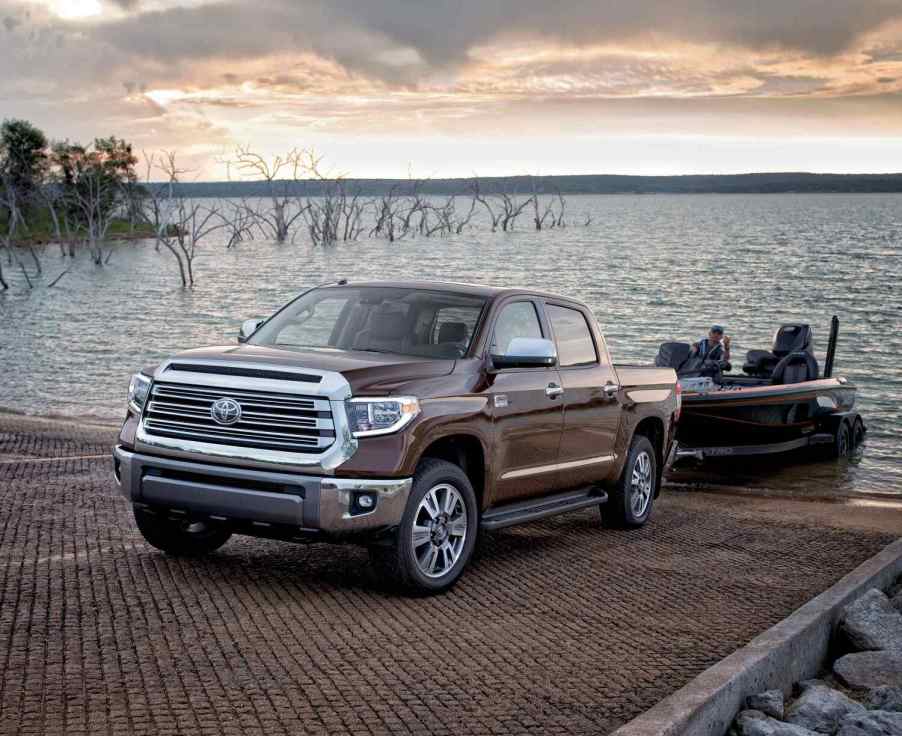
Older Tundra models from the late 2010s can be a strong alternative if you still want full-size muscle. Owners often report that the 5.7L V8 runs long with the right maintenance. One owner described the engine as “indestructible” on Reddit. Fuel consumption comes in higher than most midsize options, but parts availability and long-term reliability help offset costs.
If you plan to keep the truck for several more years, a well-maintained used Tundra may end up costing less per year than a brand-new F-150.
2022 Chevrolet Colorado
Edmunds reports the 2022 Colorado Z71 4WD at around $46,276 across five years. It’s one of the more efficient ways to get real payload and towing ability without full-size expenses. Reduced weight and smaller size lead to better fuel use than most half-ton trucks.
It’s a logical middle-ground option if you still need capability but want to sidestep the pricing and long-term cost of a new F-150.
2025 Ford Maverick XLT
The Maverick XLT offers truck function at a much more manageable ownership cost. While compact, it surprises many with its usable bed and useful payload for small job-site equipment or home projects. Long-term costs remain low due to reasonable fuel consumption and simpler running expenses.
It’s not a direct substitute for an F-150 if heavy towing matters, but it does make sense for buyers who mostly use a truck for daily transportation and occasional hauling.
These trucks present logical alternatives because they’re sized closer to what owners actually use
Buying used also avoids the steepest depreciation, especially on high-demand models. Reliability ratings matter when planning for longer ownership, and several of these models have strong track records. For buyers willing to match their truck to their real-world needs instead of sizing up for aesthetics alone, switching from a new F-150 to one of these options could mean saving thousands without losing much in ownership experience.