17 cars that quietly share factory parts
Walk into any dealership and you’d think every car on the lot is completely unique. But behind the marketing, many models quietly share parts with others you’d never expect.
This isn’t a bad thing. Automakers do it to save money and keep repair costs reasonable. It also helps with reliability, since tried-and-true components get reused across multiple platforms. You just have to know where to look.
Let’s start with the classic example: GM
Take the Chevy Tahoe and the Cadillac Escalade. Different badges, different price tags. But under the skin, they share the same basic frame, engine options, and many suspension parts. Even the infotainment architecture overlaps.
Of course, it’s not just GM doing this with its cars.
Toyota and Lexus do it, too
The Lexus RX and Toyota Highlander both ride on the same GA-K platform and use the same 2.4L turbo engine in some trims.
Sometimes, the overlap is less obvious.
The Volkswagen Golf R and Audi S3 are corporate cousins
Both use VW’s MQB platform. Underneath, they share engine architecture, all-wheel-drive systems, and even their digital dashboard setups. The difference is mostly in tuning, styling, and interior materials.
Ford does it with its trucks and SUVs
The Ford Expedition shares major components with the Lincoln Navigator. We’re talking chassis, powertrains, and electrical systems. The Navigator just gets more chrome and cushier seats.
Even Ford’s smaller vehicles like the Bronco Sport and Escape share their basic underpinnings, since both use the C2 platform.
Nissan plays this game with its cars, too
The Frontier pickup and the Nissan Pathfinder have more in common than most buyers realize. Both use the same 3.8L V6 engine and 9-speed automatic transmission. They’re tuned for different purposes, but the hard parts are the same. That makes sourcing replacement parts cheaper and easier for both models.
Sometimes the parts-sharing crosses brands you wouldn’t think of together
The Subaru BRZ and Toyota GR86 are, from a mechanical standpoint, nearly identical. They’re built in the same plant with the same engine and transmission. Toyota and Subaru co-developed the car, and it shows. The only major differences are the tuning and design details.
There’s also global strategy
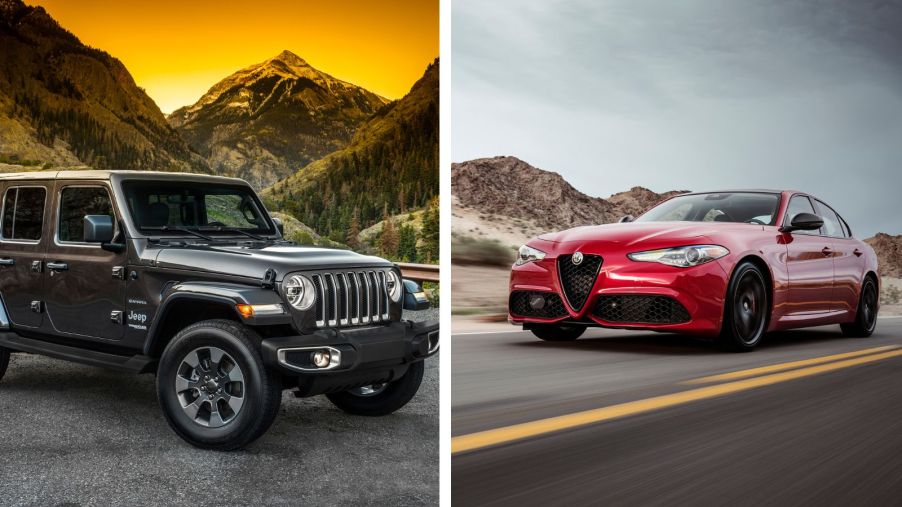
Stellantis, for example, uses the same 2.0L turbocharged four-cylinder engine in the Jeep Wrangler, Alfa Romeo Giulia, and Dodge Hornet. It’s one engine, three very different buyers. This helps the company streamline manufacturing and supply chains.
These shared parts don’t take away from the cars’ personalities. If anything, they help keep costs down and improve serviceability. On the flip side, if there’s a manufacturing or performance problem, you can bet any model with the same parts will also feel the pain.
You just might get a laugh the next time you realize your luxury SUV shares a steering rack with a fleet vehicle or your sporty coupe uses a parts bin HVAC switch from a compact sedan. But hey, if it works, it works.