12 cars that changed names (but nothing else)
And this is what I love about automotive media: Cars often have more behind-the-scenes stories than most people realize. For example, sometimes a car gets a whole new name, but stays exactly the same otherwise. Automakers rebadge for legal reasons, like trademark conflicts, or to better align a vehicle with a brand’s image.
Sometimes it’s about marketing: selling essentially the same car to different audiences without investing in a completely new model. Other times, it’s about global strategy, letting a single platform work across markets with region-specific names.
For drivers, these changes can be confusing, but they reveal a lot about how the auto industry thinks about branding, perception, and even consumer psychology. Here are some familiar examples on U.S. roads, along with their model years.
Toyota Matrix and Pontiac Vibe
The Toyota Matrix ran from 2003 to 2014 as a compact hatchback built on the Corolla platform. At the same time, Pontiac sold it as the Vibe with only minor styling differences. The cars were otherwise identical, a product of the GM-Toyota joint venture at the NUMMI plant.
Chevrolet Silverado and GMC Sierra
Chevrolet launched the Silverado in 1999, while GMC sold the Sierra alongside it. Both trucks share platforms, drivetrains, and towing specs. The differences come down to interior trim and branding, with Chevrolet aimed at volume buyers and GMC marketed as the premium choice.
Dodge Stealth and Mitsubishi 3000GT
The Mitsubishi 3000GT, sold from 1990 to 2001, appeared in Dodge showrooms as the Stealth from 1991 to 1996. Both cars used the same chassis, drivetrain, and technology, including optional all-wheel drive and twin-turbo power. Dodge changed exterior details but not the substance.
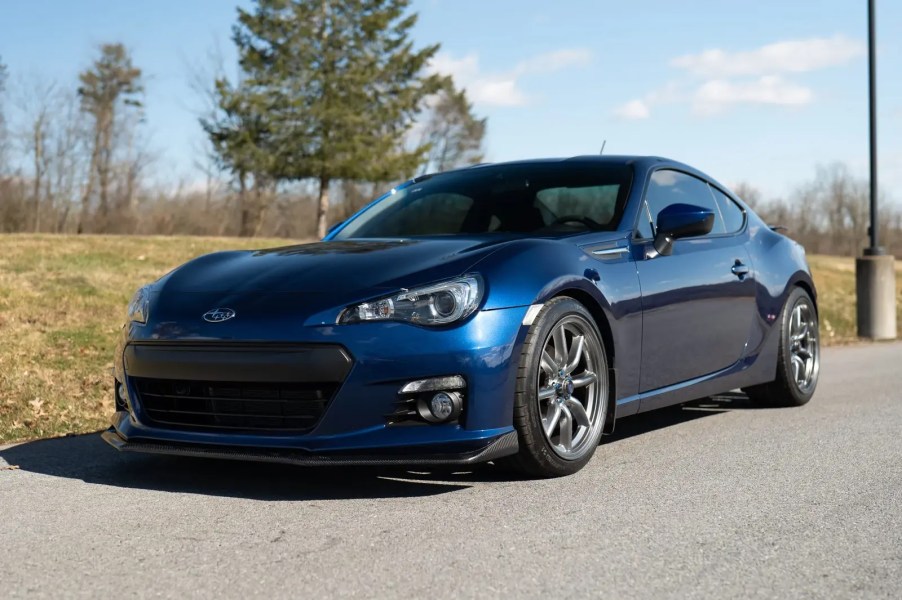
Subaru BRZ, Toyota 86, and Scion FR-S
The Subaru BRZ debuted in 2012, matched by Toyota’s 86 and originally Scion’s FR-S. These lightweight coupes shared the same 2.0-liter flat-four engine, chassis, and handling character. The badges and bumpers varied slightly, but the driving experience remained identical.
Mazda2, Scion iA, and Toyota Yaris iA
Mazda’s second-generation Mazda2 sedan, built in Mexico, arrived in the U.S. in 2016 as the Scion iA. When Toyota closed Scion in 2016, the car continued as the Toyota Yaris iA through 2020. The only changes were emblems and grille details, but the car remained Mazda underneath.
Cadillac Cimarron and Chevrolet Cavalier
Cadillac tried to enter the small luxury market in 1982 with the Cimarron, which ran through 1988. It was little more than a Chevrolet Cavalier with leather seats and a Cadillac badge. The attempt became infamous for its lack of distinction.
Lincoln Blackwood and Ford F-150
Lincoln sold the Blackwood luxury pickup in 2002. It was essentially a Ford F-150 with a plush interior and a unique cargo box covered by a power tonneau. The truck flopped, but the DNA remained pure F-150.
Dodge Dart and Fiat Viaggio
The Dodge Dart sold in the U.S. from 2013 to 2016 shared its platform with the Fiat Viaggio, sold in China from 2012 to 2017. Aside from regional trim changes, the two sedans were the same car wearing different badges.
Ford Fusion and Ford Mondeo
Ford’s midsize sedan went by Fusion in North America from 2006 to 2020, while Europe and other markets knew it as the Mondeo. The two names described one global model with only small trim differences to fit regional tastes.
Infiniti Q50/Q60 and Nissan Skyline
Infiniti launched the Q50 sedan in 2014 and the Q60 coupe in 2017 for the U.S. market, but in Japan both were sold as the Nissan Skyline. The cars share the same chassis and powertrains. The difference lies in Infiniti’s luxury branding abroad.
Infiniti Q70 and Nissan Fuga
The Infiniti Q70, sold in the U.S. from 2014 to 2019, matched the Nissan Fuga in Japan. Both full-size sedans rode on Nissan’s FM platform with little more than trim and branding changes between them.
Chevrolet Cruze, Daewoo Lacetti Premiere, and Holden Cruze
Chevrolet replaced its compact lineup with the Cruze in 2008, which lasted through 2019 in North America. The same car wore badges as the Daewoo Lacetti Premiere in Korea and the Holden Cruze in Australia. Specs remained the same, only the names changed.
Automakers rename cars for legal reasons, marketing strategies, or brand alignment
But under the surface, the cars often remain unchanged. For certain drivers, that means you may already know a model…just not by the name on the badge.