Tesla Robotaxis in Texas Continue to Crash at a Rate Four Times Higher Than Humans
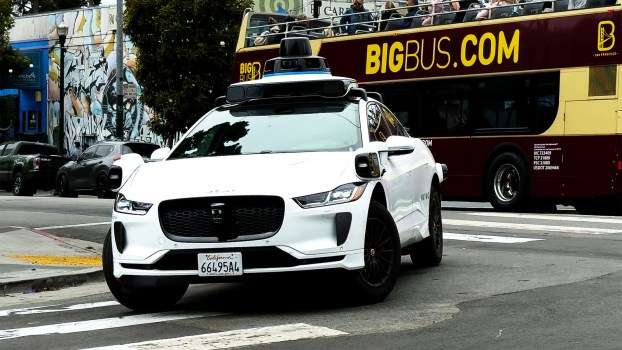
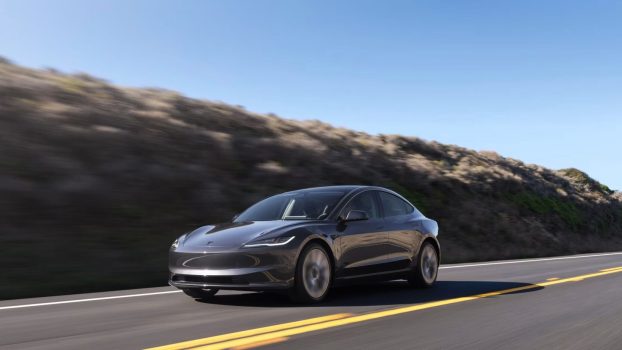
Tesla reported five new crashes involving its robotaxis in Austin, Texas from December 2025 to January 2026. So, based on Tesla’s own benchmark, they are now crashing nearly four times as often as human drivers.
According to Tesla’s reports to the National Highway Traffic Safety Administration (NHTSA), robotaxis have caused 14 crash incidents in around eight months.
The accidents in December and January included an accident between a stopped robotaxi and an Austin city bus; two incidents in which a robotaxi backed into objects in parking lots; a collision with a fixed object at 17 miles per hour; and a crash with a truck at 4 miles per hour.
Tesla robotaxis have also been in accidents involving a cyclist, an animal, and two that authorities categorized as “other.” One of the accidents, with an SUV, which reportedly happened at just two miles-per-hour, somehow resulted in hospitalizing a person.
Interestingly, as Electrek reports, Tesla’s Vehicle Safety Report claims the average American driver experiences a minor collision every 229,000 miles and a major collision every 699,000 miles. That means, according to Tesla, their robotaxis are crashing nearly four times more often than the average human driver.
Making the numbers look even worse for Tesla, “virtually every single one of these miles was driven with a trained safety monitor in the vehicle who could intervene at any moment, which means they likely prevented more crashes that Tesla’s system wouldn’t have avoided.”
Also, according to NHTSA data, the average human driver crashes about once every 500,000 miles driven. Using those numbers, Tesla’s robotaxis are crashing at approximately eight times the rate of human drivers.
The startling crash numbers aren’t slowing Tesla down when it comes to production
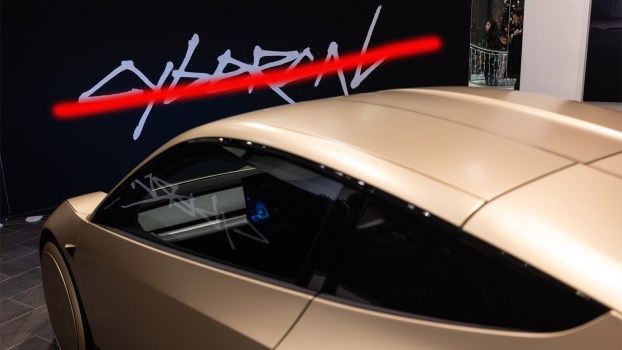
On Tuesday, Tesla’s first “Cybercab” – a name which they don’t actually own – rolled off the production line in Texas. Bonus: they don’t have any steering wheels or pedals.
Considering the company still hasn’t figured out how to make its robotaxis crash less than the average human driver, this might seem a bit premature.
Then again, in January, financial analysts warned that Tesla needs to deliver on its long-promised robotaxi in 2026 to satisfy its investors and to keep them “from asking questions about other parts of the business.”
Musk originally said during Tesla’s second-quarter earnings call in July 2025 that the company would “probably have autonomous ride-hailing in probably half the population of the U.S. by the end of the year.” That didn’t happen, so perhaps Tesla is producing the first “Cybercab” as nothing more than a weak effort to pacify investors.