WA semi-truck driver says he only had 1 beer before rolling over his rig and blowing 10X the legal limit
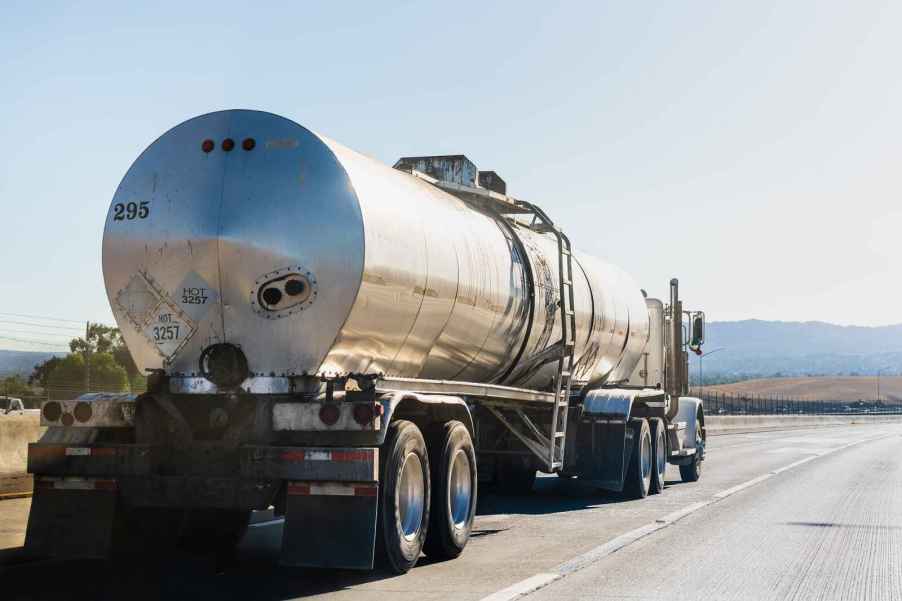
Last week, a semi-truck rolled over on the ramp connecting State Route 16 to Sprague Avenue in Tacoma, Washington. The driver, a 45-year-old male, faces a DUI and two counts of vehicular assault. Authorities revealed that his blood alcohol content (BAC) measured an alarming 0.398, nearly 10 times the legal limit of 0.04 for CDL holders.
According to the Washington State Patrol (WSP), the tanker operator appeared visibly intoxicated. Troopers noted his unsteady demeanor, bloodshot eyes, and slurred speech. While the trucker admitted to having “just one beer,” some pretty damning evidence suggested otherwise. Court documents stated that before testing, he struggled to respond to basic questions and his responses were slow and unclear.
Troopers and @wsdot_tacoma are on scene with a rolled over semi truck on the ramp from SR 16 to Sprague. Both ramps from 16 to sprague are closed.
— Trooper John Dattilo (@wspd1pio) November 26, 2024
Expect a lengthy closure. More details to follow. pic.twitter.com/RTMcjoXQI1
Two victims suffered serious injuries in the crash. One sustained fractures to their neck and skull, while the other endured multiple broken ribs. Both individuals were hospitalized.
Despite the semi-truck carrying argon gas, authorities told Fox 13 the cargo posed no additional threat to the public after the accident. Argon gas, when transported, is highly pressurized. It’s poisonous in enclosed spaces.
The tanker driver’s bail was set at $50,000. His extremely high BAC level neared a potentially fatal threshold.
DUI laws and penalties for commercial drivers differ from regular motorists
DUI laws are stricter for truck drivers than for standard motorists. Federal regulations, enforced alongside state laws, require commercial drivers to adhere to a BAC limit of 0.04…half the standard limit of .08. Violating this threshold can result in the suspension of a commercial driver’s license (CDL) for at least one year for a first offense, regardless of whether the violation occurs in a commercial or personal vehicle.
In Ohio, for instance, drivers with a CDL face harsh penalties if convicted of a DUI. Beyond losing their CDL, they may incur heavy fines, potential jail time, and mandatory substance abuse programs. A second offense results in a lifetime disqualification from holding a CDL.
Commercial drivers must also consider civil and career repercussions. Companies typically terminate drivers convicted of a DUI, ending their ability to operate professionally. Since the case above involves injuries and extreme intoxication, it could lead to further legal consequences and civil lawsuits from the victims.