‘Spend 5 seconds running this checklist’ Retired FBI agent shares how to protect yourself in a parking garage
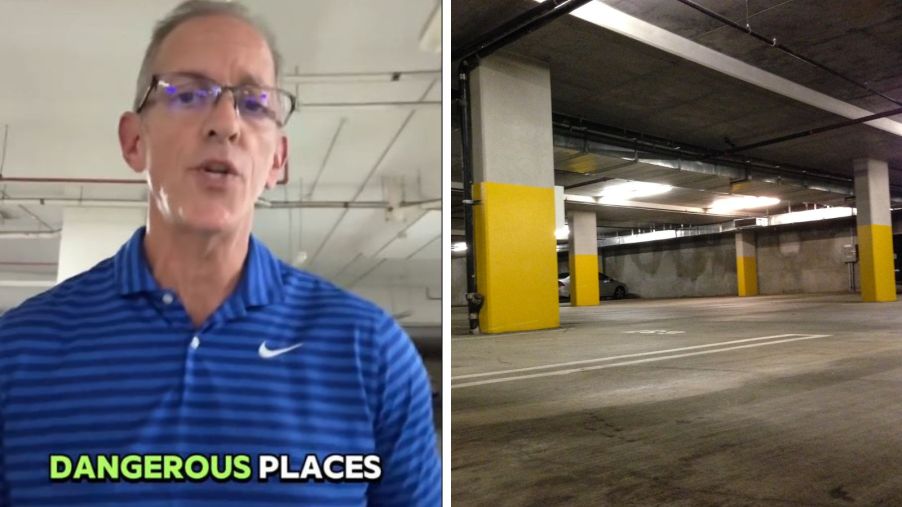
Like gas stations, parking garages are one of the most dangerous places drivers, especially women, can hang around. That’s according to Steve Lazarus Books. He’s a former FBI agent and U.S. Air Force veteran with 35-plus years of service under his belt.
He’s not wrong about the dangers of car parks, either
Attacks on people in parking garages and lots are more common than most realize. It seems that most crime statistics group parking garages together with surface lots, making it hard to separate the two. Still, the available data paints a clear picture: parking facilities are a common setting for violent crime in the U.S.
According to LVT, which looked at U.S. Bureau of Justice Statistics data, up to 10% of all violent crimes in the U.S. happen in parking lots or garages.
That translates to roughly 1,400 violent incidents every day, or more than 500,000 annually.
These include assaults, robberies, carjackings, and in some cases, sexual assaults.
One study found that garages in particular are more prone to crime than surface lots
Garages often have poor lighting, hidden corners, and isolated stairwells that make them easier targets for criminals.
Some sources estimate that theft and other crimes are up to three times more likely to occur in a parking garage than in an open lot.
About 16% of violent crimes that take place in parking facilities are physical assaults. And while the Department of Justice doesn’t single out parking garages in its sexual assault data, it does report that about 9% of all sexual assaults happen during travel or in commercial locations, which includes parking structures.
Former FBI agent has tips on how to avoid looking like an easy target
Books highlights that in a parking garage, awareness is key.
Briefly scan the distance between you and your car
Look for people hanging around, checking for movement between the cars. “Anyone getting in or out of a car near yours,” Books says.
Keys in your hand
Don’t wait until you’re standing next to your car to dig through a bag or your pockets.
If you have one on your keychain, your thumb goes on a personal alarm or mace dispenser
Be prepared to use, if needed.
Phone is put away
Holding your phone, at best, clogs up your ability to quickly respond to a physical threat. At worst, it distracts you from seeing what’s even coming.
Stride confidently
And keep your head on a swivel.
Quickly glance under the car and check the backseat before unlocking
While the thought is literally terrifying, you’re making sure no one is hiding.
Get into the left front seat with any packages you’re carrying
Unless your stuff won’t fit in the front with you, don’t spend time opening the other car doors or trunk. That could distract you from your surroundings and just delays your exit.
Once inside, immediately lock the car doors, start the engine, and drive away
No dilly-dallying on your phone or anything else. Just leave. “The goal is to spend the least amount of time possible in a vulnerable position,” Books explains.
There’s also real-world evidence that safety upgrades can help
At Ohio State University, my alma mater, crime in one garage dropped significantly after changes like improved lighting, security cameras, and better sightlines were installed.
That kind of success supports broader recommendations from security professionals who say that better lighting, visible patrols, and emergency call boxes can all reduce the risk of attacks.
But if you find yourself alone in a parking garage, keep the retired FBI agent’s suggestions in mind.
MotorBiscuit reached out to Books via direct message with his TikTok account, @steve.lazarus.books, for comment.