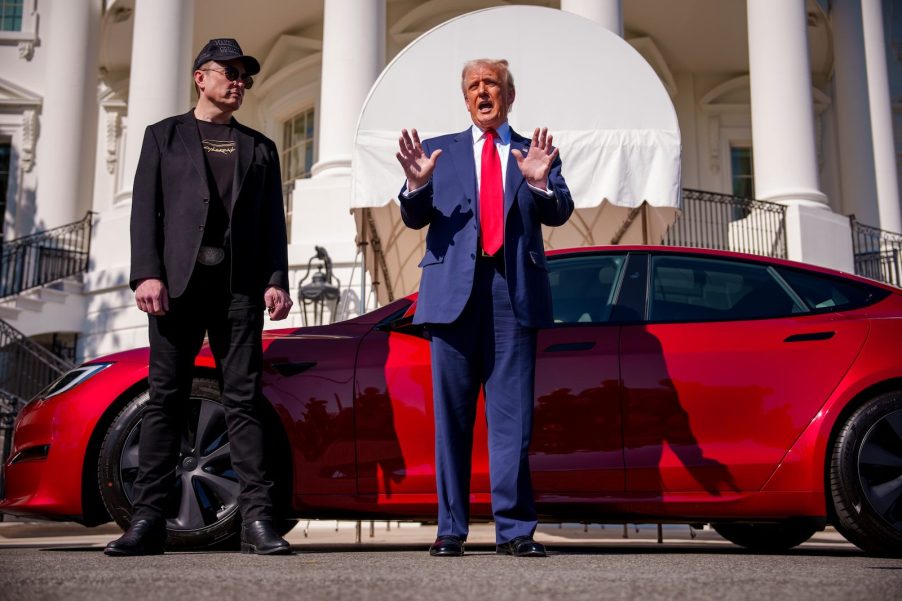
There’s a rumor online that President Trump proposed 15-year car loans. It went viral because, after his administration recommended extending the maximum home mortgage from 40 years to 50 years (AP News), the claim sounded believable. But it isn’t true (Snopes). That said, the idea itself isn’t necessarily a bad one.
The history of the home mortgage
When I was growing up, my mom read Laura Ingalls Wilder’s Little House on the Prairie series aloud to my siblings and me. The nine books, adapted from Wilder’s childhood journals, tell the story of a pioneer family migrating across the American West between 1872 and 1894.
What struck me most was how the family settled in each new place. At every homestead, “Pa” would grab his ax, chop down trees, and build a new little house for the family. He often finished in weeks, sometimes months.
How was that possible? Those houses had no plumbing and no electricity. Many of the family’s cabins didn’t even have glass windows. In winter, the children shook snow off their blankets every morning. Housing has become far more complex since the 1800s. That complexity requires specialists, which makes homes more expensive. This is progress. Fewer children die of pneumonia. But by the 1930s, most Americans couldn’t afford to buy a home outright.
The government responded with an elegant solution. During the 1930s, it created the Federal Housing Administration. The FHA regulates a special class of loan: the mortgage. By standardizing terms and interest rates, it allowed families to buy modern homes and pay for them over time without going broke.
It’s time for an automotive “mortgage”
By 1924, Ford had reduced the Model T’s MSRP to $260. Henry Ford was fond of reminding everyone that was just four months of pay for one of his entry-level factory workers. Today, four months of entry-level pay (before taxes) at River Rouge would be $10,880.
The average new-car transaction price now hovers around $50,000. If you need towing capacity or a third row of seats, $70,000 isn’t unusual. Meanwhile, the average used-car transaction remains above $25,000.
Many critics blame “feature creep” for rising prices. Large touchscreens and leather seats are easy targets. But the Model T was a convertible with a 40 mph top speed, no airbags or crumple zones, and often got as little as 13 mpg. The last century of advances in safety, reliability, and emissions are real progress. Pivoting back to “cute” ultra-cheap, lightlweight cars would put drivers at risk. But again, advances come with costs.
One often unsung upside is durability. Better metallurgy and build quality alone mean entry-level cars have a far better shot at seeing 250,000 miles than ever before. The average car on American roads is now more than 12 years old. We have the oldest vehicle fleet in history. From an environmental and economic standpoint, that’s good news. It’s not good news, however, if drivers finance aging used cars at 15% APR.
In 2025, roughly one-quarter of car buyers rolled debt from previous loans into new ones. Estimates show U.S. drivers defaulted on 3 million car loans last year. That’s the highest number since the Great Recession. The system is dangerously close to a collapse.
The mortgage model worked as homes became more complex and longer-lasting. Cars now follow the same trajectory. A regulated, long-term auto loan could align financing with reality. The FHA could expand to oversee both housing and auto loans.
If automakers had to support 15-year financing, they would have incentives to build cars that actually last that long. Change the way we finance cars, and we change what we drive—while protecting both wallets and the environment.