How Do You Protect Your Rights During A Traffic Stop? Experts’ Advice Could Keep You Out of Jail
Two lawyers have some advice for those seeking to protect their rights at a traffic stop — make sure to lock your car, because it can prevent a lawless, unwarranted search of your vehicle.
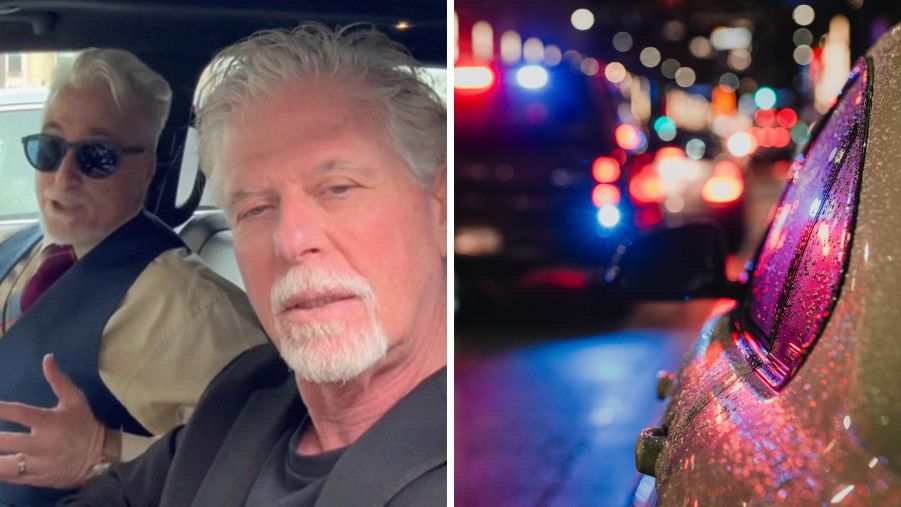
Craig and Marc Wasserman are two legal content creators. The pair have gained a significant following on social media through their legal firm, Pot Brothers at Law.
Recently, the duo posted a Facebook reel which has since received 1,600 comments and over 95,000 likes. In it, the brother-lawyer team advocates for car owners to lock their keys in their cars to avoid unlawful searches.
“We know a lot of people who do that. It further enforces your Fourth and your privacy, so you can do it if you want to,” one of the brothers said.
How Can Locking Your Car Reinforce Your Fourth Amendment Right?
The Fourth Amendment certifies that “[t]he right of the people to be secure in their persons, houses, papers, and effects, against unreasonable searches and seizures, shall not be violated.” In essence, the Fourth Amendment protects individuals from unlawful searches without proper cause.
Most of the time, a police officer stopping an individual for a routine traffic stop will not have a warrant for a search. Still, police officers occasionally attempt to conduct unlawful searches on the road for a variety of reasons.
Civilians can and should lock their car to prevent a police officer from conducting an unlawful search of the vehicle. Unless an officer has a warrant, is lawfully arresting an individual, has an immediate emergency that warrants a search, or has probable cause, it’s reasonable to reject a request to search the vehicle.
Generally, probable cause under the “plain view” doctrine can allow some police officers to search vehicles without a warrant. This only applies if they see obvious contraband or have a specific justification for doing so.
That’s one of the reasons why it’s important to clearly record and identify why a police officer wants to search a vehicle. That way, if they do conduct an illegal search and have little reason for doing so, it’s well-documented.
What Types of Searches Require a Warrant?
One commenter said, “anything locked needs a warrant, if you have zero contraband on your person they can not enter your car without a warrant.”
This is generally true. A police officer cannot search vehicles without a warrant. Exceptions apply if they receive explicit consent or see obvious contraband in the vehicle.
Police officers can ask an individual to step out of their vehicle, though. They can look inside the vehicle for any obvious contraband that can give them probable cause for a search. Police officers can even bring out dogs to sniff out any contraband, as it’s not considered a “lawful search.” They cannot, however, make the traffic stop longer than usual for a K-9 sniff test.
Do Most Cars Even Lock With the Keys Still in the Car?
A number of commenters pointed out one issue with the Wasserman brothers’ suggestion. In short, some newer cars don’t lock from the inside when the keys are still inside the vehicle.
“Cars today don’t lock when the keys are inside. The fob is programmed to not do that so you don’t lock yourself out,” said one commenter.
Another added that their Nissan doesn’t allow the key fob to get locked on the inside. “The only way I’ve found to lock a fob inside is to use another fob programmed to the car,” they said. “My Grand Caravan was more than happy to oblige with an inaudible sinister chuckle.”
Modern car systems are too advanced to allow car owners to lock their cars with the keys inside. This is to prevent car owners from having to call a locksmith in case they don’t have a spare at hand, but it also means that the Wasserman brothers’ suggestion may be difficult to practice.
How Should One Handle This Situation?
For that reason, it may be helpful to kindly and politely let a police officer know if you are reaching for the keys to bring out and lock the vehicle.
It’s a good, standard practice to verbally tell an officer about any movements in the vehicle. Quick advance notice by saying things like, “I’m going to get my registration from the glove box,” and “I’m going to grab my keys that are sitting on the passenger seat before exiting the vehicle,” can help prevent miscommunications.
It’s incredibly important to be as clear as possible with officers, as they’re in a much more advantageous position to abuse their power than a passenger.
It’s also important to not give police officers any more information than required, as it’s best not to give them any reason to search the vehicle to begin with. That way, passengers can get back on the road.
We’ve reached out to the Wasserman brothers via their Pot Brothers at Law Facebook page. We’ll let you know if they respond.