Will police actually pull you over for a cracked windshield
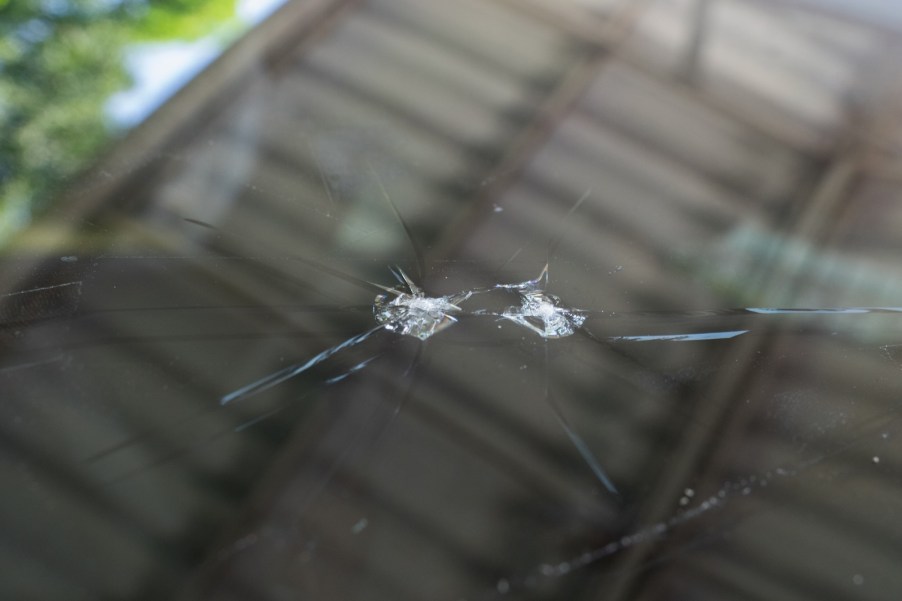
Imagine you are driving along a bumpy mud season road through the beautiful Green Mountains. A slow dump truck looms ahead, so you follow along. It is carrying gravel. Later, you noticed a crack in your windshield and don’t have the time or money to fix it right away. Do you risk the Vermont State Police pulling you over every time you drive your car? Not necessarily. That depends on the specific crack in your windshield–and the state you’re driving through.
Is a cracked windshield a “primary offense”
The legal system divides traffic offenses into primary and secondary offenses. Police officers can pull you over for primary offenses. But during a traffic stop to investigate a primary offense, they can write you tickets for any secondary offenses they notice.
Here’s an example: in Vermont, a cracked windshield is a secondary offense. If a police officer tells you they’re pulling you over for a crack in your windshield it’s an illegal traffic stop. Let’s say they write you other tickets during said stop. In Vermont, I imagine that would be for open containers of Maple Syrup or listening to a band other than Phish while driving. A judge might throw those tickets out if you challenge them in court because they resulted from an illegal traffic stop.
Why? Vermonters must have their cars inspected yearly, and they won’t pass inspection with a cracked windshield. If police pull a Vermonter over for speeding, they can ticket them for an illegal crack in their windshield. But not every crack in a windshield is illegal.
Is the crack in your windshield illegal?
In every state, your windshield must meet federal regulations: Esseintially, there can’t be large or intersecting cracks blocking the driver’s view. That’s it. But some states have more specific rules.
Lake Monsters fans (yes, that’s a Vermont baseball team named after Lake Champlain’s mythical “Champ”) can think of the federal window crack law like a “batter’s box” above the steering wheel. The area extending upward from the height of the steering wheel must be free of cracks larger than 3/4 inches in diameter, more than 3 inches from any other cracks. This area excludes a 1-inch border at the side of the windshield and 2-inches at the top.
But that’s not all. Vermont state law adds that “star cracks” can’t be larger than 2 inches. (Or about the size of a small maple leaf). Chips or bullseye cracks directly in front of the driver can’t be larger than a half inch in diameter. (So if you could fit a sugaring tap into it, no good). And finally all damage cannot block your view of the road (Presumably, scenic Route 100).
Insurance provider “The Zebra” rounded up all the state-specific cracked windshield laws. If you’re driving up to Vermont for leaf peeping season, you are subject to local laws, not the laws where your car is registered. Check them out below:
| State | Cracked windshield law |
|---|---|
| Alabama | Cracks must meet the standards of federal law. |
| Alaska | Cracks must meet the standards of federal law. |
| Arizona | Cracks must meet the standards of federal law. |
| Arkansas | Cracks must meet the standards of federal law. |
| California | It’s unlawful to operate a motor vehicle on a highway when the windshield or rear window is in defective condition |
| Colorado | The crack must not extend more than six inches, intersect with another crack or be more than 1.5 inches from the edge of the windshield. |
| Connecticut | Cracks cannot be more than 20% of the width of the windshield or more than 3″ from the edge of the windshield. |
| Delaware | Cracks or chips are illegal if they obstruct the view of the road. Any cracks over 5 inches on any window are mandatory failure items. |
| Florida | Cracks must meet the standards of federal law. |
| Georgia | Cracks on a windshield or rear window cannot have a starburst or spider webbing effect greater than three inches by three inches. |
| Hawaii | Cracks must meet the standards of federal law. |
| Idaho | Idaho has strict laws on cracks in windshields with any crack considered unsafe. |
| Illinois | Cracks must meet the standards of federal law. |
| Indiana | Cracks or chips are illegal if they obstruct the view of the road. |
| Iowa | Cracks or chips are illegal if they obstruct the view of the road. |
| Kansas | Cracks must meet the standards of federal law. |
| Kentucky | Cracks must meet the standards of federal law. |
| Louisiana | Cracks (including nicks, chips, bullseyes or half-moons) cannot be larger than 1/2 inch in the area directly in the driver’s line of vision. They cannot be larger than 2 inches in the area swept by the windshield wipers. |
| Maine | Cracks or chips are illegal if they obstruct the view of the road. |
| Maryland | Cracks must meet the standards of federal law. |
| Massachusetts | No cracks or chips are allowed within area cleared by windshield wipers or larger than the size of a quarter. |
| Michigan | Cracks must meet the standards of federal law. |
| Minnesota | Cracks must meet the standards of federal law. |
| Mississippi | Cracks outside the area cleared by windshield wipers on driver’s side are permitted, but only if no other areas of damage or discoloration impact view of the road |
| Missouri | No cracks within windshield wiper area or any longer than 3 inches. |
| Montana | Cracks must meet the standards of federal law. |
| Nebraska | Cracks must meet the standards of federal law. |
| Nevada | Cracks must meet the standards of federal law. |
| New Hampshire | All windshield cracks or distortions are illegal. |
| New Jersey | Cracks or chips are illegal if they obstruct the view of the road. |
| New Mexico | Cracks must meet the standards of federal law. |
| New York | Cracks or chips are illegal if they obstruct the view of the road. |
| North Carolina | Cracks or chips are illegal if they obstruct the view of the road. |
| North Dakota | Cracks or chips are illegal if they obstruct the view of the road. |
| Ohio | Cracks or chips are illegal if they obstruct the view of the road. |
| Oklahoma | Cracks larger than 3 inches, hairline cracks longer than 12 inches in the windshield wiper area and cracks which allow air to pass through are illegal. |
| Oregon | Cracks or chips are illegal if they obstruct the view of the road. |
| Pennsylvania | Glass with exposed edges, cracks that obstruct the drivers’ vision and areas of etching are illegal. |
| Rhode Island | Cracks cannot damage the safety seal inside the glass layers. Minor cracks and discoloration are only permitted at edges of windshields. |
| South Carolina | Cracks must meet the standards of federal law. |
| South Dakota | No cracks, chips or other damage on the windshield or any other window. |
| Tennessee | Cracks must meet the standards of federal law. |
| Texas | Cracks must meet the standards of federal law. |
| Utah | Cracks or chips are illegal if they obstruct the view of the road. Cracks, chips or other damage larger than one inch is permitted only if within six inches from any edge. |
| Vermont | Star cracks cannot be larger than 2 inches. Star or bullseye cracks, or chips and discoloration larger than half an inch in diameter are not permitted in front of the driver. All damage cannot obstruct view of the road. |
| Virginia | Scratches greater than 6 inches by ¼ are not permitted in area cleared by windshield wipers. Any cracks larger than 1 inch may not be above the bottom 3 inches of the windshield. |
| Washington | Cracks must meet the standards of federal law. |
| Washington, DC | Cracks or chips are illegal if they obstruct the view of the road. |
| West Virginia | Cracks are not permitted in 8-1/2 by 11 inch area directly in front of the driver, and not larger than 1.5 inches in the windshield wiper area. |
| Wisconsin | Cracks cannot be directly in driver’s line of sight, unless less than half an inch in diameter. Cracks can’t extend more than 8 inches from top of windshield. Cracks cannot obstruct view of the road. |
| Wyoming | Cracks must meet the standards of federal law. |