You might want to disable your phone’s facial recognition before your next traffic stop
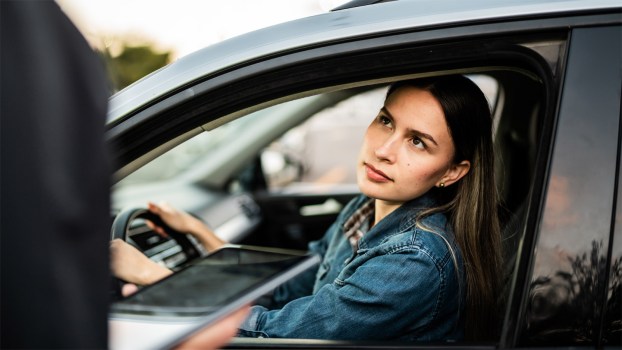
Imagine you’re cruising down the highway, tunes up, windows down. Suddenly, flashing lights in your rearview. So you pull over, heart racing. The officer approaches and asks for your phone. You refuse to unlock it. Without hesitation, they hold it up to your face. Click. Unlocked. So they start scrolling through your personal messages, photos, and apps. No warrant. No consent. Is this legal? Maybe. But you could have avoided the entire scenario by disabling facial recognition so your phone only unlocks with a passcode.
The thumbprint tug-of-war
In 2014, the U.S. Supreme Court ruled that police need a search warrant to demand your PIN so they can unlock and search your phone–just like any other password. But within years, biometrics threw a wrench in the digital cogs.
Jeremy Travis Payne, a California parolee, was stopped by the CHP in 2021. Officers forced his thumb onto his phone, unlocking it. In United States v. Payne, the Ninth Circuit ruled this didn’t violate the Fifth Amendment because “the compelled use of Payne’s thumb to unlock his phone… required no cognitive exertion.” They likened it to providing a physical key.
Contrast that with United States v. Brown. In 2025, the D.C. Circuit found that compelling a suspect to use a thumbprint to unlock a phone was not just physical, it was “testimonial.” Thus it violated the Fifth Amendment. The court stated, “Unlocking the cellphone represented the appellant’s thoughts of ‘I know how to open the phone,’ ‘I have control over access to this phone,’ and ‘the print of this specific finger is the password to this phone.’”
Facial recognition is the new frontier
While the Supreme Court has yet to weigh in on police using our thumbs without a warrant, the phone industry has moved on to facial recognition.
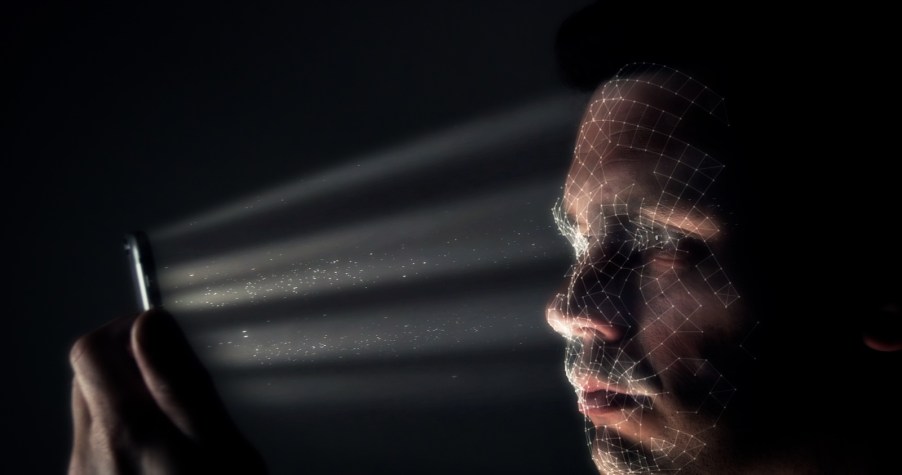
In United States v. Wright, detectives held a phone up to the suspect’s face to unlock it using facial recognition. The court ruled this action violated the Fifth Amendment, stating that biometric unlocking is “functionally the same as a passcode.” They emphasized that using facial recognition to unlock a phone is testimonial because it implies control over the device.
However, not all courts agree. Some jurisdictions allow law enforcement to compel facial recognition unlocking, viewing it as non-testimonial. The legal landscape is fragmented, with different courts interpreting the use of biometrics in varying ways.
Passcodes vs facial recognition: the legal Wild West
The Supreme Court hasn’t provided clear guidance on whether using biometrics like facial recognition or fingerprints to unlock phones is protected under the Fifth Amendment. This lack of a definitive ruling has led to a patchwork of decisions across the country. Some courts view biometric unlocking as non-testimonial, while others see it as a violation of constitutional rights.
With facial recognition technology becoming more prevalent, the urgency for a unified legal standard grows. Until then, individuals concerned about privacy might consider disabling biometric unlocking features. Relying on a strong passcode could offer better protection against warrantless searches during encounters with law enforcement.
While it’s unclear what individual police departments will choose to do—or can get away with—some courts have ruled on the legality of asking for a passcode or biometric unlocking without a warrant. Here are those rulings, by district and state (according to the New York Law School, updated November 2024).
| Jurisdiction | Passcode Compulsion | Biometric Compulsion (Fingerprint/Face) | Notes |
|---|---|---|---|
| 1st Circuit (Federal) | No | No | Both methods ruled testimonial. |
| 2nd Circuit (E.D.N.Y.) | Mixed/Not settled | Yes (Eldarir case) | Court ruled biometric is not testimonial. |
| 4th Circuit (W.D. Va.) | Not addressed | Yes | Biometrics allowed with a warrant. |
| 5th Circuit (S.D. Tex.) | Yes (under foregone conclusion) | Yes | Passcodes can be compelled if gov’t can prove prior knowledge. |
| 6th Circuit (E.D. Ky.) | No | Yes | Split stance—passcodes are testimonial, biometrics are not. |
| 7th Circuit (N.D. Ill.) | No | Mixed (Barrera: Yes; others: No) | Judges split on biometrics; passcodes more clearly protected. |
| 8th Circuit (E.D. Mo.) | Not addressed | Yes | Biometrics generally allowed. |
| 9th Circuit (N.D. Cal., Idaho) | No (some districts) | Mixed (some yes, some no e.g., Wright) | Highly split; Wright case bans facial unlocking without warrant. |
| 11th Circuit (Federal) | No | Not addressed | Courts block compelled passcode use. |
| D.C. Circuit (D.D.C.) | Yes | Yes (In re Search of) | Biometrics allowed as non-testimonial. |
| California (State) | Mixed | Yes | Generally allows biometrics with warrant. |
| Florida (State) | Mixed | Yes | Often applies foregone conclusion doctrine. |
| Illinois (State) | Mixed | Yes | Same as federal district—depends on judge. |
| Indiana (State) | No | Not addressed | Passcodes protected. |
| Maine (State) | No | Not addressed | Strong protection of passcodes. |
| Massachusetts (State) | Mixed | Yes | Case-by-case. |
| Minnesota (State) | No | Yes | Courts draw line between passcodes (testimonial) and biometrics. |
| Missouri (State) | Mixed | Yes | No firm precedent on passcodes. |
| New Jersey (State) | Yes | Yes | Rare state where both methods can be compelled. |
| Oregon (State) | Yes | Yes | Compulsion generally permitted under warrant. |
| Pennsylvania (State) | No | Not addressed | Passcodes protected. |
| Utah (State) | No | Not addressed | Strong constitutional privacy protections. |
| Virginia (State) | No | Yes | Split protections. |