‘This Is A 2024’: Customer Asks Mechanic To Check Brakes On Nissan Pathfinder. Then The Mechanic Takes Off The Back Tires
No matter how gingerly you drive your car, there’s going to come a time when something needs to be replaced.
Whether it’s a broken part, a routine tire swap, or something else entirely, there are numerous things that can go wrong with a vehicle, even with only light use.
This is to be expected, as any car mechanic will tell you. What’s a little more unexpected is the rate at which some parts need to be replaced. For example, an old car can drive for thousands of miles without needing to replace its rear brake pads. But is that the case for new vehicles?
What Happened to This Nissan’s Rear Brakes?
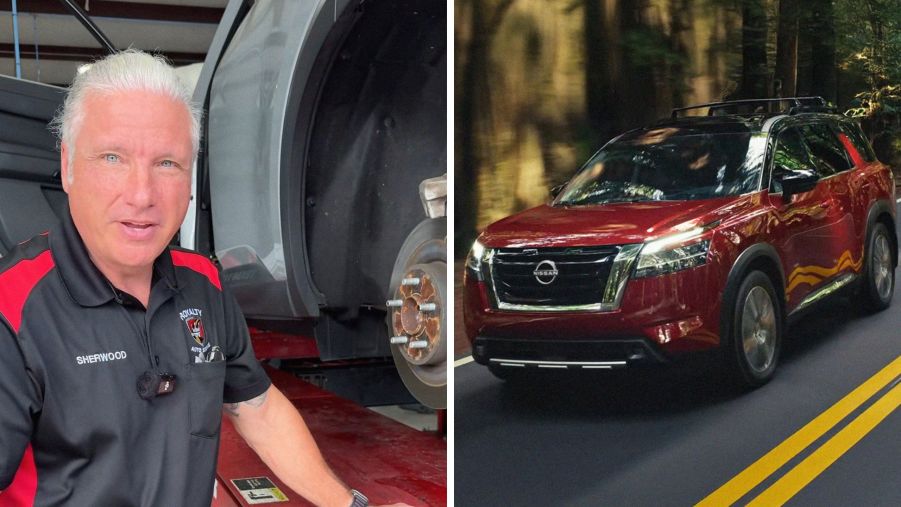
In a video with over 195 thousand views, mechanic and TikTok user Sherwood Cooke Jr. (@royaltyautoservice) shows himself working on a 2024 Nissan Pathfinder. The rear brake pads, he says, are in need of replacement — something that indicates a major change in both how cars work and how they’re produced.
“For my entire career, front brakes wore out way faster than the rears,” he starts. “We would always tell people, ‘You’re probably gonna do front brakes, and then the next time you do brakes is gonna be front and rear, and then you’re gonna do front brakes, and then front and rear.’”
“The norm now is the exact opposite of that,” he adds.
There are a few reasons for this. To start, Cooke says that the rear brakes are now employed more often than they were with cars of previous generations. Electronic brake force distribution, traction control, stability control, lane assist, and other modern car functions may use the rear brakes in ways that older cars did not.
“There’s lots of times that these rear brakes are being used that we don’t really think about them being used — other than when we’re around the brake pedal,” Cooke summarizes.
What Else Is Causing Premature Brake Wear?
The second factor causing premature brake wear, Cooke says, is the simple fact that rear brake pads are small. While this used to be okay given their limited use, the fact that they’re now employed more often means that they wear out much faster.
“I’m not saying that the rear brakes are doing more work than the front. They’re not,” Cooke says. “But, they’re being used more often, and they start off thinner and they are smaller. So, they’re wearing out way faster.”
In the case of this car, the rear brake pads needed to be replaced after just 21,000 miles.
Is This Normal for Nissans?
Cooke isn’t the first person to point out this trend. As previously noted by MotorBiscuit, traction control and electronic stability control have both been known to reduce the lifespan of brake pads, both in Nissan vehicles and cars from other manufacturers.
While 21,000 miles is on the earlier side for brake pad wear-out, it’s not entirely unreasonable. The lifespan of brake pads varies considerably. For example, gently-used brake pads on a light vehicle could last 75,000 miles or more. In contrast, a heavier vehicle with significant brake pad use may require replacement after just 20,000 miles.
If one needs to change out their brake pads, AAA estimates that they should cost $100 to $300 per axle to replace. For the entire vehicle, this means a cost of between $200 and $600.
Commenters Are Annoyed
In the comments section, many users decried the perceived recent decline in the quality of auto parts.
“Brakes, tires, plastic parts, car parts in general. Engines, it’s all made cheaper these days,” wrote a user. “All crap with designed in failures.”
“I’m not exaggerating my 97 Tacoma pick up that I bought new that has 284,000 miles on it,” added another. “Rear shoes still have about 50%.”
“That’s crazy. I had 50% life left on my ten year old 2011 1 ton duramax when I traded it in at 73,000 miles. NEVER needed a brake change,” declared a third.
@royaltyautoservice Times have changed… #mechanic #brakes #diy #fyp #viral ♬ original sound – Royaltyautoservice
We’ve reached out to Royalty Auto Service via website contact form and Nissan via email.