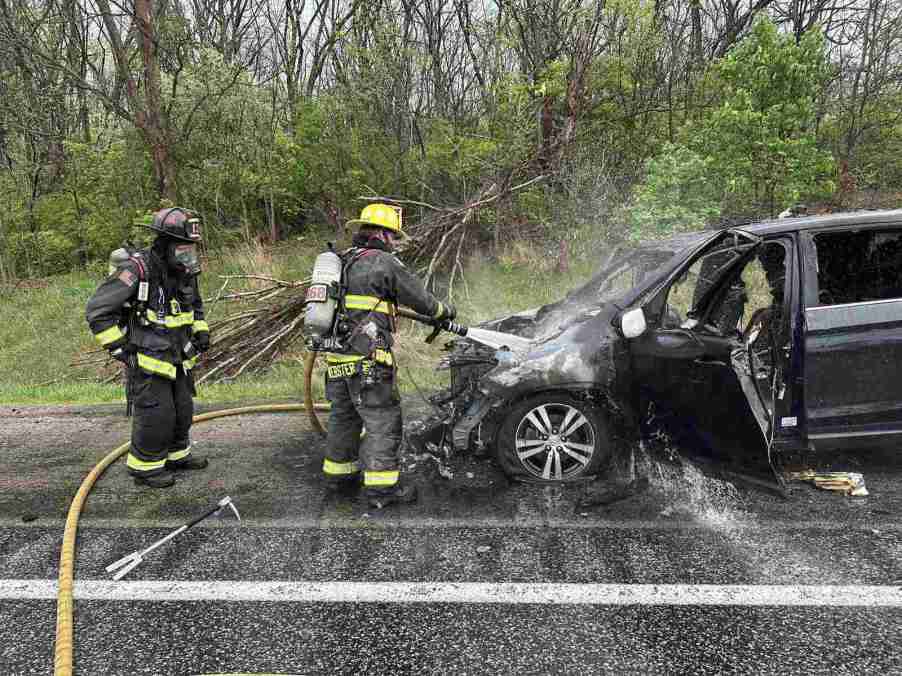
“I never knew cars could get struck by lightning,” one Hoosier remarked at the photos. “Always was told the rubber on the tires were grounds.” Well, today certainly proved that theory wrong. Rubber tires don’t stop lightning, but they do slow the discharge. Case in point: A Honda SUV driving highway speeds caught on fire this morning after a storm struck the interstate.
The Yorktown Fire Department responded to a car fire on I-69
This morning, several local emergency response crews rushed to the scene. While waiting for help, the caller reported smoke coming from the car, which looks like a Honda Pilot. Once the Yorktown FD arrived, the SUV was already totaled from heavy fire damage.
By about 9:45 am, the FD posted photos on Facebook. No injuries were reported.
Lightning can strike a moving car and cause chaos, but it usually doesn’t hurt the people inside
A vehicle’s metal shell, or unibody, acts like a Faraday cage, sending the electricity around the car and into the ground. The charge avoids the cabin, which keeps passengers safe…unless they’re touching metal parts.
The real victim is the car’s electronics. Lightning can fry the ECU, kill sensors, and brick your infotainment. It might blow a tire or burn the paint. Antennas can melt. Windows might crack. Smoke or loud pops can follow. The engine may stall, and you could see warning lights illuminate. Some cars keep running, while others – like the one above – need a tow (or worse).
If a thunderstorm’s brewing, passengers should stay inside, hands off metal. Don’t open doors or windows. Don’t touch the radio. If lightning does strike, check for damage. Look at the tires. Try restarting the engine. Call for help if needed. Insurance should cover any damage if you have comprehensive coverage. You might need to prepare for a fight to prove the circumstances, though.
Moving or parked, cars can attract lightning. So if a storm hits, consider pulling over, waiting it out, and let the Faraday cage do its thing. Stay calm, stay in, and let the car keep you safe.