Mechanic Gets Asked If ‘Lifetime’ Transmission Fluid Is Real. He Doesn’t Hold Back. So, Do You Actually Need To Change It?
A mechanic completely debunks “lifetime fluids” and believes it’s just a marketing term used to generate sales.
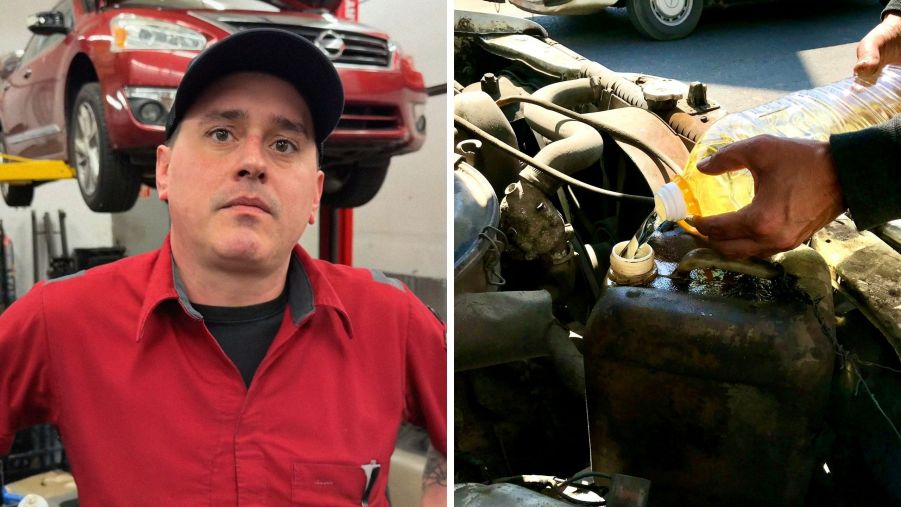
In a viral video, an Eich Brothers Automotive (@eichbrothers) mechanic doesn’t hold back his honest opinion when asked about lifetime fluids.
The TikTok has generated more than 13,900 views as of this writing.
The camera man asks mechanic Patrick, “Are lifetime fluids a real thing?”
Buckle in, Patrick doesn’t hold with his response.
“Absolutely, in three cases. If you die, total your car, or you just don’t give a [expletive],” Patrick begins.
After a brief laugh, Patrick reveals his real honest opinion.
“In all honesty, no. All fluids break down, it’s just part of it. Usually when manufacturers are referring to lifetime fluid, it’s almost always going to be transmission fluid,” he shares.
Patrick believes this term is used to sway customers into believing this product will last forever, but clarifies what they mean.
“That is a marketing term. What they are telling you is that it will last a lifetime of the warranty of the vehicle. Generally speaking, if there is no specification for when to change that fluid out, between 50,000 to 80,000 is always a good bet,” he elaborates.
The mechanic mentions what happens when going 100,000 miles without changing the fluid.
“If you are over 100,000 miles you’re kind of starting to play with fire. If you are over 120,000, leave it alone. Let it blow up on its own” he shares.
Given these scenarios, the mechanic does agree the fluid will last the lifetime of the transmission. However, it’s best to change out the fluid when reaching the mileage threshold.
“You’re gonna get a lot longer out of it if you take care of fluid service,” he suggests.
‘Lifetime Fluids’ Is A Marketing Term
Eich Brothers Automotive told MotorBiscuit, “We do believe this is a marketing term and a bit of trickery from the manufacturer. If you go by their definition of ‘lifetime’ it’s going to be the lifetime of the transmission. Not the lifetime of the human. Whether that’s 100k miles or 300k miles it’s no difference to the manufacturer. It’s just a very odd coincidence that we see these vehicles failing right outside the warranty period that supposedly have ‘lifetime fluids.’”
Marketing terms like this can be misleading and instill false confidence that the product will last their lifetime. As mentioned, this term is applied for the lifetime of the transmission and not the entire life of a human. Or even the car. While this isn’t exactly spelled out on the bottle, that’s typically how long it lasts.
The Eich Brothers aren’t the only ones who believe this is a misleading marketing term. Valvoline agrees that lifetime fluids is a marketing term and not a technical standard.
“In practice, it usually refers to the expected service life of the vehicle as defined by the manufacturer — often until the end of the warranty period or a certain number of years,” per Valvoline.
Transmissions generate a great deal of heat, friction, and contamination when operating. The more the transmission is used, the more fluid oxidizes, leading to a loss in protective additives. Additionally, debris is collected from the clutch gears and packs and takes a toll on the transmission.
So with heavy usage over the years, even the best formulas will break down and need to be replaced to keep the transmission running longer.
How To Keep Your Transmission Running Longer
Now that we’ve addressed the lifetime fluid marketing trick, let’s review when to change out the transmission fluid.
AAA reports that automatic transmission fluid should be changed every 60,000 to 100,000 miles and manual transmissions need to be changed every 30,000 to 60,000 miles.
If keeping track of mileage is difficult to do, the fluid can be changed out every two to four years, L&R Transmission reports.
The guys at Eich Brother Automotive mention the transmission fluid interval cycle can take place between 50,000 to 80,000 miles.
By changing out your transmission fluid, the new fluid can properly reduce friction and prevent overheating from taking place. This is because transmission fluid acts as a coolant and lubricant in the transmission.
When the fluid gets old and worn down fluid, the transmission will have a greater chance of overheating. When a transmission overheats, a full breakdown may occur and repairs for this are not cheap.
AAA shares a transmission rebuild is typically between $2,000 to $4,500. If the transmission needs to be fully replaced, the tab can rack up to be between $2,900 to over $7,000.
To avoid this, it’s best to ignore the lifetime fluid marketing claim and change out the transmission fluid as needed.
@eichbrothers Asking Mechanics: Are Lifetime Fluids a real thing?? #mechanic #carrepair #oilchange #carmaintenance #newcar ♬ original sound – EichBrothers