‘Boom, gone.’ Knoxville, TN, man out $26,000 on a 1963 Corvette that never existed
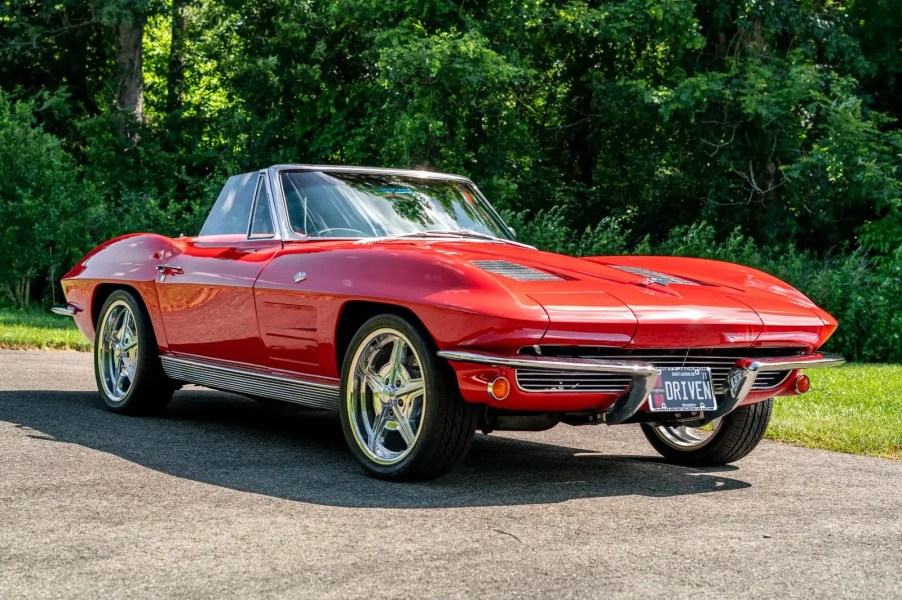
For anyone who loves old cars, the hunt can feel as thrilling as the drive itself. You scroll through listings, see a gleaming chrome bumper, and your pulse jumps. That’s exactly what happened to an East Tennessee man when he spotted a dream-worthy 1963 Corvette on Facebook Marketplace. But instead of rolling into his driveway, the classic car vanished into thin air…and so did $26,750 of his own cash.
Jim Maidens, a longtime car enthusiast from Knoxville, thought he had found the real deal in July.
The Facebook ad showed several Corvette models at prices that looked within reach
A 1969 model at $38,000. A ’73 at just under $12,000. And then, the unicorn: a 1963 priced at $26,000 with $750 delivery.
For Maidens, a former nurse who already owns a pair of early-2000s Corvettes, the price sounded right. But here’s a huge red flag: the classic Vette market would say that the price is simply too good to be true.
On Bring a Trailer, 1963 models typically fetch between $50,000 and can cross $200,000. Sure, one sold for $39k early this year. But $26k, then, seems off from the jump.
Still, Maidens says he spoke with the seller via phone, who claimed the car was in excellent shape and drove perfectly.
A bill of sale arrived, complete with a VIN and electronic signature. The paperwork looked official.
Maidens wired the money. Then waited.
The seller said the Corvette would be shipped that weekend and arrive Monday. Instead, the line went dead. Calls and messages were blocked. The car never existed. He summed it up bluntly: “Boom, gone.”
He contacted Facebook Marketplace, which removed the listing, and reached out to his local sheriff’s office. A deputy briefly reached the scammer by phone, WATE 6 News shared. But the moment the caller identified himself as law enforcement, the line cut off.
Just like that, the trail went cold.
That leaves the painful question: if the Facebook scammer disappears, does the victim ever get the money back?
The hard truth is rarely.
Unless investigators can track the individual and recover funds, wired money sent to strangers is essentially gone. Banks often warn that wire transfers carry little to no protection once sent.
The Corvette scam follows a familiar pattern
Crooks dangle rare or desirable cars at below-market prices. They build fake Facebook profiles with stolen photos. They push urgency by saying others are interested. Once they secure full payment, they vanish.
Folks: Never wire money to someone you don’t know. Always insist on seeing the car in person and meeting the seller face-to-face. Even convincing documents can be forged. A Corvette may be timeless, but so is the golden rule of car buying: If the deal seems too good to be true, it probably is.