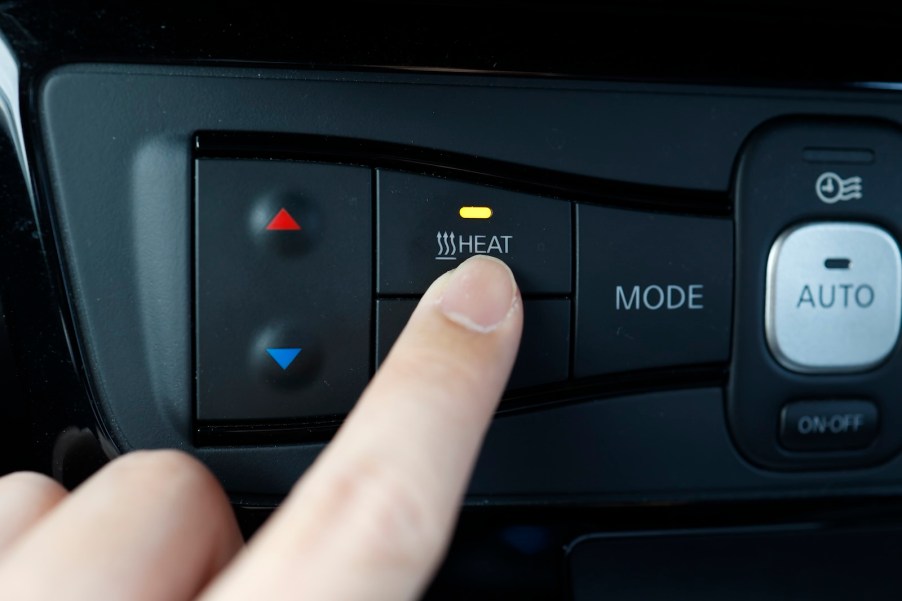
Kia Is Doubling Down on Physical Buttons and Switches
For a decade, automakers have pushed touchscreen-only interiors as “sleek” and “futuristic.” They are also a blatant money grab. Automakers save a few pennies per vehicle by building fewer switches and buttons.
Consumers are over it. Many automakers have done an about-face.
In 2020, Honda redesigned several models and conspicuously brought back physical controls. The most recent Toyota Corolla also saw the return of physical buttons its predecessor lacked.
Kia never hopped on the button-delete trend in the 20-teens. Now it looks like the automaker never will. As the traditionally more cost-effective brand in the Kia-Hyundai-Genesis family, I was concerned Kia might go full “Tesla Model 3.”
But the automaker’s vice president of interior design, Jochen Paesen, recently dispelled those concerns. “The key is finding the balance of creating a certain level of warmth and aspiration.”
He admits that buttons sometimes bring “warmth.” Other times, they add critical safety. “There are certain functions you need to find straight away and you don’t want to mess up, so we keep them physical.”
Why buttons are making a comeback
What’s interesting is that this shift is not a linear evolution. Tesla likely will not bring back physical controls unless regulators force it to. The latest cutting-edge EVs from China also favor touchscreen-heavy interiors.
“Technology is developing very fast, and there have been a component of novelty, especially with the Chinese brands.”
So will the next generation of Kias copy Chinese automakers? Probably not. Paesen diplomatically added, “They’ve done it and you’ve got to respect that they have. You can’t learn from what you haven’t done.”
“We’re at a place where novelty is great, but we’re going into the next phase where there’s a lot of value to be found and added, and that’s where you can develop your own taste, approach and interaction logic.” — Jochen Paesen, Kia VP of interior design