You Can Now Visit ‘Into the Wild’ Bus 142 Without Risking Your Own Death
Alexander Supertramp rings a strong bell for readers of John Krakauer’s bestselling book “Into the Wild,” published in 1996. The nom de guerre of Chris McCandless, Sumpertramp was a young, educated transient who entered the Alaskan bush in the spring of 1992. He was on what he considered a deeply philosophical mission. McCandless would perish of sick starvation by August.
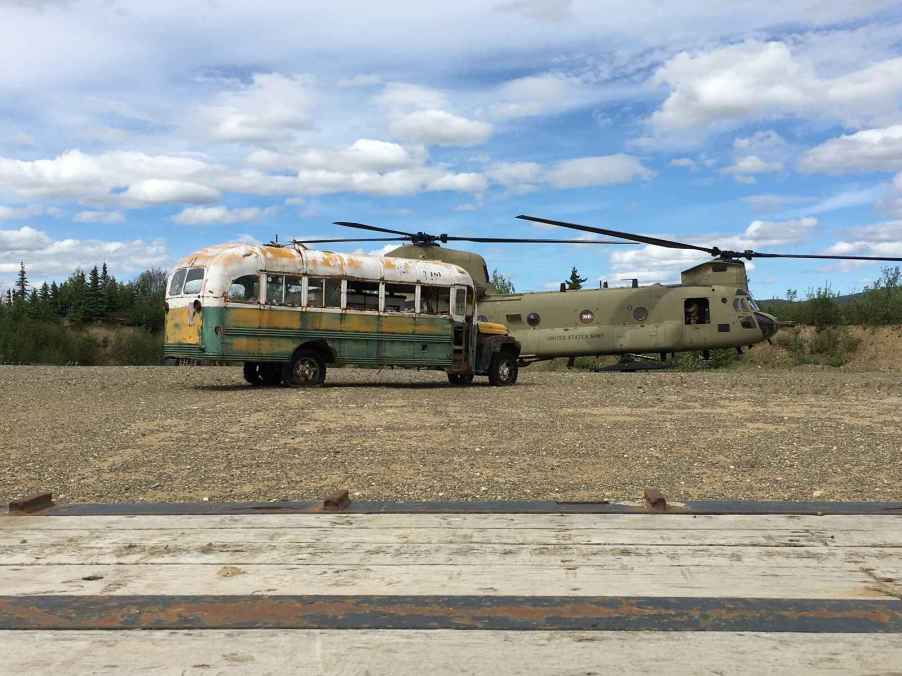
McCandless stayed in an abandoned 1946 International Harvester bus, where moose hunters found him in September 1992. In 2020, the bus was quietly lifted from wild Alaska without formal announcement. An Alaska Army National Guard Chinook helicopter was tasked with the project. Afterward, the bus was placed in government storage.
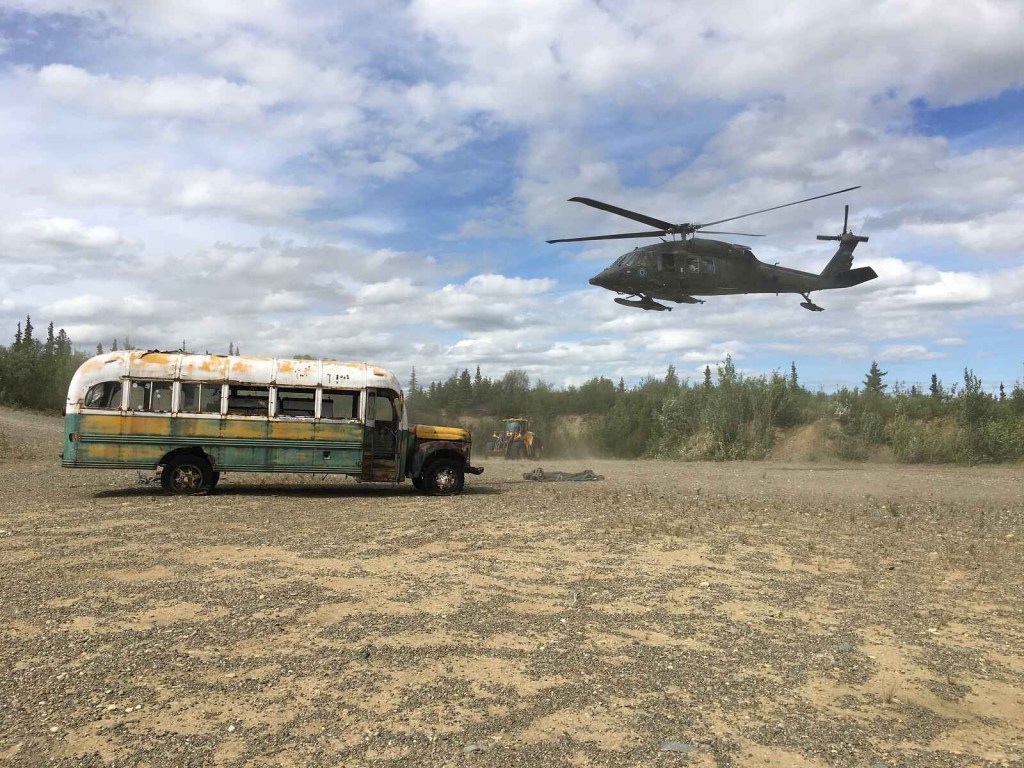
Since about 1961, the bus had sat abandoned about 20 miles down a rough overland trail outside Healy, Alaska. The International Harvester likely began its career with the U.S. military before being used by Alaska Transit in Fairbanks. This is when it received its number, 142.
Once retiring as a passenger bus, the vehicle was converted to a shelter of sorts by a private owner. It looks to have been towed down the overland road, past the end of the Stampede Trail. It would have housed teams working the trail. The bus was abandoned once that work stopped.
Since 1996, when the bus first caught national attention, Outside reported that the two people had drowned trying to reach it. What’s more, over a dozen others had been rescued from the Alaskan bush trying to visit the bus. The two women killed were trapped in the rapid water of Teklanika. This was the same river that prevented McCandless from returning to civilization when he was still mobile but in dire straights.
Once the news of the 2020 airlift hit the public eye, the commissioner of Alaska’s Department of released a statement. “We encourage people to enjoy Alaska’s wild areas safely, and we understand the hold this bus has had on the popular imagination. However, this is an abandoned and deteriorating vehicle that was requiring dangerous and costly rescue efforts, but more importantly, was costing some visitors their lives. I’m glad we found a safe, respectful and economical solution to this situation.”
Many followers of McCandless’s storied life and death were disheartened to learn the bus was put into storage. But now, pilgrims can see the bus at an in-progress exhibit at the University of Alaska Museum of the North (UAMN). The museum is located in Fairbanks in view of Denali.
The “Into the Wild” bus has a much longer story than its time sheltering Christopher McCandless. Its placement as a permanent fixture in an Alaskan museum, paired with its full contextual history, seems right. Moreover, removing any real risk of visiting Bus 142 makes perfect sense, especially in attempts to keep the Alaskan wilderness, well, wild.