‘I can’t do a Sudoku’ Pilot shares what he’s actually allowed to do during the boring parts of flights
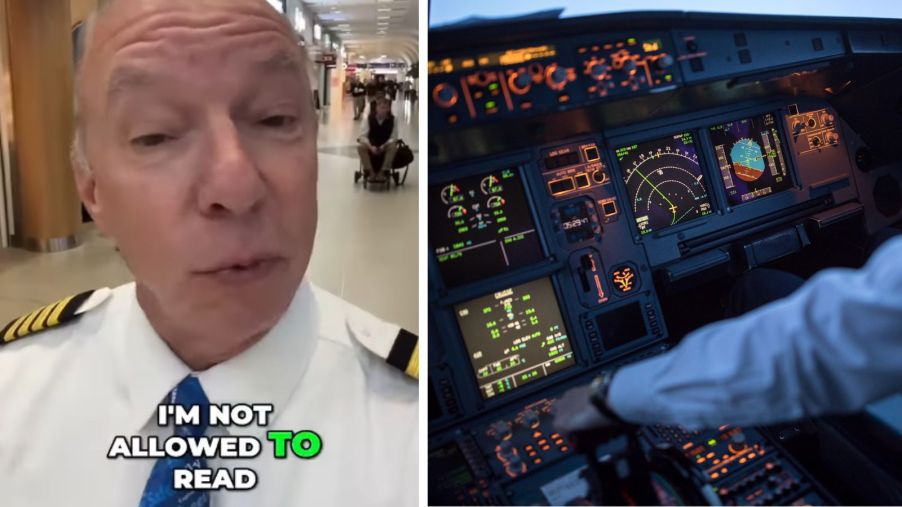
Captain Steve, better known as “Captain Steeeve,” has turned his cockpit experience into a full-blown social media presence. A commercial airline pilot with time at the controls of everything from Boeing 727 to 777 airplanes, he blends technical insight with approachable humor. This week, he shared what exactly he’s allowed to do with his “spare” time mid-flight.
Turns out, there are a lot of activity restrictions (and for good reason)
You might be surprised about what he’s definitely not able to do on the job. “I’m not allowed to read,” the pilot starts. Well, he can read some things, but there’s a bit of a catch: It has to be related to the flight he’s on or aviation.
“I can’t get out my Mad Magazine,” he says, or do a Sudoku up at altitude.
After all, the pilot is required to be aware of the plane and flight status when they’re on duty.
So, small talk skills are a BIG part of any pilot’s job interview
The pilot explains that when he first interviewed for his job, most of his time in the hot seat was (confusingly) spent chatting about seemingly, well…nothing. “They didn’t ask me much in the way of technical questions…I was kind of scratching my head,” he says.
He later realized that this was totally intentional. “You’d be surprised how many people can’t hold a conversation for very long.”
See, he came to figure out that just because a pilot looks good on paper, it doesn’t mean he’ll be able to handle the more social aspects of the job, like working closely with flight crews. “It’s all about the conversation between you and your copilot.”
Since you can’t really do much else, you spend a lot of time learning about where they’re from, what their hobbies are, and what they’re families are like. “There’s a lot of things that you can talk about,” the pilot explains. “It makes the flight go by a lot quicker.”
Commenters confirmed this, adding the “Sterile Cockpit” rule
In commercial aviation, the “Sterile Cockpit” rule means pilots must avoid all non-essential activities during critical flight phases. That includes takeoff, landing, and any time the aircraft is below 10,000 feet. No casual chatting, like sharing personal stories. No unrelated tasks.
The rule was established in 1981 after NASA reviewed reports of unwanted incidents (like wrecks) during critical flight stages. Back in 1974, Eastern Air Lines Flight 212 crashed during landing at Charlotte/Douglas International Airport. The NTSB concluded that despite fog, the crew had been distracted by personal talk, per a 2017 U.S. Department of Transportation newsletter.
The goal is to keep pilots fully focused on flying and safety. Distractions at low altitude can quickly lead to mistakes, because there’s less time and space to recover. This rule also applies to communication from the cabin: flight attendants only interrupt if it’s urgent.
So if you’re wondering what the pilot’s doing in the cockpit two hours into a four-hour flight, the answer’s not watching YouTube videos. They’re probably having a good talk with their copilot and paying attention to the flight deck.
MotorBiscuit reached out to Captain Steve via direct message with his Instagram profile, @captainsteeeve, wondering whether flight crews report on violations of these rules and whether the pilot himself has seen the “Sterile Cockpit” rule really serve the flight well.