Harvard Scientist Suggests 3I/ATLAS Might Release Alien Spy Probes Near Jupiter
Space watchers already had 3I/ATLAS flagged as a curiosity. Heck, we only just recently reported that certain folks might think it houses teensy alien robot spiders. Now, a high-profile astrophysicist thinks it might have plans that don’t include Earth at all, at least not yet.
Avi Loeb of Harvard looked at the interstellar object’s flight path and suggested it might not just be on a passive pass through our system. He explained it could be positioning itself to release technological probes near Jupiter next spring. We’re not talking random speculation over a late coffee, either.
Loeb walked the New York Post through his calculations.
The scientist pointed to March 16, 2026, when 3I/ATLAS will drift past Jupiter at roughly 53.445 million kilometers
That’s virtually identical to the boundary where Jupiter’s gravity begins to override the Sun’s influence. It’s an area known as the Hill radius. He said that if anything wanted to “deploy” near the gas giant while sinking as little fuel as possible, that would be the prime spot.
According to Loeb, 3I/ATLAS appears to be steering directly into it. Loeb explained that NASA’s Jet Propulsion Laboratory data shows ATLAS tracking toward that exact zone, calling it “an extraordinary coincidence.”
He also reported that a small course correction likely occurred during its closest approach to the Sun. He claimed it was just the right adjustment to place the object where it needed to be. The scientist suggested artificial thrusters could explain it.
Compounding the issue, 3I/ATLAS moved behind the Sun during that maneuver, placing it out of view for Earth-based observatories
So no one can confirm whether anything was released or if that adjustment happened naturally.
Loeb stated that Jupiter is a preferable target because its size would make the planet more visible to “whoever” launched 3I/ATLAS, possibly billions of years ago.
He added that the absence of similar behavior near Earth could point to our comparatively late emergence as a technological species.
The scientist ranked the alien probe drop-off theory lowest out of 6 major unexplained ATLAS anomalies addressed in a blog post
But he still noted the object’s “anti-tail,” which points toward the sun, and suggested it could be sweeping meteorites out of its path using a directed beam.
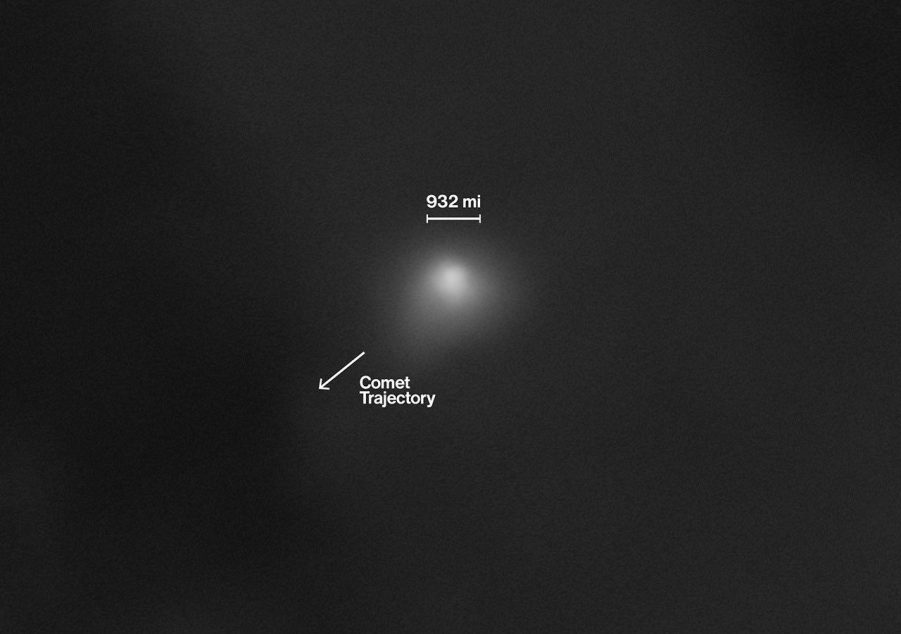
NASA maintains 3I/ATLAS is simply a comet. Still, Loeb commented that if spacecraft such as Juno detect unfamiliar hardware orbiting Jupiter after ATLAS passes, it would force humanity to rethink its place in the solar system. For the agency’s latest updates on the comet, you can check out NASA’s 3I/ATLAS hub.