GM files patent to use its cars to alert cities of bad roads
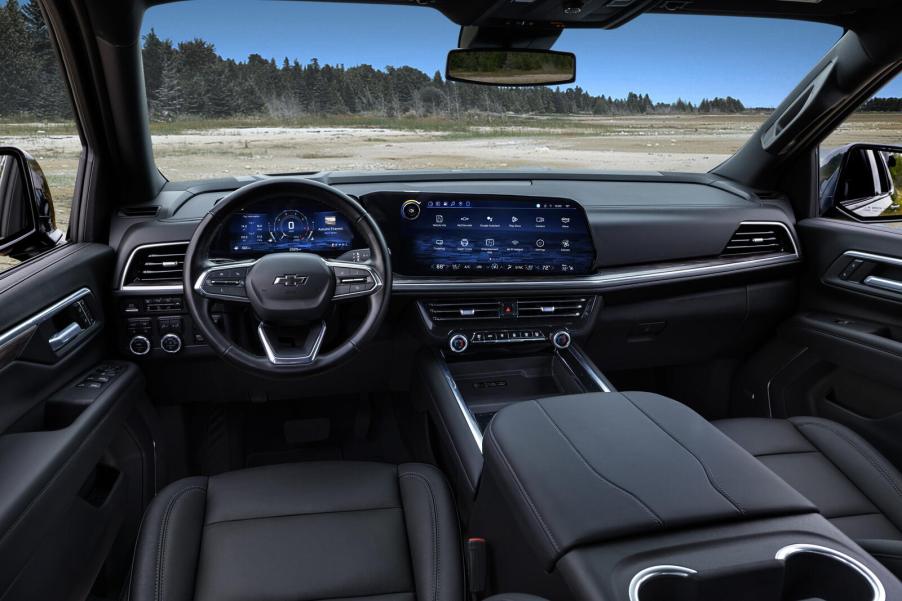
Say you’re driving your 2031 Chevrolet Tahoe down a stretch of road when your car’s nav system alerts you to a huge pothole up ahead. It suggests a bypass, steering you clear of the impending jolt. What’s more, you already know that the high-tech SUV will also tell the local department of transportation about the problem.
This isn’t entirely science fiction. It’s a glimpse into the future of connected driving, powered by tech already present in your vehicle in 2025. GM has filed a patent for a system that transforms its cars into real-time road condition monitors.
Utilizing existing sensors like cameras, accelerometers, and GPS, the system would detect road anomalies such as bumps, cracks, or debris
The patent, filed in June, says that cars would collect data and send it to the cloud. There, it’s aggregated to generate a “Road Maintenance Score.”
If the score indicates significant deterioration, local authorities are alerted for timely repairs.
Why GM is pursuing this patent
GM’s interest in this tech likely stems from two primary objectives:
Driver experience: By addressing road imperfections proactively, GM is probably thinking creatively about how to improve the ride quality of its lineup.
Leveraging data for innovation: The patent positions GM as a leader in using vehicle-generated data to help solve real-world problems. Move over, Tesla!
And anyway, better roads mean people will stay happy drivers instead of, say, opting to fly.
The “smart” initiative is part of a broader industry trend
Ford has explored similar concepts, focusing on vehicle sensors to monitor road conditions and inform driveability, plus maintenance needs. However, GM’s approach appears more integrated. It’s leveraging a cloud system to centralize data from a potentially large batch of its cars, offering a more comprehensive view of road health.
Tesla, on the other hand, has developed advanced suspension systems that adjust in real-time based on road conditions. While Tesla’s technology directly enhances the driving experience, GM’s system aims to provide local communities with actionable data to prevent road deterioration.
GM’s long been imagining the future of American roads
I recently came across a lovely short film GM produced in 1956 called “Key to the Future.”
In it, a family stuck in traffic warps to 1976. By then, GM imagined, cars would self-drive. A friendly (human!) traffic controller would help you navigate the most efficient route.
It’s a hoot and a half, especially considering how far we’ve come…and how far we have to go. If you’ve seen any Mystery Science Theater 3000, this one could really make the cut:
Automakers file hundreds of patents each year, but only a fraction actually show up in vehicles you can drive
Many are experiments, future ideas, or backup plans. Some are filed in “defense.” Many are waiting for the right timing, but most just never leave the drawing board.