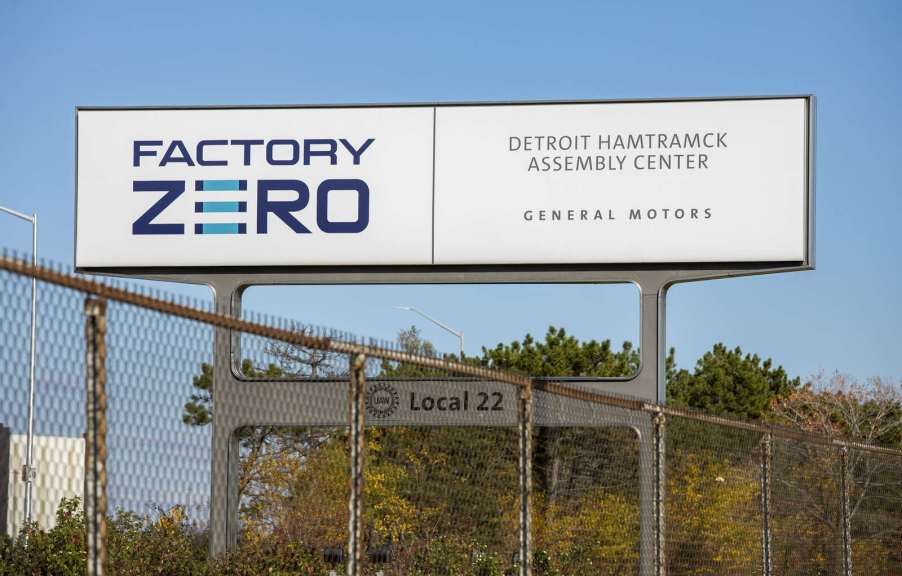
GM Factory Zero Workers Suggest Layoff Alternatives After Building Cars Most Americans Can’t Afford
At GM’s Factory Zero in Detroit, the work keeps stopping and starting, and nobody seems able to say when it will stabilize. Off until Thanksgiving week, then on again, but off again in January. For these workers and other GM staff in other factories, the sword hangs heavy over wary (and weary) heads.
That uncertainty is the backbone of a new essay by Nevena Pilipović-Wengler and Andrew Bergman, both hourly workers at Factory Zero and members of UAW Local 22.
They work at GM’s flagship EV plant, the one tasked with building the 6-figure Hummer EV and other high-dollar electric models.
In their essay, published by Daily Struggle on December 10, they laid out what life has looked like on the shop floor since 2024, and why the current approach to layoffs makes no sense for workers or the company’s long-term health.
They explained that more than 1,100 workers were told in late October that a temporary two-month layoff would end just in time for Thanksgiving week
But only for an “indefinite layoff” to begin in January.
GM was cutting production from two shifts to one. That news followed a year defined by extremes.
They say that much of 2024 meant mandatory overtime pushing 72 to 80 hours a week, especially in battery operations, where seven-day workweeks became routine. But an 80-hour per head budget, half of which are overtime rates, could support twice the staff, no?
Then came rolling layoffs, sudden terminations of temporary workers, and notices that often arrived with little warning.
They argued this whiplash is not an “accident”
Rather, it’s how the modern auto industry manages risk and protects margins.
According to Pilipović-Wengler and Bergman, GM and other carmakers treat workers as more of a line item. A simple cost to expand, or ever-ready, on-demand reduction lever. The stakes for workers are high despite lack of control.
After all, recent layoffs trigger when production planning fails or the market rejects expensive cars that most Americans cannot realistically afford.
Instead of accepting the GM layoffs as inevitable, they pointed to older labor strategies the UAW once used
One is the jobs bank, a program created in the 1980s that protected workers’ pay during long layoffs caused by restructuring or automation.
Instead of going home indefinitely, workers remained employed and continued to report for approved activities. These included job training, education, community service, or on-site assignments until work resumed or they were reassigned.
I looked into them. In practice, companies including GM, Chrysler, Ford set aside funds as part of their overall labor costs. When they laid off workers because of automation, plant closures, or restructuring, those workers moved into the jobs bank instead of onto unemployment. They kept receiving full or near-full pay and benefits.
The idea was that the workers kept their paychecks and the car companies ultimately avoided the costs of hiring and training when production was ready to ramp up again.
That made the program more expensive for the automakers, which is exactly why it became controversial. By 2008, facing bankruptcy, the Big Three pushed to sunset job banks, citing financial strain.
Another alternative is work sharing
Shorter workweeks, fewer days per week, or alternating shifts so everyone keeps a foothold instead of some workers losing everything.
Pilipović-Wengler and Bergman explained that sharing reduced hours spreads pain evenly, limits retraining costs, and avoids forcing families into sudden financial freefall.
It also helps workers stick together, which some companies, er, tend to “resist.”
In these GM workers’ minds, layoffs are a choice, not weather
If production slows, the Factory Zero workers say, employees should help decide how the work that’s left gets divided. Otherwise, the cycle repeats: Long overtime, abrupt layoffs. Rinse, repeat.
To me, it’s a difficult problem with only imperfect, problematic answers. In 2025, who is responsible for supporting workers subjected to the failings (foreseen or unforeseen) of private companies? The truth is, if the private company doesn’t have the money, it doesn’t have the money. But, I’m sure, some question whether whoever is deciding where “the money” goes (and doesn’t) is a big part of the problem.
At some point, you’d have to think that like mechanic jobs, which Ford CEO Jim Farley has lamented not being able to fill, factory workers might truly tire of the rough instability and avoid the work altogether. I wouldn’t blame them. For those who feel their options are limited to automaker factory floors, I hope the industry can support you.