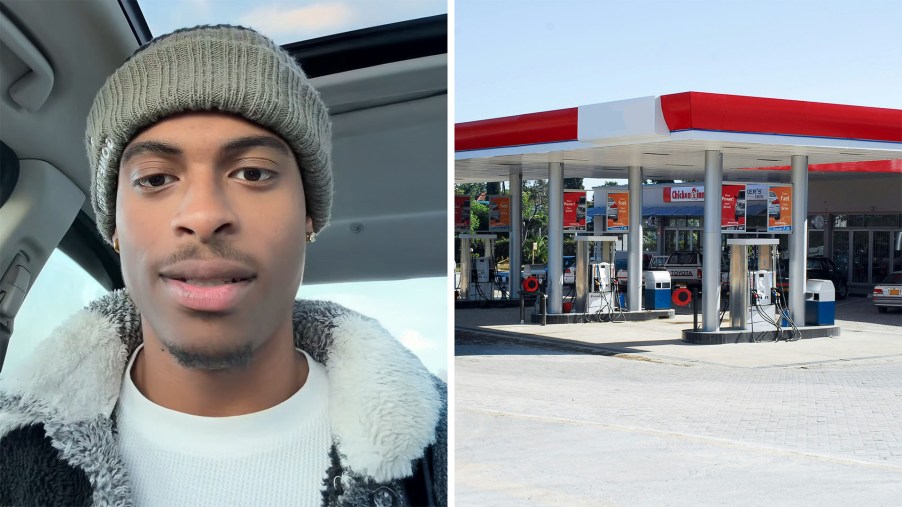
‘Walmart Trying This Same Mess’: Connecticut Man Goes To Gas Station With No Price Tags. Then He Pays—But The Register Won’t Display His Total
A Connecticut man posted a video questioning the pricing methods of his local gas station, causing viewers to inquire about the legality of the station’s operations.
On Jan 21, Tyris Cauley (@tyriscauley) posted a TikTok inquiring about why gas stations do not have price tags. The video has 2,352 views as of Thursday. “I go into the store to get something, and I’m seeing that there are no price tags,” says Cauley.
Cauley states that he goes to purchase a Reese’s Big Cup, but no price tags are present. He then hands it to the attendant at the register. However, the price is not visible on the screen when the item is rung up. “So how am I supposed to know how much I’m paying?” he asks.
Cauley clarified that at the end of the interaction, he was told that his purchase was worth $5. “Anybody who knows a Reese’s Big Cup knows that [expletive] is not $5 worth,” he says. “Scam.”
Are Gas Stations Required To Have Price Tags?
Some of the commenters claimed that this is not legal. “You can file a report online with your state AG, as well as the FTC and FCC,” wrote one user. “They have to show the price.”
While pricing laws vary state to state, Connecticut’s pricing laws generally require retailers to disclose the price and unit price of consumer commodities. This is so customers can see what they’re buying before they get rung up. Stores that use barcode systems without visible shelf or item price labels are technically supposed to post conspicuous pricing or use approved electronic shelf labeling. Otherwise, consumers have grounds to complain or report violations to the state’s consumer protection division.
The “Get One Free” law in Connecticut even says if an item scans higher than the posted price, the customer is entitled to one free. This makes the lack of clear tags even more suspect. “In Connecticut, if certain items scan higher at checkout than the sticker price on the item or the price posted on the shelf, the consumer is entitled to that item free (up to $20),” says the Connecticut Department of Consumer Protection website.
Why Might Gas Station Prices Be So Much Higher?
Gas stations generally make very thin margins on fuel itself as average profit margin on a gallon of gas is 10 cents. Gas stations make much of the real profit coming from in-store sales and convenience fees. The gas stations know that drivers buying gas are already captive customers for snacks, drinks, and other quick buys. So gas stations can charge premium prices because the alternative is often inconvenient for customers.
Convenience stores also buy inventory in much smaller quantities than big supermarkets, meaning they pay higher wholesale prices and pass those costs onto consumers. Factors like location, local competition, and overhead costs all feed into pricing decisions. A small station off a busy highway with little nearby competition can charge much more than a large store near a supermarket.
Are Major Retail Chains Also Removing Price Tags?
Several viewers have even pointed to similar price-tag complaints at big-box retailers like Walmart and Target. “Walmart trying this same mess!” wrote one comment.
In recent months, shoppers and self-identified employees have posted videos and threads showing racks of clothing and other items with no visible price tags at all, or tags being ripped off before new ones are applied, leading to confusion at checkout. Critics say removing printed prices makes it easier for retailers to adjust prices “quietly” amid tariff-driven cost pressures. This is done because customers can’t easily compare the price on a tag to what rings up at the register.
Walmart has acknowledged changing its tagging process to use shelf or peg signs. The retailer is piloting digital shelf labels to speed up repricing, while Target hasn’t publicly addressed the missing tags directly. Many of the viral videos and anecdotes cite employees spending entire shifts removing old price tags so new prices can be applied. This leads consumers to be left guessing what they’ll actually pay until they reach the register.
Legally, Walmart and Target aren’t automatically violating the law by removing individual item price tags. Most states allow large retailers to rely on shelf pricing, signage, or electronic labels instead of tagging every item. Problems arise only if prices are not clearly disclosed at the point of selection or if items scan higher than posted prices, which can trigger state consumer protection violations depending on local law.
MotorBiscuit reached out for comment to Cauley via TikTok direct message and email, and to Walmart and Target via email.
@tyriscauley Where the price tags go ??#pricetag #scam #gasstation #fyp ♬ original sound – thatGuyTy