‘How’s that work?’ gas station sells three grades of fuel but only has two tanks
Ever noticed a detail in the world that changes how you see some aspect of everyday life? Subaur BRZ driver Jesse Miller was fueling up at a Shell gas station the other day and saw something that shocked four million TikTokers: the truth about midgrade gasoline.
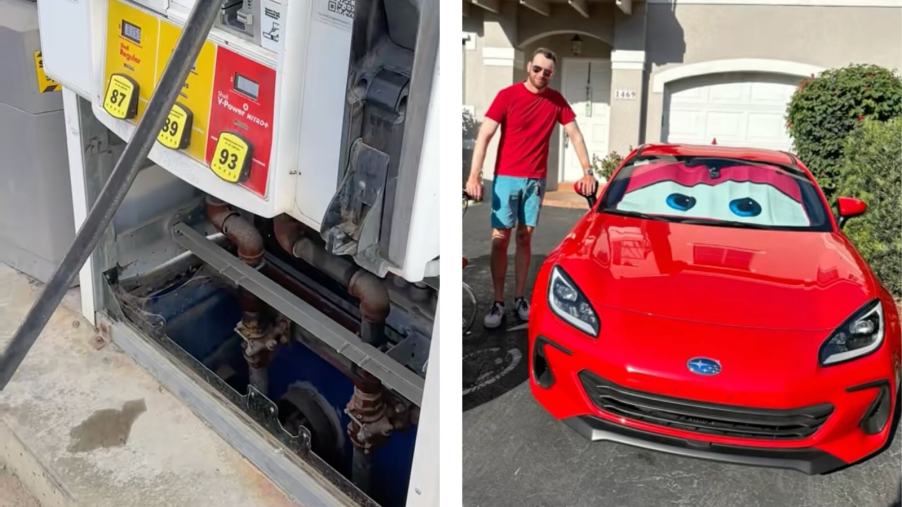
Miller posted a video to his TikTok @Jesse_m603. In the video, the mechanism below a regular Shell pump are showing. Miller explains, “Someone left the hatch open.” The pump appears fully operational, but something looks odd to Miller.
“Can anyone explain to me why there’s two pipes that go in but there’s three options? How’s that work?” See the video embedded below, and read on to discover the truth about the midgrade gasoline myth.
If you look closely, he’s right. The pump is setup with buttons to sell 87, 89, and 93 octane gasoline. But beneath the pump there are only two pipes descending to its underground tanks. That’s because the Shell station–like most gas stations–only has two gasoline tanks.
CNET explains, “Most refiners don’t really make midgrade gas. They make regular and premium and that’s what’s stocked underground at the gas station.”
So what happens when you decide to splurge on midgrade gasoline? “When you squeeze the midgrade handle you get a cocktail of the two fuels, ‘splash blended’ as you pump.”
The midgrade gasoline myth
CNET offers this tip to drivers of cars that require midgrade gasoline. “If your car is rated for midgrade gas you may save money by blending your own. Dispense some from the regular pump, then start a new transaction and dispense the rest from the premium pump.”
When the octane ratings are 87, 89, and 91, a 50/50 split should be mid grade. And you might save between 5 and 10 cents a gallon. But my colleague Peter Corn dispelled the “mid-grade myth” when he revealed how few cars require 89 octane. It’s really just a handful of models from Stellantis.
The truth is that high compression engines require fuel with a higher octane content–including Jesse Miller’s Subaru BRZ. That’s almost always 91 octane or more. This is because the fuel combusts more predictably, and is much less likely to “knock” by combusting too early. Most engines can run 87 octane “regular” gas. And they won’t make any more power with premium or midgrade; a higher octane rating doesn’t mean a fuel has any more “energy.”
I expect most midgrade purchases are based on the myth that high octane gas does include more “energy” and makes your car more powerful. Having the midgrade option is a great way to get indecisive buyers to splurge a bit–and throw away their money.
MotorBiscuit has reached out to @Jesse_m603 for comment.